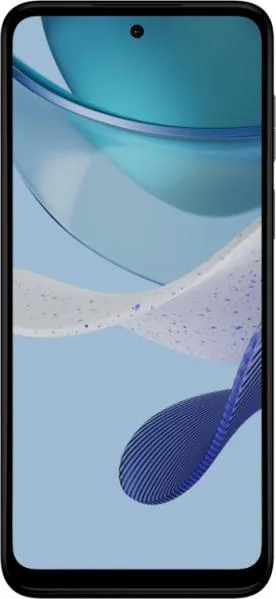
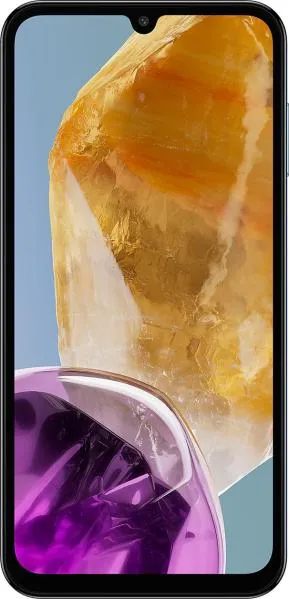
1. Specifications Comparison
| Feature | Motorola Moto G (2023) | Samsung Galaxy M15 | Practical Impact |
|---|---|---|---|
| Design | |||
| Dimensions (mm) | 164 x 75 x 8.4 | 160.1 x 76.8 x 9.3 | M15 slightly shorter and narrower, but thicker. Negligible difference in hand feel. |
| Weight (g) | 189 | 217 | Moto G noticeably lighter, reducing hand fatigue during extended use. |
| Build Material | Not specified | Not specified | Cannot compare build quality and durability. |
| Display | |||
| Display Type | IPS LCD, 120Hz | Super AMOLED, 90Hz | AMOLED offers deeper blacks, vibrant colors, and better power efficiency. 120Hz on Moto G provides smoother scrolling and animations. |
| Resolution | 720 x 1600 | 1080 x 2340 | Significantly sharper and more detailed visuals on the M15. Noticeable difference in clarity for text, images, and videos. |
| Pixel Density (PPI) | 270 | 396 | Higher PPI on M15 translates to crisper text and images. |
| Peak Brightness | Not specified | 800 nits | M15's higher brightness ensures better outdoor visibility. |
| Performance | |||
| Chipset | Snapdragon 480+ 5G (8 nm) | Mediatek Dimensity 6100+ (6 nm) | Dimensity 6100+ offers significantly better CPU and GPU performance, leading to faster app loading, smoother multitasking, and improved gaming capabilities. |
| CPU | Octa-core (2x2.2 GHz Kryo 460 & 6x1.8 GHz Kryo 460) | Octa-core (2x2.2 GHz Cortex-A76 & 6x2.0 GHz Cortex-A55) | Dimensity 6100+'s more modern CPU architecture provides a performance advantage. |
| GPU | Adreno 619 | Mali-G57 MC2 | Mali-G57 MC2 offers better graphics performance for gaming and demanding applications. |
| RAM | 4GB | 6GB | More RAM in M15 allows for smoother multitasking and less frequent app reloading. |
| Camera | |||
| Main Camera | 48MP | 50MP | Slight difference in resolution; image quality depends more on sensor size and processing, which are not fully specified. |
| Ultrawide | Not specified | 5MP | M15 offers ultrawide photography for capturing wider scenes. |
| Macro | 2MP | 2MP | Similar macro capabilities, but practical usability depends on sensor quality and software processing. |
| Selfie | 8MP | 13MP | Higher resolution selfie camera on the M15. |
| Video Recording | 1080p@30fps | 1080p@30fps with EIS | Both record at 1080p, but M15 features Electronic Image Stabilization (EIS) for smoother video footage. |
| Battery | |||
| Capacity | 5000 mAh | 6000 mAh | Larger battery in M15 should provide longer usage time between charges. |
2. Key Differences Analysis
Motorola Moto G (2023) Advantages:
- Lighter Weight: More comfortable for extended use.
- Higher Refresh Rate Display: Smoother scrolling and animations.
- Lower Price: Generally more affordable. (Based on limited price data)
Samsung Galaxy M15 Advantages:
- Superior Display: AMOLED technology with higher resolution and brightness.
- Significantly Better Performance: More powerful chipset, CPU, and GPU for smoother multitasking and gaming.
- Larger Battery: Longer battery life.
- NFC: Enables contactless payments and other NFC functionalities.
- More RAM: Better multitasking performance.
- Ultrawide Camera: Expands photographic versatility.
- EIS for Video: Smoother video recording.
3. User Profiles & Recommendations
Motorola Moto G (2023): Budget-conscious users who prioritize basic communication, web browsing, and casual media consumption. Best for users who don't play demanding games or require top-tier performance.
Samsung Galaxy M15: Users seeking a well-rounded experience with a good display, strong performance, long battery life, and versatile camera features. Suitable for moderate gaming, multitasking, and content creation.
4. Decision Framework
Key Questions for Buyers:
- What is your budget? The Moto G (2023) is likely more affordable.
- What are your primary use cases? (e.g., gaming, photography, social media)
- How important is display quality and performance? The M15 excels in these areas.
Scenario-Based Recommendations:
- Tight Budget, Basic Use: Moto G (2023)
- Balanced Performance and Features: Samsung Galaxy M15
My Choice: Samsung Galaxy M15
While the Motorola Moto G (2023) offers a lower price and higher refresh rate display, the Samsung Galaxy M15 is the superior choice overall. The significantly improved performance, higher resolution AMOLED display, larger battery, NFC capability, and more versatile camera system outweigh the Moto G's advantages for me. The smoother user experience, longer battery life, and broader functionality offered by the M15 justify the likely price difference. The 6GB of RAM on the M15 will also future-proof the device better. While I appreciate the smoother scrolling of 120Hz, the overall quality of the AMOLED display is more important to me. I also frequently use NFC for mobile payments, making it a must-have feature.
