1. Specifications Comparison
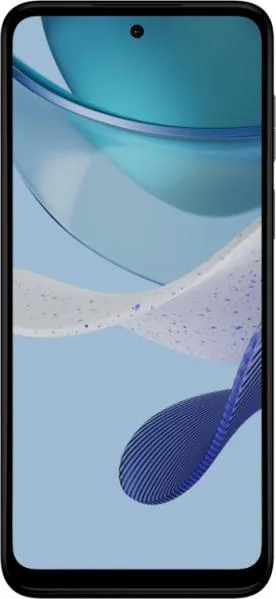
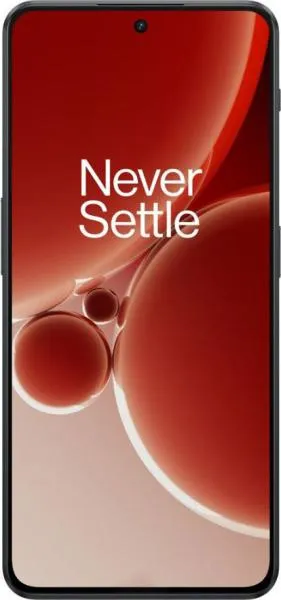
| Feature | Motorola Moto G (2023) | OnePlus Nord 3 | Practical Impact |
|---|---|---|---|
| Design | |||
| Dimensions (mm) | 164 x 75 x 8.4 | 162 x 75.1 x 8.2 | Nord 3 is slightly more compact. Negligible difference in daily use. |
| Weight (g) | 189 | 193.5 | Nord 3 is slightly heavier, but the difference is minimal. |
| Build | Unspecified | Unspecified | Build quality cannot be compared due to missing information. |
| Display | |||
| Display Type | IPS LCD, 120Hz | Fluid AMOLED, 120Hz, HDR10+ | Nord 3's AMOLED offers significantly better contrast, deeper blacks, and potentially brighter visuals, especially with HDR10+ content. |
| Display Size (inches) | 6.5 | 6.74 | Nord 3 offers a slightly larger screen for more immersive media consumption. |
| Resolution | 720 x 1600 | 1240 x 2772 | Nord 3 boasts much sharper visuals due to significantly higher resolution. |
| PPI | 270 | 451 | Nord 3's higher pixel density results in crisper text and images. |
| Peak Brightness | Unspecified | 1450 nits | Nord 3's higher peak brightness ensures better visibility in direct sunlight. Moto G's unspecified brightness limits our comparison. |
| Performance | |||
| Chipset | Snapdragon 480+ 5G (8nm) | Dimensity 9000 (4nm) | Nord 3's Dimensity 9000 is significantly more powerful, enabling smoother multitasking, faster app loading, and better gaming performance. |
| CPU | Octa-core (2x2.2 GHz Kryo 460 & 6x1.8 GHz Kryo 460) | Octa-core (1x3.05 GHz Cortex-X2 & 3x2.85 GHz Cortex-A710 & 4x1.80 GHz Cortex-A510) | Nord 3's CPU architecture offers superior performance across various tasks. |
| RAM | 4GB | Up to 16GB | Nord 3 offers considerably more RAM, resulting in improved multitasking and smoother performance with demanding applications. |
| GPU | Adreno 619 | Mali-G710 MC10 | Nord 3 has a more powerful GPU, delivering smoother graphics and better gaming performance. |
| Camera | |||
| Main Camera | 48MP, f/1.7 | 50MP, f/1.8, Sony IMX890 | Nord 3's main camera utilizes a larger sensor (IMX890) known for its good performance, likely resulting in better image quality. |
| Ultrawide | No | 8MP, f/2.2 | Nord 3 offers an ultrawide lens for broader perspectives, absent in the Moto G. |
| Selfie Camera | 8MP, f/2.0 | 16MP, f/2.4, Sony IMX471 | Nord 3's selfie camera has a higher resolution and uses a well-regarded sensor (IMX471), suggesting better selfie quality. |
| Video Recording | 1080p@30fps | Up to 4K@60fps with EIS | Nord 3 offers significantly better video recording capabilities with higher resolution and frame rates, along with Electronic Image Stabilization (EIS). |
| Battery | |||
| Capacity | 5000 mAh | 5000 mAh | Both phones have the same battery capacity. Real-world battery life will depend on software optimization and usage patterns. |
| Charging Speed | Unspecified | Unspecified | Charging speed comparison is impossible due to missing information. |
2. Key Differences Analysis
Motorola Moto G (2023) Advantages:
- Potentially Lower Price: While not specified, Moto G phones generally target a more budget-conscious market.
OnePlus Nord 3 Advantages:
- Significantly Superior Performance: The Dimensity 9000 chipset and higher RAM provide a noticeable performance advantage for demanding tasks and gaming.
- Higher Quality Display: The AMOLED with HDR10+ offers richer colors, deeper blacks, and better outdoor visibility.
- More Versatile Camera System: The inclusion of an ultrawide lens, higher resolution sensors, and better video recording capabilities makes the Nord 3 more versatile.
- More Feature-Rich: NFC for contactless payments is present in the Nord 3 and absent in the Moto G.
3. User Profiles & Recommendations
Motorola Moto G (2023): Ideal for users on a tight budget who prioritize basic smartphone functionality – calling, texting, web browsing, and light social media usage.
OnePlus Nord 3: Suited for users who demand a smoother, more powerful experience for demanding tasks, gaming, media consumption, and mobile photography.
4. Decision Framework
Key Questions:
- What is your budget? The Moto G likely offers a lower price point.
- What are your primary smartphone usage patterns? For basic tasks, the Moto G might suffice. For demanding tasks and media consumption, the Nord 3 is significantly better.
- How important is camera quality and versatility? The Nord 3 has a clear advantage in camera capabilities.
My Choice: OnePlus Nord 3
While the Moto G (2023) might be a decent budget option, the OnePlus Nord 3 offers a significantly superior overall experience. The much more powerful processor, stunning AMOLED display, versatile camera system, and inclusion of features like NFC justify the likely price difference for most users. The Nord 3 offers a future-proof package with its performance capabilities and will likely provide a smoother and more enjoyable user experience in the long run.
