1. Specifications Comparison
| Feature | Motorola Edge 40 | TCL 50 SE | Practical Impact |
|---|---|---|---|
| Design | |||
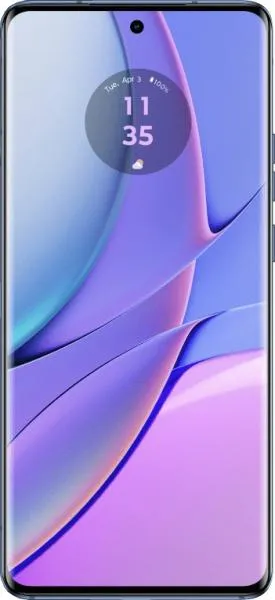
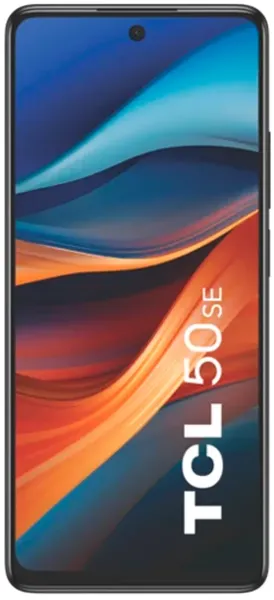
| Dimensions (mm) | 158.4 x 72 x 7.6 | 168.2 x 75.5 x 8.1 | The Motorola is significantly more compact and thinner, making it easier to hold and pocket. |
| Weight (g) | 167 | 195 | The Motorola is noticeably lighter, reducing hand fatigue during extended use. |
| Build Materials | Not specified | Not specified | Build quality and durability cannot be compared without more information. |
| Display | |||
| Display Type | P-OLED | IPS LCD | The Motorola's P-OLED offers deeper blacks, richer colors, and better power efficiency compared to the TCL's IPS LCD. |
| Display Size (inches) | 6.55 | 6.78 | The TCL offers a larger screen for more immersive media consumption, while the Motorola's smaller size enhances one-handed usability. |
| Resolution (pixels) | 1080 x 2400 | 1080 x 2460 | Similar resolutions, but the slightly smaller Motorola screen results in a sharper image (402 ppi vs 396 ppi), though the difference is negligible. |
| Refresh Rate (Hz) | 144 | 90 | The Motorola's 144Hz refresh rate provides a significantly smoother and more responsive user experience, especially for gaming and scrolling. |
| Performance | |||
| Chipset | Mediatek Dimensity 8020 (6nm) | Mediatek Helio G88 (12nm) | The Motorola's Dimensity 8020, built on a smaller process node, offers significantly better performance and power efficiency compared to the Helio G88. |
| CPU | Octa-core (4x2.6 GHz Cortex-A78 & 4x2.0 GHz Cortex-A55) | Octa-core (2x2.0 GHz Cortex-A75 & 6x1.8 GHz Cortex-A55) | The Motorola's CPU features faster cores and a more modern architecture, leading to superior performance in demanding tasks. |
| GPU | Mali-G77 MC9 | Mali-G52 MC2 | The Motorola's GPU offers considerably better graphics performance for gaming and other visually intensive applications. |
| RAM (GB) | 8 | 6/4 | The Motorola has more RAM enabling smoother multitasking and better performance with multiple apps open. |
| Camera | |||
| Main Camera (MP) | 50 | 50 | Megapixel count is similar but sensor details for the TCL are missing making a detailed comparison impossible. Motorola specifies a larger sensor size (1/1.55") suggesting potentially better low-light performance. |
| Video Recording | Up to 4K@30fps with HDR, EIS | 1080p@30fps | The Motorola offers higher resolution video recording with HDR and electronic image stabilization for smoother footage. |
| Battery | |||
| Capacity (mAh) | 4400 | 5010 | The TCL has a larger battery capacity, potentially offering longer battery life. However, real-world battery life depends on various factors including screen type and processor efficiency. |
2. Key Differences Analysis
Motorola Edge 40 Advantages:
- Significantly better performance: The Dimensity 8020 chipset, coupled with more RAM, provides a substantial performance advantage for demanding tasks and gaming.
- Smoother and more responsive display: The 144Hz P-OLED display delivers a superior visual experience compared to the TCL's 90Hz IPS LCD.
- More compact and premium design: The thinner and lighter build, combined with the use of P-OLED, contributes to a more premium feel.
- Superior video recording capabilities: 4K recording with HDR and EIS offers better quality video.
TCL 50 SE Advantages:
- Larger battery: The 5010mAh battery may provide longer usage time between charges, although real-world usage will vary.
- Larger display: The 6.78-inch screen offers a more immersive experience for media consumption.
- Lower price: Based on the provided prices, the TCL 50 SE is more affordable.
3. User Profiles & Recommendations
Motorola Edge 40: Ideal for users who prioritize performance, a smooth and responsive display, a premium design, and good camera features. Suitable for gaming, multitasking, and media consumption.
TCL 50 SE: Best suited for budget-conscious users who primarily use their phone for basic tasks like calling, texting, browsing, and social media. The larger battery and display may appeal to those who consume a lot of media.
4. Decision Framework
Key Questions for Buyers:
- What is your budget? The TCL 50 SE is significantly cheaper.
- What are your performance needs? For demanding tasks and gaming, the Motorola Edge 40 is far superior.
- What is your priority: display quality or battery life? The Motorola excels in display quality, while the TCL boasts a larger battery.
Scenario-Based Recommendations:
- Gamer: Motorola Edge 40 (superior performance and display)
- Heavy Multitasker: Motorola Edge 40 (powerful processor and ample RAM)
- Budget-Conscious User: TCL 50 SE (lower price)
- Media Consumer prioritizing screen size: TCL 50 SE (larger display)
My Choice: Motorola Edge 40
While the TCL 50 SE offers a larger battery and display at a lower price, the Motorola Edge 40's significant advantages in performance, display quality (both smoothness and color richness), and overall design make it the clear winner for me. I prioritize a smooth and responsive user experience, which the 144Hz P-OLED and powerful Dimensity 8020 deliver. The more compact form factor is also appealing. The price difference is justifiable for the substantial upgrade in quality and user experience. The superior video recording capabilities of the Motorola are also a deciding factor. While battery life is important, I'd rather have a slightly shorter battery life with a significantly better overall user experience.
