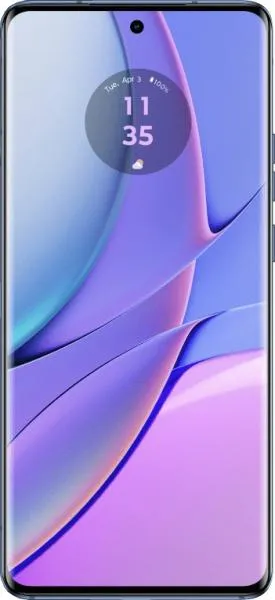
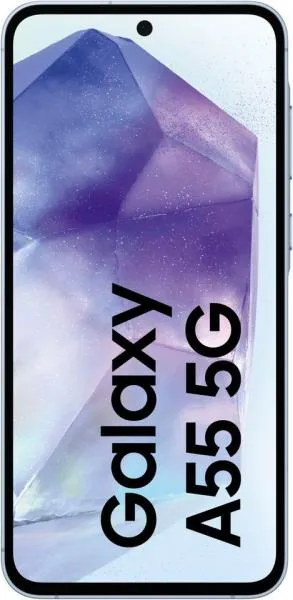
1. Specifications Comparison
| Feature | Motorola Edge 40 | Samsung Galaxy A55 | Practical Impact |
|---|---|---|---|
| Design | |||
| Dimensions (mm) | 158.4 x 72 x 7.6 | 161.1 x 77.4 x 8.2 | The Edge 40 is noticeably smaller and thinner, making it more pocketable and easier to handle one-handed. The A55 is slightly larger and heavier. |
| Weight (g) | 167 | 213 | The Edge 40 is significantly lighter, reducing hand fatigue during extended use. |
| Build | Unspecified | Unspecified | Build materials impact durability and premium feel. This information is missing. |
| Display | |||
| Display Type | P-OLED | Super AMOLED | Both offer vibrant colors and deep blacks. Subjective preference may determine the better display. |
| Size (inches) | 6.55 | 6.6 | Negligible size difference. |
| Resolution (pixels) | 1080 x 2400 | 1080 x 2340 | Virtually identical resolutions, resulting in similar sharpness. |
| Refresh Rate (Hz) | 144 | 120 | The Edge 40's higher refresh rate delivers smoother animations and scrolling, particularly noticeable in games and fast-paced content. |
| Peak Brightness (nits) | 1200 | Unspecified | The Edge 40's known high peak brightness ensures better visibility outdoors in sunlight. The A55's unspecified brightness limits comparison. |
| Performance | |||
| Chipset | Mediatek Dimensity 8020 (6 nm) | Exynos 1480 (4 nm) | The Exynos 1480's 4nm process suggests better power efficiency compared to the Dimensity 8020's 6nm process. Real-world performance depends on optimization. |
| CPU | Octa-core (4x2.6 GHz Cortex-A78 & 4x2.0 GHz Cortex-A55) | Octa-core (4x2.75 GHz Cortex-A78 & 4x2.0 GHz Cortex-A55) | The A55 has slightly faster prime cores, potentially offering a minor performance edge in demanding tasks. |
| GPU | Mali-G77 MC9 | Xclipse 530 | Direct GPU comparison is difficult without benchmarks. Both should handle everyday tasks and moderate gaming well. |
| RAM (GB) | 8 | 8/12 | The A55 offers a 12GB RAM option, providing better multitasking and potentially smoother performance with demanding apps. |
| Camera | |||
| Rear Camera | 50MP Main, 13MP Wide + Macro | 50MP Main, 13MP Wide, 5MP Macro | The A55 includes a dedicated macro lens, potentially offering better close-up shots. Both have comparable main and wide-angle sensors. Image quality depends heavily on software processing. |
| Front Camera | 32MP | 32MP | Similar resolution; real-world selfie quality depends on image processing. |
| Video Recording | Up to 4K@30fps | Up to 4K@30fps | Comparable video resolution; quality differentiation relies on features like stabilization and dynamic range. |
| Battery | |||
| Capacity (mAh) | 4400 | 5000 | The A55 boasts a significantly larger battery, likely translating to longer battery life. |
2. Key Differences Analysis
Motorola Edge 40 Advantages:
- More compact and lighter: Easier to handle and carry.
- Higher refresh rate display: Smoother user experience.
- Higher peak brightness: Better outdoor visibility.
Samsung Galaxy A55 Advantages:
- Larger battery: Potentially longer battery life.
- More RAM options: Improved multitasking for power users.
- Dedicated macro lens: Enhanced close-up photography potential.
- Newer OS with longer support: Android 14 with potential updates to 18 offers a longer software lifespan and latest features.
3. User Profiles & Recommendations
Motorola Edge 40: Users who prioritize a compact and lightweight phone with a smooth display and good performance. Ideal for one-handed use, media consumption, and moderate gaming.
Samsung Galaxy A55: Users who value long battery life, potentially need extensive multitasking capabilities (with the 12GB RAM variant), and enjoy macro photography. Suitable for heavy users, long trips without charging, and content creators.
4. Decision Framework
Key Questions for Buyers:
- How important is portability and one-handed use? Edge 40 excels here.
- How much do you value battery life? A55 likely offers longer usage.
- What is your budget and required RAM? A55's 12GB option comes at a higher price.
Scenario-Based Recommendations:
- Heavy user, needs long battery life: Samsung Galaxy A55.
- Prioritizes portability and smooth display: Motorola Edge 40.
- Budget-conscious but wants good performance: Both are contenders depending on specific pricing; consider the 8GB RAM A55 variant.
My Choice:
I would choose the Samsung Galaxy A55. While the Motorola Edge 40 offers a compelling compact design and smooth display, the A55's significantly larger battery and the availability of a 12GB RAM option are more important to me. Longer battery life significantly impacts daily usage, reducing anxiety about charging. The newer OS with extended software support ensures security and feature updates for a longer period. The dedicated macro lens, while not a primary deciding factor, adds versatility. Although I appreciate the Edge 40's lighter weight, the A55's benefits outweigh this advantage for my personal needs.
