1. Specifications Comparison
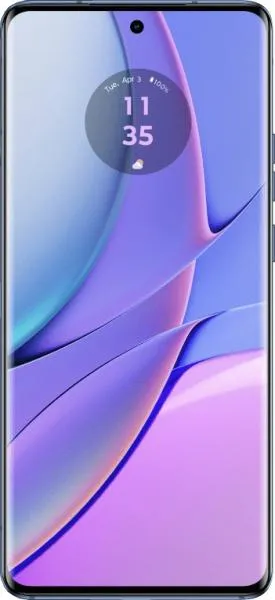
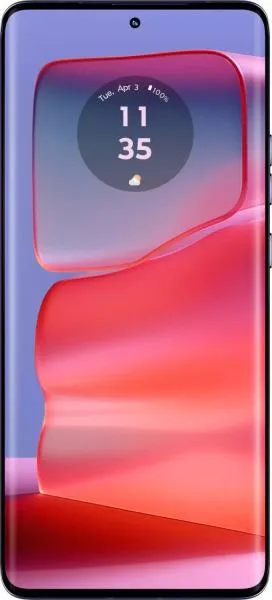
| Feature | Motorola Edge 40 | Motorola Edge 50 Pro | Practical Impact |
|---|---|---|---|
| Design | |||
| Dimensions (mm) | 158.4 x 72 x 7.6 | 161.2 x 74.2 x 8.2 | Edge 40 is noticeably smaller and thinner, making it more pocketable and easier to handle one-handed. |
| Weight (g) | 167 | 186 | The Edge 40 is significantly lighter, reducing hand fatigue during extended use. |
| Display | |||
| Display Type | P-OLED | P-OLED | Both offer vibrant colors and deep blacks. |
| Refresh Rate (Hz) | 144 | 144 | Both provide smooth scrolling and gaming experiences. |
| Display Size (inches) | 6.55 | 6.7 | Edge 50 Pro offers a slightly larger screen for more immersive content consumption. |
| Resolution | 1080 x 2400 | 1220 x 2712 | Edge 50 Pro has a sharper display due to higher resolution, but the difference might not be noticeable in everyday use. |
| Peak Brightness (nits) | 1200 | 2000 | Edge 50 Pro will be significantly more visible in direct sunlight. |
| Performance | |||
| Chipset | Mediatek Dimensity 8020 (6 nm) | Qualcomm Snapdragon 7 Gen 3 (4 nm) | Snapdragon 7 Gen 3 is generally considered more powerful and efficient, leading to better performance and battery life in the Edge 50 Pro. |
| CPU | Octa-core (4x2.6 GHz Cortex-A78 & 4x2.0 GHz Cortex-A55) | Octa-core (1x2.63 GHz Cortex-A715 & 4x2.4 GHz Cortex-A715 & 3x1.8 GHz Cortex-A510) | While both are octa-core, the architectural differences favor the Snapdragon in the Edge 50 Pro for sustained performance. |
| GPU | Mali-G77 MC9 | Adreno 720 | Adreno 720 generally offers better gaming performance than the Mali-G77 MC9. |
| RAM (GB) | 8 | 12 | More RAM in the Edge 50 Pro allows for better multitasking and smoother performance with demanding applications. |
| Camera | |||
| Main Camera (MP) | 50 | 50 | Similar resolution, but sensor details are missing to make a comprehensive comparison. |
| Ultrawide (MP) | 13 | 13 | Similar resolution, but detailed sensor information is needed for in-depth comparison. |
| Telephoto (MP) | N/A | 10 | Edge 50 Pro offers optical zoom capability, missing in the Edge 40. |
| Selfie Camera (MP) | 32 | 50 | Edge 50 Pro boasts a higher resolution selfie camera. |
| Battery | |||
| Capacity (mAh) | 4400 | 4500 | Edge 50 Pro has a slightly larger battery, potentially resulting in longer battery life. This is further enhanced by the more efficient processor. |
2. Key Differences Analysis
Motorola Edge 40 Advantages:
- Significantly smaller and lighter: More comfortable for one-handed use and portability.
- Lower price: Offers a more budget-friendly option.
Motorola Edge 50 Pro Advantages:
- More powerful processor and GPU: Better performance for demanding tasks and gaming.
- More RAM: Smoother multitasking and handling of demanding applications.
- Brighter display: Enhanced outdoor visibility.
- Larger battery: Potentially longer battery life.
- Telephoto lens: Offers optical zoom for versatile photography.
- Higher resolution selfie camera: Better quality self-portraits.
- More advanced connectivity: WiFi 7 and Bluetooth 5.4 offer faster speeds and better reliability compared to WiFi 6 and Bluetooth 5.2
3. User Profiles & Recommendations
Motorola Edge 40: Users who prioritize a compact and lightweight phone, value affordability, and have moderate performance needs (web browsing, social media, casual gaming).
Motorola Edge 50 Pro: Users who demand high performance for gaming and demanding tasks, require a bright and large display for media consumption, prioritize camera versatility with optical zoom, and need excellent connectivity.
4. Decision Framework
Key Questions for Buyers:
- What is your budget? The Edge 40 offers better value for its price.
- What is your primary use case? (e.g., gaming, photography, social media)
- Do you prioritize portability and one-handed use?
Scenario-Based Recommendations:
- Tight Budget, Casual User: Motorola Edge 40
- Power User, Gamer, Photographer: Motorola Edge 50 Pro
My Choice: Motorola Edge 50 Pro
While the Motorola Edge 40 offers excellent value for its price, the Edge 50 Pro is the superior device overall. The Snapdragon 7 Gen 3, coupled with 12GB of RAM, provides a significant performance advantage for demanding tasks and future-proofing. The brighter display, larger battery, telephoto lens, and enhanced connectivity further solidify its position as the better choice. While the Edge 40's compact size is appealing, the overall performance and feature set of the Edge 50 Pro outweigh the size difference for me. I prioritize performance, a great camera, and a future-proof device, making the Edge 50 Pro the clear winner.
