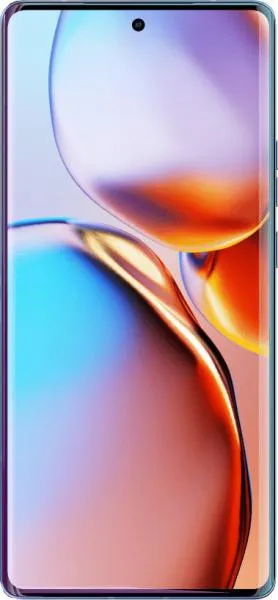
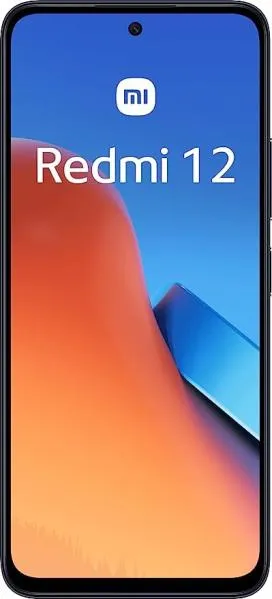
1. Specifications Comparison
| Feature | Motorola Edge 40 Pro | Xiaomi Redmi 12 | Practical Impact |
|---|---|---|---|
| Design | |||
| Dimensions (mm) | 161.2 x 74 x 8.6 | 168.6 x 76.3 x 8.2 | The Redmi 12 is noticeably larger and slightly thinner. |
| Weight (g) | 199 | 198.5 | Negligible weight difference. |
| Build | Unspecified | Unspecified | Build quality and materials cannot be compared due to lack of information. |
| Display | |||
| Display Type | 6.67" OLED, 1B colors, 165Hz | 6.79" IPS LCD, 90Hz | The Edge 40 Pro offers significantly better contrast, color accuracy, and smoother animations due to OLED technology and higher refresh rate. Redmi 12's larger screen provides slightly more viewing area. |
| Resolution | 1080 x 2400 | 1080 x 2460 | Virtually identical sharpness. |
| Peak Brightness | 1300 nits | 550 nits | The Edge 40 Pro will be much more visible in direct sunlight. |
| Performance | |||
| Chipset | Snapdragon 8 Gen 2 | Helio G88 | Massive performance difference. The Edge 40 Pro will handle demanding tasks and gaming far better. |
| CPU | Octa-core (1x3.2 GHz Cortex-X3 & 2x2.8 GHz Cortex-A715 & 2x2.8 GHz Cortex-A710 & 3x2.0 GHz Cortex-A510) | Octa-core (2x2.0 GHz Cortex-A75 & 6x1.8 GHz Cortex-A55) | Edge 40 Pro has a significantly more powerful and modern CPU architecture. |
| GPU | Adreno 740 | Mali-G52 MC2 | The Adreno 740 offers a substantial advantage in graphics performance for gaming and visually intensive applications. |
| RAM | 12GB | 8GB/4GB | The Edge 40 Pro offers more RAM for smoother multitasking and app switching. |
| Camera | |||
| Main Camera | 50MP OmniVision OV50A | 50MP Samsung S5KJN1 | While both have 50MP sensors, image quality can vary significantly due to processing and lens quality, which are not fully specified. |
| Ultrawide | 50MP Samsung S5KJN1 | 8MP Sony IMX355 | The Edge 40 Pro offers a much higher resolution ultrawide camera. |
| Telephoto | 12MP Sony IMX663 | None | The Edge 40 Pro offers optical zoom capability, absent in the Redmi 12. |
| Video Recording | Up to 8K@30fps | Up to 1080p@30fps | The Edge 40 Pro offers significantly higher resolution and frame rate video recording capabilities. |
| Battery | |||
| Capacity | 4600 mAh | 5000 mAh | The Redmi 12 has a larger battery capacity, potentially offering longer battery life. However, real-world battery life depends on factors like software optimization and display power consumption. |
2. Key Differences Analysis
Motorola Edge 40 Pro Advantages:
- Significantly higher performance: The Snapdragon 8 Gen 2 provides a vastly superior user experience for demanding tasks, gaming, and overall responsiveness.
- Superior display: The OLED screen offers vibrant colors, deeper blacks, and a smoother 165Hz refresh rate.
- More versatile camera system: Includes a high-resolution ultrawide and a telephoto lens for optical zoom. Higher quality video recording capabilities.
- Brighter display: Much more usable in outdoor environments.
Xiaomi Redmi 12 Advantages:
- Larger battery: Potential for longer battery life, although real-world usage may vary.
- Lower price: Significantly more affordable.
3. User Profiles & Recommendations
Motorola Edge 40 Pro: Ideal for users who prioritize performance, a premium display, a versatile camera system, and a smooth user experience. Suitable for demanding tasks like gaming, content creation, and multitasking.
Xiaomi Redmi 12: Suitable for budget-conscious users who prioritize basic smartphone functionality, such as calling, texting, web browsing, and social media. Less demanding users who don't play graphically intensive games.
4. Decision Framework
Key Questions for Buyers:
- What is your budget? The price difference is significant.
- What are your performance requirements? For demanding tasks and gaming, the Edge 40 Pro is essential.
- How important is display quality? The Edge 40 Pro's OLED screen is far superior.
My Choice: Motorola Edge 40 Pro
While the Redmi 12 offers a larger battery and a significantly lower price, the Motorola Edge 40 Pro is the clear winner for me. The superior performance, stunning OLED display with a high refresh rate, and the more versatile camera system are decisive factors. The Snapdragon 8 Gen 2 ensures a future-proof experience, and the overall user experience would be drastically better. I prioritize a smooth, responsive phone with a great display, and I am willing to pay a premium for that. While battery life is important, the difference in capacity doesn't outweigh the significant advantages of the Edge 40 Pro in other areas. The Redmi 12 is a good budget option, but the Edge 40 Pro is a true flagship experience.
