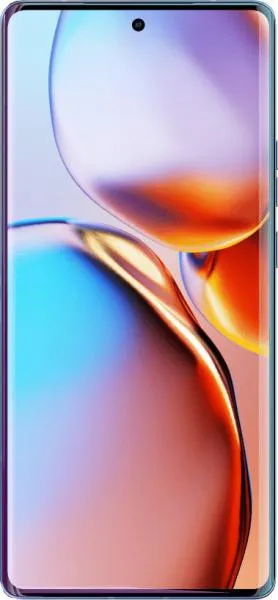
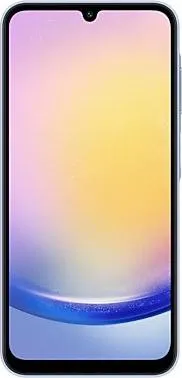
1. Specifications Comparison
| Feature | Motorola Edge 40 Pro | Samsung Galaxy A25 | Practical Impact |
|---|---|---|---|
| Design | |||
| Dimensions (mm) | 161.2 x 74 x 8.6 | 161 x 76.5 x 8.3 | Edge 40 Pro is slightly thinner, A25 slightly wider. Negligible difference in hand feel. |
| Weight (g) | 199 | 197 | Virtually identical weight. |
| Build | Missing | Missing | Build quality and materials cannot be compared due to missing information. |
| Display | |||
| Display Type | OLED | Super AMOLED | Both offer vibrant colors and deep blacks. OLED generally consumes less power. |
| Size (inches) | 6.67 | 6.5 | Edge 40 Pro offers a slightly larger screen for more immersive content consumption. |
| Resolution | 1080 x 2400 | 1080 x 2340 | Nearly identical resolution, resulting in similar sharpness. |
| Refresh Rate (Hz) | 165 | 120 | Edge 40 Pro's higher refresh rate provides smoother animations and scrolling. Noticeable in gaming and fast-paced UI interactions. |
| Peak Brightness (nits) | 1300 | 1000 | Edge 40 Pro will be significantly more visible in direct sunlight. |
| Performance | |||
| Chipset | Snapdragon 8 Gen 2 | Exynos 1280 | 8 Gen 2 is significantly more powerful, leading to much faster app loading, smoother multitasking, and better gaming performance. |
| CPU | Octa-core (1x3.2 GHz Cortex-X3 & 2x2.8 GHz Cortex-A715 & 2x2.8 GHz Cortex-A710 & 3x2.0 GHz Cortex-A510) | Octa-core (2x2.4 GHz Cortex-A78 & 6x2.0 GHz Cortex-A55) | Edge 40 Pro has a more powerful and efficient CPU architecture. |
| GPU | Adreno 740 | Mali-G68 | Adreno 740 provides a substantial advantage in graphics performance for demanding games and applications. |
| RAM (GB) | 12 | 6/8 | More RAM in Edge 40 Pro allows for more apps to run in the background and smoother multitasking. |
| Camera | |||
| Main Camera (MP) | 50 | 50 | Megapixel count is similar, but sensor quality and image processing significantly impact the final image. More details on sensor models are needed for the A25. |
| Ultrawide (MP) | 50 | 8 | The Edge 40 Pro has a much higher resolution ultrawide, capturing significantly more detail. |
| Telephoto (MP) | 12 | None | Edge 40 Pro offers optical zoom for clearer zoomed-in shots, a feature absent in the A25. |
| Video Recording | Up to 8K@30fps | Up to 4K@30fps | Edge 40 Pro offers higher resolution video recording. |
| DXOMARK Score | 130 | 92 | Edge 40 Pro scores significantly higher in overall camera quality according to DXOMARK. |
| Battery | |||
| Capacity (mAh) | 4600 | 5000 | A25 has a larger battery capacity, potentially offering longer battery life. However, the more power-efficient chip in the Edge 40 Pro could offset this. |
| Charging Speed | Missing | Missing | Charging speed comparison is not possible due to missing information. |
2. Key Differences Analysis
Motorola Edge 40 Pro Advantages:
- Significantly more powerful: Snapdragon 8 Gen 2 provides a substantial performance advantage.
- Smoother Display: 165Hz refresh rate for fluid visuals.
- Superior Camera System: Higher resolution ultrawide, telephoto lens for optical zoom, and higher DXOMARK score.
- Brighter Display: Better visibility in sunlight.
Samsung Galaxy A25 Advantages:
- Larger Battery: Potentially longer battery life, though real-world usage depends on various factors.
- Lower Price: Significantly more affordable.
3. User Profiles & Recommendations
Motorola Edge 40 Pro: Ideal for users who demand top-tier performance, a premium camera system, and a smooth display. Power users, gamers, and photography enthusiasts will appreciate this phone.
Samsung Galaxy A25: Suitable for budget-conscious users who prioritize battery life and basic smartphone functionality. Casual users who primarily use their phones for social media, browsing, and communication will find this phone adequate.
4. Decision Framework
Key Questions for Buyers:
- What is your budget? The Edge 40 Pro is significantly more expensive.
- What is your primary use case? Gaming, photography, and demanding tasks benefit from the Edge 40 Pro's power. Basic usage is well-served by the A25.
- How important is performance and camera quality? The Edge 40 Pro excels in these areas.
Scenario-Based Recommendations:
- Heavy gamer: Motorola Edge 40 Pro
- Photography enthusiast: Motorola Edge 40 Pro
- Budget-conscious user: Samsung Galaxy A25
- Casual user: Samsung Galaxy A25
My Choice: Motorola Edge 40 Pro
While the Samsung Galaxy A25 offers a lower price and potentially longer battery life, the Motorola Edge 40 Pro is the superior device overall. The significantly more powerful processor, smoother display, much better camera system, and brighter screen make it a much more compelling option for me. I prioritize performance and a premium user experience, and I'm willing to pay the premium for the Edge 40 Pro. The difference in chipset performance (Snapdragon 8 Gen 2 vs. Exynos 1280) and the inclusion of a telephoto lens are key deciding factors. While battery life is important, the power efficiency of the 8 Gen 2 might close the gap in real-world usage, and I value the other advantages more highly.
