1. Specifications Comparison
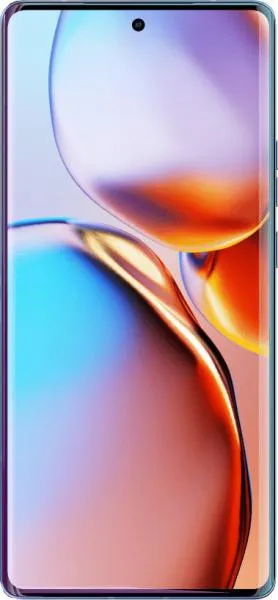
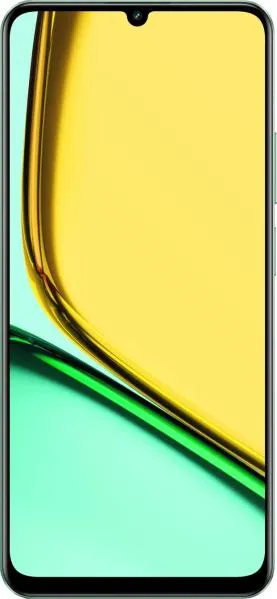
| Feature | Motorola Edge 40 Pro | Realme C61 | Practical Impact |
|---|---|---|---|
| Design | |||
| Dimensions (mm) | 161.2 x 74 x 8.6 | 167.3 x 76.7 x 7.8 | The Edge 40 Pro is slightly smaller and thinner. |
| Weight (g) | 199 | 188 | The Realme C61 is slightly lighter. |
| Build | Not specified | Not specified | Build quality impact unknown. |
| Display | |||
| Display Type | OLED, 1B colors, 165Hz | IPS LCD, 90Hz | Edge 40 Pro offers significantly better color accuracy, smoother motion, and potentially higher brightness with OLED technology and 165Hz refresh rate. |
| Display Size | 6.67" | 6.74" | Realme C61 has a marginally larger screen. |
| Resolution | 1080 x 2400 | 720 x 1600 | Edge 40 Pro has a much sharper display with higher pixel density (394 ppi vs 260 ppi). |
| Performance | |||
| Chipset | Snapdragon 8 Gen 2 | Unisoc Tiger T612 | The Snapdragon 8 Gen 2 in the Edge 40 Pro is vastly more powerful, enabling significantly faster performance in demanding tasks and gaming. |
| CPU | Octa-core (1x3.2 GHz Cortex-X3 & 2x2.8 GHz Cortex-A715 & 2x2.8 GHz Cortex-A710 & 3x2.0 GHz Cortex-A510) | Octa-core (2x1.8 GHz Cortex-A75 & 6x1.8 GHz Cortex-A55) | The Edge 40 Pro has a much more powerful and efficient CPU architecture. |
| GPU | Adreno 740 | Mali-G57 | Edge 40 Pro offers dramatically better graphics performance for gaming and visually demanding applications. |
| RAM | 12GB | 6GB | Edge 40 Pro has double the RAM, allowing for smoother multitasking and better performance with demanding apps. |
| Camera | |||
| Rear Camera | 50MP Main + 50MP Ultrawide + 12MP Telephoto | 32MP Main + 2MP Depth | Edge 40 Pro boasts a more versatile and higher resolution camera system with telephoto capabilities for optical zoom. |
| Front Camera | 60MP | 5MP | Edge 40 Pro has a much higher resolution front camera. |
| Video Recording | Up to 8K@30fps | Up to 1080p@30fps | Edge 40 Pro offers significantly higher video resolution and frame rate options. |
| Battery | |||
| Capacity | 4600 mAh | 5000 mAh | Realme C61 has a slightly larger battery capacity, potentially offering longer battery life despite having a less efficient processor. |
2. Key Differences Analysis
Motorola Edge 40 Pro Advantages:
- Significantly more powerful: Snapdragon 8 Gen 2 provides a massive performance advantage for demanding tasks, gaming, and multitasking.
- Superior display: OLED technology with 165Hz offers vibrant colors, deeper blacks, smoother scrolling, and higher peak brightness.
- More versatile camera system: Higher resolution sensors, telephoto lens with optical zoom, and superior video recording capabilities.
Realme C61 Advantages:
- Lower price: Significantly more affordable.
- Potentially longer battery life: Larger battery capacity might offset the less efficient processor.
Trade-offs:
- Performance vs. Price: Edge 40 Pro offers significantly higher performance at a much higher price point.
- Features vs. Affordability: Realme C61 compromises on features like display quality, camera capabilities, and performance to achieve a lower price.
3. User Profiles & Recommendations
Motorola Edge 40 Pro Ideal User:
- Power users who demand top-tier performance for gaming, demanding applications, and multitasking.
- Users who prioritize a high-quality display and camera experience.
Realme C61 Ideal User:
- Budget-conscious users who prioritize affordability over top-tier specifications.
- Users who primarily use their phone for basic tasks like calling, messaging, and social media browsing.
4. Decision Framework
Key Questions for Buyers:
- What is your budget? The Edge 40 Pro is significantly more expensive.
- What are your primary phone usage patterns? Demanding tasks and gaming favor the Edge 40 Pro, while basic usage is well-suited for the Realme C61.
- Which features are most important to you? Prioritize display quality, camera performance, and overall speed with the Edge 40 Pro, or affordability and potentially longer battery life with the Realme C61.
My Choice: Motorola Edge 40 Pro
Reasoning: While the Realme C61 offers excellent value for its price, I prioritize performance, display quality, and a versatile camera system. The Motorola Edge 40 Pro's Snapdragon 8 Gen 2, beautiful OLED display with 165Hz, and advanced camera setup are compelling features that significantly enhance the user experience. I am willing to invest in a higher-priced device for the significant benefits it offers in terms of speed, visuals, and overall capabilities. The smooth performance and responsiveness would greatly benefit my daily workflow and allow me to enjoy demanding mobile games without compromise.
