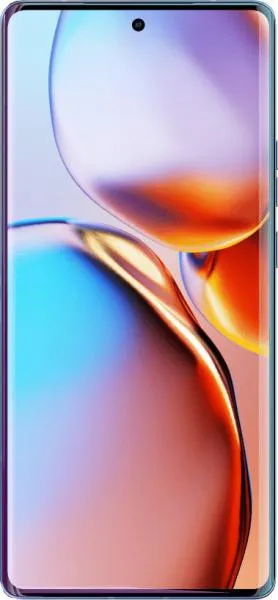
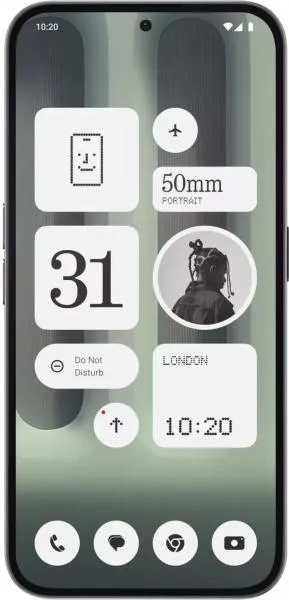
1. Specifications Comparison
| Feature | Motorola Edge 40 Pro | Nothing Phone (2a) Plus | Practical Impact |
|---|---|---|---|
| Design | |||
| Dimensions (mm) | 161.2 x 74 x 8.6 | 161.7 x 76.3 x 8.5 | Virtually identical in size; negligible real-world difference. |
| Weight (g) | 199 | 190 | Slightly lighter, but the difference is minimal in hand. |
| Build | Not specified | Not specified | Build quality and materials can significantly impact durability and feel; lack of information limits comparison. |
| Display | |||
| Display Type | OLED | AMOLED | Both offer excellent contrast and vibrant colors. |
| Display Size (inches) | 6.67 | 6.7 | Negligible size difference. |
| Resolution | 1080 x 2400 | 1084 x 2412 | Almost identical resolutions; sharpness will be indistinguishable. |
| Refresh Rate (Hz) | 165 | 120 | Smoother animations and scrolling on the Motorola; noticeable in fast-paced games and UI interactions. |
| Peak Brightness (nits) | 1300 | 1300 | Similar peak brightness; good outdoor visibility on both. |
| Performance | |||
| Chipset | Snapdragon 8 Gen 2 | Dimensity 7350 Pro | Significant performance difference; Snapdragon 8 Gen 2 provides much faster processing and graphics rendering for demanding tasks and gaming. |
| CPU | Octa-core (1x3.2 GHz Cortex-X3 & 2x2.8 GHz Cortex-A715 & 2x2.8 GHz Cortex-A710 & 3x2.0 GHz Cortex-A510) | Octa-core (2x3.0 GHz Cortex-A715 & 6x 2.0 GHz Cortex-A510) | Superior CPU performance in the Motorola, especially in multi-core workloads; faster app loading, smoother multitasking. |
| GPU | Adreno 740 | Mali-G610 MC4 | Adreno 740 offers significantly better gaming performance and graphics rendering capabilities. |
| RAM | 12GB | 12GB | Both offer ample RAM for smooth multitasking. |
| Camera | |||
| Main Camera (MP) | 50 | 50 | Resolution alone doesn't determine image quality; sensor size and processing are crucial. |
| Ultrawide (MP) | 50 | 50 | Similar resolution; real-world performance will depend on lens quality and processing. |
| Telephoto | 12MP (2x optical zoom) | No dedicated telephoto | Motorola offers optical zoom for better quality zoomed images. |
| Video Recording | Up to 8K@30fps | Up to 4K@30fps | Motorola supports higher resolution video recording. |
| Battery | |||
| Capacity (mAh) | 4600 | 5000 | Larger battery in the Nothing Phone suggests potentially longer battery life, but real-world usage varies greatly. |
| Charging Speed | Not specified | Not specified | Charging speed significantly impacts usability; lacking this information hinders comparison. |
2. Key Differences Analysis
Motorola Edge 40 Pro Advantages:
- Significantly superior performance: The Snapdragon 8 Gen 2 offers a substantial advantage in processing power and graphics capabilities.
- Higher refresh rate display: Smoother and more responsive user experience.
- Dedicated telephoto lens: Provides optical zoom for better image quality.
- Higher resolution video recording: Captures more detail in videos.
- Wi-fi 7: Latest Wi-fi technology for faster speeds and lower latency. However, widespread adoption is still limited.
- USB 3.2: Faster data transfer speeds compared to USB 2.0 on the Nothing Phone.
Nothing Phone (2a) Plus Advantages:
- Larger battery: Potential for longer battery life.
- Lower price: Offers better value for users with less demanding performance needs.
3. User Profiles & Recommendations
Motorola Edge 40 Pro: Ideal for power users, gamers, and those who prioritize performance, a smooth display, and camera versatility.
Nothing Phone (2a) Plus: Suitable for budget-conscious users who prioritize battery life and general everyday usage over peak performance.
4. Decision Framework
Key Questions for Buyers:
- What is your budget? The Motorola is significantly more expensive.
- What are your primary use cases? Gaming, demanding apps, and content creation benefit from the Motorola's power.
- How important is battery life? While the Nothing Phone has a larger battery, real-world battery life depends on usage patterns.
My Choice: Motorola Edge 40 Pro
While the Nothing Phone (2a) Plus offers a compelling price, the Motorola Edge 40 Pro's significantly superior performance, higher refresh rate display, and more versatile camera system make it my preferred choice. The Snapdragon 8 Gen 2 provides a noticeable real-world difference in responsiveness and future-proofing. I am willing to pay the premium for the enhanced user experience and longevity offered by the Motorola. The inclusion of Wi-Fi 7 and USB 3.2 also provides cutting-edge connectivity, though the benefits may not be immediately realized for all users.
