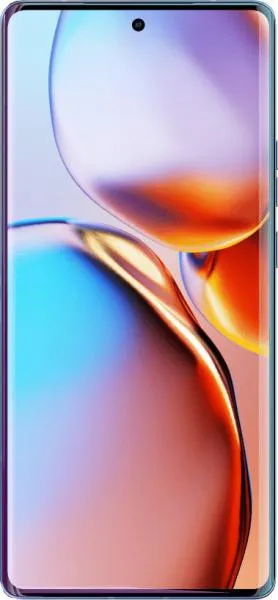
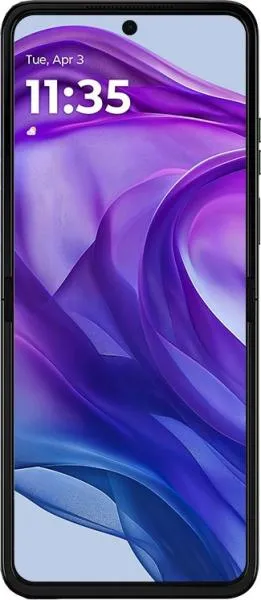
1. Specifications Comparison
| Feature | Motorola Edge 40 Pro | Motorola Razr 50 Ultra | Practical Impact |
|---|---|---|---|
| Design | |||
| Dimensions (mm) | 161.2 x 74 x 8.6 | 171.4 x 74 x 7.1 | Razr 50 Ultra is taller and significantly thinner due to its foldable design, but wider when unfolded. Edge 40 Pro is a more traditional slab phone design. |
| Weight (g) | 199 | 189 | Razr 50 Ultra is slightly lighter despite its larger display. |
| Foldable | No | Yes | Razr 50 Ultra offers a compact folded size for pocketability, transforming into a larger screen when needed. Edge 40 Pro offers a larger screen consistently. |
| Display | |||
| Display Size (inches) | 6.67 | 6.9 | Razr 50 Ultra has a slightly larger main display. |
| Resolution (px) | 1080 x 2400 | 1080 x 2640 | Both have similar sharpness, but Razr 50 Ultra is slightly taller. |
| Display Type | OLED | Foldable LTPO AMOLED | Razr's foldable LTPO AMOLED likely offers better power efficiency and potentially brighter outdoors visibility due to the 3000 nits peak brightness, although real-world battery life depends on usage. |
| Refresh Rate (Hz) | 165 | 165 | Both offer smooth scrolling and animations. |
| Performance | |||
| Chipset | Snapdragon 8 Gen 2 | Snapdragon 8+ Gen 1 | Edge 40 Pro has a significantly more powerful and newer processor, resulting in faster performance, better multitasking, and smoother gaming. |
| CPU | Octa-core (1x3.2 GHz Cortex-X3 & 2x2.8 GHz Cortex-A715 & 2x2.8 GHz Cortex-A710 & 3x2.0 GHz Cortex-A510) | Octa-core (1x3.0 GHz Cortex-X4 & 4x2.8 GHz Cortex-A720 & 3x2.0 GHz Cortex-A520) | Edge 40 Pro's CPU architecture, combined with the newer generation chip, delivers a performance advantage. |
| GPU | Adreno 740 | Adreno 735 | Edge 40 Pro boasts a more powerful GPU, leading to improved graphics performance in demanding games and applications. |
| RAM (GB) | 12 | 12 | Both offer ample RAM for multitasking. |
| Camera | |||
| Main Camera (MP) | 50 | 50 | Comparable resolution, but sensor and image processing differences will likely impact image quality. We need more details (e.g., sensor size, aperture) for a comprehensive comparison. |
| Triple Camera | Dual Camera | Edge 40 Pro offers a dedicated telephoto lens for optical zoom, while the Razr 50 Ultra has a telephoto + portrait lens. More information is needed to compare their capabilities. | |
| Battery | |||
| Capacity (mAh) | 4600 | 3800 | Edge 40 Pro has a significantly larger battery, potentially offering longer battery life. However, the Razr's LTPO display could offset this difference somewhat. |
| Other | |||
| OS | Android 13 (upgradable to 16) | Android 14 (upgradable to 17) | Razr 50 Ultra launches with a newer Android version and will likely receive updates for a longer period. |
| USB Version | 3.2 | 2.0 | Edge 40 Pro offers significantly faster data transfer speeds. |
| Price Range | High | Medium | Razr 50 Ultra offers compelling features at a lower price point than the Edge 40 Pro. |
2. Key Differences Analysis
Motorola Edge 40 Pro Advantages:
- Superior Performance: Significantly faster processor and GPU.
- Larger Battery: Potentially longer battery life.
- Faster Data Transfer: USB 3.2 provides quicker data transfer speeds.
- Triple Camera System: Offers more versatility with a dedicated telephoto lens.
Motorola Razr 50 Ultra Advantages:
- Foldable Design: Offers compact portability and a larger screen when unfolded.
- Newer Android Version: Comes with Android 14 and potentially longer software update support.
- More Affordable: Lower price point for a flagship-level experience.
- Brighter Display: Significantly brighter peak brightness for better outdoor visibility.
3. User Profiles & Recommendations
Motorola Edge 40 Pro: Ideal for users who prioritize performance, battery life, and a traditional smartphone experience. Best for power users, gamers, and those who need fast data transfer speeds.
Motorola Razr 50 Ultra: Best for users who value portability and a unique, innovative design. Suitable for those who prioritize a compact phone without sacrificing screen size when needed.
4. Decision Framework
Key Questions for Buyers:
- How important is portability? If compactness is paramount, the Razr 50 Ultra is the clear choice.
- What is your budget? The Razr 50 Ultra offers a more compelling price-to-performance ratio.
- What are your performance needs? For demanding tasks and gaming, the Edge 40 Pro's superior hardware is crucial.
My Choice: Motorola Edge 40 Pro
While the foldable design of the Razr 50 Ultra is appealing, the significant performance advantage of the Edge 40 Pro, coupled with its larger battery, is more compelling for my needs. I prioritize a smooth user experience, fast app loading, and long battery life, which the Edge 40 Pro delivers. The newer chipset and more powerful GPU will provide a better experience for gaming and demanding tasks, making it a more future-proof choice. Although the Razr 50 Ultra is more affordable, the performance difference is substantial enough to justify the higher price for me. The USB 3.2 faster data transfer is a bonus for quickly moving files. While I appreciate the Razr's compactness, I prefer the consistent large-screen experience of a traditional slab phone.
