1. Specifications Comparison
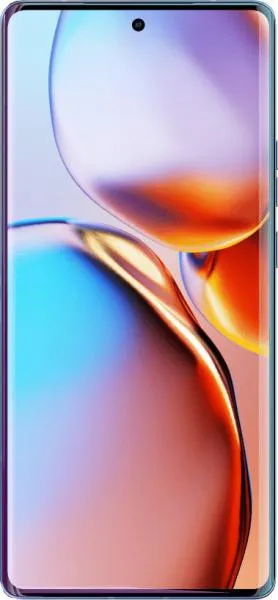
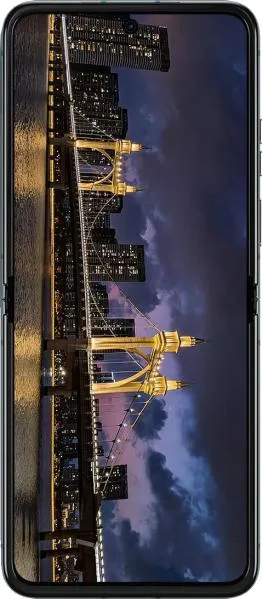
| Feature | Motorola Edge 40 Pro | Motorola Razr 40 Ultra | Practical Impact |
|---|---|---|---|
| Design | |||
| Dimensions (mm) | 161.2 x 74 x 8.6 | 170.8 x 74 x 7 | Razr 40 Ultra significantly more compact when folded, but taller when unfolded. Edge 40 Pro thinner overall. |
| Weight (g) | 199 | 184.5 | Razr 40 Ultra lighter despite larger main display due to foldable design. |
| Foldable | No | Yes | Razr's foldable design offers portability and a unique form factor, but introduces potential durability concerns. |
| Display | |||
| Display Type | OLED | Foldable LTPO AMOLED | Razr uses a potentially more power-efficient LTPO display, but its crease and durability are factors to consider. |
| Size (inches) | 6.67 | 6.9 (Main), 3.6 (Cover) | Razr offers a larger main display for immersive content, plus a functional cover screen for quick tasks. |
| Resolution | 1080 x 2400 | 1080 x 2640 (Main), 1056 x 1066 (Cover) | Both offer sharp displays, but Razr's taller aspect ratio provides more vertical space. Cover screen allows for notifications and basic interactions without unfolding. |
| Refresh Rate (Hz) | 165 | 165 | Both offer smooth scrolling and animations. |
| Peak Brightness (nits) | 1300 | 1400 | Razr's higher peak brightness improves outdoor visibility. |
| Performance | |||
| Chipset | Snapdragon 8 Gen 2 | Snapdragon 8+ Gen 1 | Edge 40 Pro boasts a newer, more powerful and efficient chipset, resulting in better performance and potentially longer battery life. |
| CPU | Octa-core (1x3.2 GHz X3 & 2x2.8 GHz A715 & 2x2.8 GHz A710 & 3x2.0 GHz A510) | Octa-core (1x3.19 GHz X2 & 3x2.75 GHz A710 & 4x1.80 GHz A510) | Edge 40 Pro's CPU configuration offers a performance advantage in demanding tasks. |
| GPU | Adreno 740 | Adreno 730 | Edge 40 Pro's superior GPU provides smoother gaming and faster graphics rendering. |
| RAM (GB) | 12 | 8/12 (Variant Dependent) | More RAM in the Edge 40 Pro (in the compared variant) enables better multitasking and app switching. |
| Camera | |||
| Main Camera (MP) | 50 | 12 | Edge 40 Pro boasts higher resolution main sensor, potentially capturing more detail. However, megapixels alone don't guarantee image quality. Missing sensor model information for Razr hinders detailed comparison. |
| Ultrawide (MP) | 50 | 13 | Edge 40 Pro features a higher resolution ultrawide sensor. |
| Telephoto (MP) | 12 | None | Edge 40 Pro offers optical zoom capability, absent in the Razr. |
| Video Recording | Up to 8K@30fps | Up to 4K@60fps | Edge 40 Pro supports higher resolution video recording. |
| Battery | |||
| Capacity (mAh) | 4600 | 3800 | Edge 40 Pro offers significantly larger battery capacity, potentially translating to longer usage time. |
2. Key Differences Analysis
Motorola Edge 40 Pro Advantages:
- Superior Performance: Newer, more powerful chipset and GPU, more RAM.
- Better Camera System: Higher resolution sensors, optical zoom.
- Larger Battery: Significantly higher capacity.
- Wi-Fi 7 support: Latest Wi-Fi standard for faster speeds (where available).
Motorola Razr 40 Ultra Advantages:
- Foldable Design: Compact portability and unique form factor.
- External Display: Functional cover screen for quick interactions.
- Lighter Weight: Easier to carry and hold.
- Higher Peak Brightness: Better outdoor visibility.
- Lower Price: Offers compelling features at a more accessible price point.
3. User Profiles & Recommendations
Motorola Edge 40 Pro: Power users, gamers, photography enthusiasts, those prioritizing performance and battery life.
Motorola Razr 40 Ultra: Style-conscious users, those valuing portability and compactness above raw performance, users who utilize the cover screen for quick interactions.
4. Decision Framework
Key Questions:
- Is portability a top priority? Razr's foldable design wins here.
- What is your budget? Razr 40 Ultra generally offers better value.
- Are peak performance and camera quality crucial? Edge 40 Pro excels in these areas.
Scenario-Based Recommendations:
- Heavy user needing top performance: Edge 40 Pro
- Style-conscious user on a budget: Razr 40 Ultra
- User prioritizing portability and quick interactions: Razr 40 Ultra
My Choice: Motorola Edge 40 Pro
While the Razr 40 Ultra's foldable design is intriguing, the Edge 40 Pro's superior performance, camera system, and battery life are more important to me. I prioritize a smooth, lag-free experience, high-quality photos and videos, and all-day battery life. The slightly larger size and weight are acceptable trade-offs for these benefits. The newer, more powerful chip in the Edge 40 Pro offers future-proofing and better sustained performance. While the Razr's cover screen is useful, it doesn't outweigh the significant advantages of the Edge 40 Pro in core functionality. The price difference is significant but justified by the performance gap.
