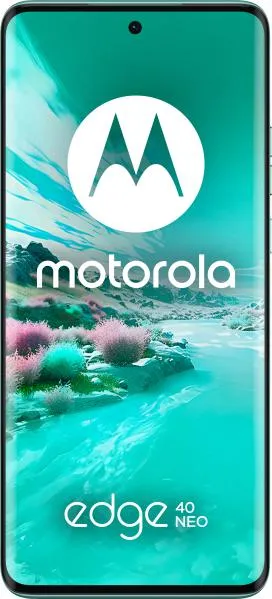

1. Specifications Comparison
| Feature | Motorola Edge 40 Neo | Samsung Galaxy M35 | Practical Impact |
|---|---|---|---|
| Design | |||
| Dimensions | 159.6 x 72 x 7.9 mm | 162.3 x 78.6 x 9.1 mm | The Motorola is noticeably smaller and thinner, making it more pocketable and easier to handle one-handed. The Samsung is larger and heavier. |
| Weight | 170g | 222g | Significant weight difference; the Motorola will feel much lighter in hand and less fatiguing to use for extended periods. |
| Fingerprint Sensor | Under display | Side-mounted | Preference-dependent; under-display is often perceived as more modern, side-mounted can be quicker to access. |
| Display | |||
| Display Type | P-OLED, 1B colors, 144Hz, HDR10+ | Super AMOLED, 120Hz, 1000 nits (HBM) | Both offer vibrant colors and deep blacks. The Motorola's 144Hz refresh rate will provide smoother scrolling and animations compared to the Samsung's 120Hz. Impact of P-OLED vs Super AMOLED is negligible for most users. We lack information on HDR support for the Samsung. |
| Peak Brightness | 1300 nits | Not specified (1000 nits HBM) | The Motorola's higher peak brightness ensures better visibility in direct sunlight. HBM on the Samsung suggests high brightness for specific content but we don't have a peak brightness value for comparison. |
| Resolution | 1080 x 2400 | 1080 x 2340 | Virtually identical pixel density, resulting in similar sharpness. |
| Performance | |||
| Chipset | MediaTek Dimensity 7030 (6 nm) | Exynos 1380 (5 nm) | The Exynos 1380 generally offers better performance and efficiency due to its more advanced 5nm process. |
| CPU | Octa-core (2x2.5 GHz Cortex-A78 & 6x2.0 GHz Cortex-A55) | Octa-core (4x2.4 GHz Cortex-A78 & 4x2.0 GHz Cortex-A55) | The Exynos 1380 likely provides a performance advantage with its faster and more numerous performance cores. |
| GPU | Mali-G610 MC3 | Mali-G68 MP5 | The Mali-G68 MP5 in the Samsung offers significantly better graphics performance, benefiting gaming and other graphically demanding tasks. |
| RAM | 12GB | 8GB | The Motorola offers more RAM, enabling better multitasking and smoother performance with multiple apps open. |
| Battery | |||
| Capacity | 5000 mAh | 6000 mAh | The Samsung offers a larger battery capacity, potentially translating to longer battery life. However, real-world usage will depend on various factors, including display settings and usage patterns. |
| Camera | |||
| Video Capabilities | 4K@30fps, 1080p at various frame rates up to 240fps | 4K@30fps, 1080p at various frame rates, 720p@480fps | Both offer standard video recording options. The Samsung boasts 720p slow-motion at 480fps, while the Motorola offers higher resolution 1080p slow-motion at 240fps. Missing details on still camera capabilities for both phones limit a full comparison. |
2. Key Differences Analysis
Motorola Edge 40 Neo Advantages:
- Smaller and Lighter: Significantly more compact and easier to handle.
- Higher Refresh Rate Display: Smoother scrolling and animations.
- Brighter Display: Better outdoor visibility.
- More RAM: Improved multitasking.
Samsung Galaxy M35 Advantages:
- More Powerful Processor and GPU: Better overall performance for demanding tasks and gaming.
- Larger Battery: Potentially longer battery life.
- Higher Resolution Slow-Motion Video: Captures more detail in slow-motion footage.
3. User Profiles & Recommendations
Motorola Edge 40 Neo: Ideal for users prioritizing one-handed usability, a smooth display, and portability. Excellent for web browsing, social media, and everyday tasks.
Samsung Galaxy M35: Suitable for users who demand performance for gaming, video editing, or other resource-intensive applications. The larger battery appeals to heavy users.
4. Decision Framework
Key Questions for Buyers:
- What is your budget and how important is price to you? Both are mid-range, but slight price differences might exist.
- What is your primary use case? (Gaming, social media, productivity, etc.)
- Do you prioritize portability and one-handed use or performance and battery life?
My Choice: Samsung Galaxy M35
While the Motorola Edge 40 Neo offers a compelling combination of portability and a smooth display, the Samsung Galaxy M35's superior performance and larger battery are more important to me. The Exynos 1380 provides a significant advantage in processing power and graphics capabilities, which will result in a more future-proof device capable of handling demanding tasks and games. The larger battery also addresses my need for extended usage without frequent charging. Though the M35 is heavier and larger, I prioritize performance and battery life over ultimate portability. The slightly slower refresh rate is a trade-off I'm willing to make. I acknowledge the lack of full camera specifications hinders a complete assessment, but based on the available information, the M35 better suits my needs.
