1. Specifications Comparison
| Feature | Huawei P60 Pro | Xiaomi Redmi 14C | Practical Impact |
|---|---|---|---|
| Design | |||
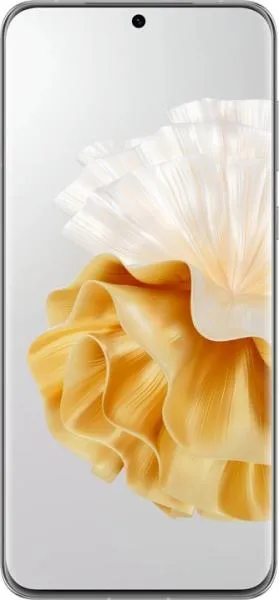
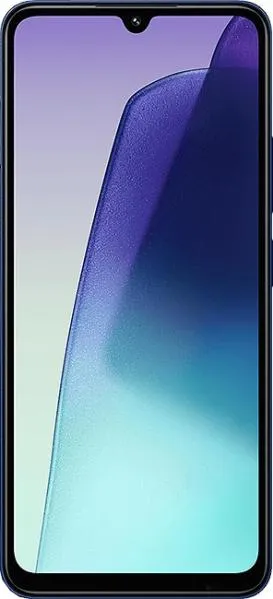
| Dimensions (mm) | 161 x 74.5 x 8.3 | 171.9 x 77.8 x 8.2 | P60 Pro is significantly more compact and pocketable. |
| Weight (g) | 200 | 211 | P60 Pro is noticeably lighter. |
| Build | Missing | Missing | Build quality and materials cannot be compared. |
| Display | |||
| Display Type | LTPO OLED | IPS LCD | P60 Pro offers superior contrast, deeper blacks, and potentially better power efficiency due to LTPO. Redmi 14C's LCD may be brighter in direct sunlight. |
| Size (inches) | 6.67 | 6.88 | Redmi 14C has a slightly larger screen for media consumption. |
| Resolution | 1220 x 2700 | 720 x 1640 | P60 Pro boasts much sharper visuals and text clarity due to higher resolution and pixel density (444 ppi vs 260 ppi). |
| Refresh Rate | 120Hz | 120Hz | Both offer smooth scrolling and animations. |
| Performance | |||
| Chipset | Snapdragon 8+ Gen 1 4G | MediaTek Helio G81 Ultra | P60 Pro offers significantly faster processing speeds, smoother multitasking, and better gaming performance. |
| CPU | Octa-core (1x3.19 GHz Cortex-X2 & 3x2.75 GHz Cortex-A710 & 4x2.0 GHz Cortex-A510) | Octa-core (2x2.0 GHz Cortex-A75 & 6x1.8 GHz Cortex-A55) | P60 Pro's CPU architecture is considerably more powerful and efficient. |
| GPU | Adreno 730 | Mali-G52 MC2 | P60 Pro provides a substantially better gaming and graphics rendering experience. |
| RAM | 8GB/12GB | 4GB/6GB/8GB | P60 Pro offers more RAM for seamless multitasking and demanding applications. Lower RAM on Redmi 14C may lead to performance limitations. |
| Camera | |||
| Main Camera | 48MP (Sony IMX888) | 50MP | P60 Pro utilizes a known high-quality sensor (IMX888), likely resulting in better image quality despite lower resolution. Sensor details missing for Redmi 14C. |
| Telephoto | 48MP (Omnivision) | None | P60 Pro offers optical zoom capabilities, enabling clearer zoomed-in shots. Redmi 14C relies on digital zoom. |
| Ultrawide | 13MP | 0.8MP (likely a depth sensor, not ultrawide) | P60 Pro offers a usable ultrawide camera, while Redmi 14C's secondary camera is likely for depth sensing only. |
| Video | Up to 4K@60fps with EIS | Up to 1080p@30fps | P60 Pro provides higher resolution and frame rate video recording with better stabilization. |
| Battery | |||
| Capacity | 4815 mAh | 5160 mAh | Redmi 14C has a slightly larger battery capacity, potentially offering longer battery life. |
| Charging | 88W wired, 50W wireless | 18W wired | P60 Pro offers significantly faster charging, minimizing downtime. |
2. Key Differences Analysis
Huawei P60 Pro Advantages:
- Superior Performance: Significantly faster processor, GPU, and more RAM for a smooth and responsive user experience.
- High-Quality Display: Sharper, more vibrant OLED display with LTPO for potentially better power efficiency.
- Versatile Camera System: High-quality main and telephoto cameras with optical zoom capabilities.
- Faster Charging: Significantly faster wired and wireless charging.
- More Compact Design: Easier to handle and carry.
Xiaomi Redmi 14C Advantages:
- Larger Battery: Potentially longer battery life.
- Lower Price: Significantly more affordable.
- Larger Display: More screen real-estate for media consumption.
Trade-offs:
- P60 Pro: Higher price, lack of 5G connectivity (using a 4G variant of the Snapdragon 8+ Gen 1).
- Redmi 14C: Lower performance, less impressive display, basic camera system, slower charging.
3. User Profiles & Recommendations
Huawei P60 Pro: Users who prioritize performance, camera quality, a premium display, and fast charging. Ideal for demanding tasks, gaming, photography enthusiasts, and those who value a compact design.
Xiaomi Redmi 14C: Budget-conscious users who prioritize basic functionality, long battery life, and a large display for media consumption. Suitable for light users, social media browsing, and casual content consumption.
4. Decision Framework
Key Questions:
- What is your budget? The P60 Pro is significantly more expensive.
- What are your performance requirements? For demanding tasks and gaming, the P60 Pro is essential.
- What are your photography needs? The P60 Pro's camera system is vastly superior.
Scenario-Based Recommendations:
- Heavy User: P60 Pro if budget allows.
- Light User on a Budget: Redmi 14C.
- Photographer/Videographer: P60 Pro.
- Gamer: P60 Pro.
My Choice: Huawei P60 Pro
While significantly more expensive, the Huawei P60 Pro offers a vastly superior overall experience. The performance difference between the Snapdragon 8+ Gen 1 and the Helio G81 Ultra is substantial, impacting daily usability, multitasking, and gaming. The P60 Pro's stunning OLED display, versatile camera system with optical zoom, and blazing-fast charging make it a compelling device. Although the Redmi 14C offers a larger battery and lower price, the compromises in performance, display, and camera are too significant for me. The lack of 5G in the P60 Pro is a drawback, but considering the overall package and my personal needs, it's a compromise I'm willing to make for the superior user experience. The compact form factor of the P60 Pro is also a significant advantage for me.
