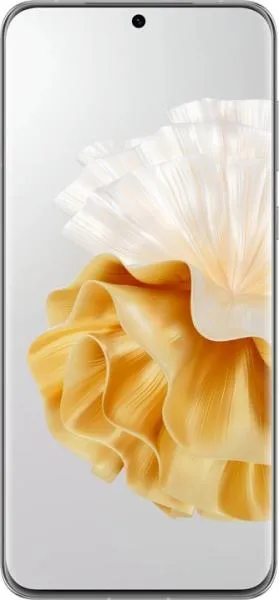
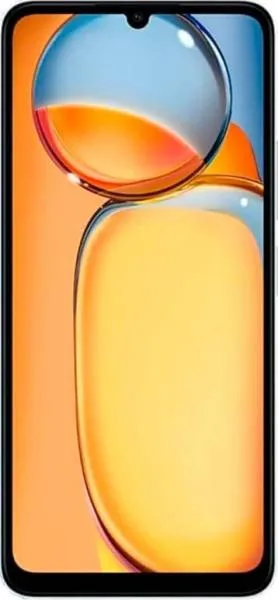
1. Specifications Comparison
| Feature | Huawei P60 Pro | Xiaomi Redmi 13C | Practical Impact |
|---|---|---|---|
| Design | |||
| Dimensions (mm) | 161 x 74.5 x 8.3 | 168 x 78 x 8.1 | P60 Pro is slightly smaller and thinner. Redmi 13C is taller and wider. |
| Weight (g) | 200 | 192 | Negligible weight difference in practical use. |
| Build | Missing | Missing | Build quality and materials cannot be compared. |
| Display | |||
| Display Type | LTPO OLED | IPS LCD | P60 Pro offers superior contrast, deeper blacks, and potentially better power efficiency due to LTPO. Redmi 13C's IPS LCD is generally less vibrant. |
| Size (inches) | 6.67 | 6.74 | Redmi 13C has a marginally larger screen. |
| Resolution | 1220 x 2700 | 720 x 1600 | P60 Pro has a significantly sharper display (444 ppi vs 260 ppi), resulting in much clearer text and images. |
| Refresh Rate | 120Hz | 90Hz | P60 Pro offers smoother scrolling and animations. |
| Performance | |||
| Chipset | Snapdragon 8+ Gen 1 4G | MediaTek Helio G85 | P60 Pro boasts a flagship-level processor, enabling significantly faster performance in demanding tasks, gaming, and multitasking. Redmi 13C's processor is budget-oriented and suitable for basic tasks. |
| CPU | Octa-core (1x3.19 GHz Cortex-X2 & 3x2.75 GHz Cortex-A710 & 4x2.0 GHz Cortex-A510) | Octa-core (2x2.0 GHz Cortex-A75 & 6x1.8 GHz Cortex-A55) | P60 Pro's CPU architecture is more powerful and efficient. |
| GPU | Adreno 730 | Mali-G52 MC2 | P60 Pro provides a much more powerful GPU for a superior gaming and graphics-intensive application experience. |
| RAM | 8GB/12GB | 4GB/6GB/8GB | P60 Pro offers more RAM in its higher-end configurations, enhancing multitasking and overall system responsiveness. |
| Camera | |||
| Main Camera | 48MP (Sony IMX888) | 50MP (Samsung S5KJN1) | While Redmi 13C has a higher megapixel count, P60 Pro uses a larger, more advanced sensor (Sony IMX888) which generally leads to better image quality, especially in low light. P60 Pro also has superior optics (f/1.4 aperture). |
| Other Cameras | 13MP Wide, 48MP Telephoto | 2MP Macro, 0.8MP unspecified | P60 Pro features a versatile camera system with wide-angle and a high-resolution telephoto lens. Redmi 13C's secondary cameras are less capable. |
| Video | Up to 4K@60fps with EIS | 1080p@30fps | P60 Pro supports higher resolution and frame rate video recording with Electronic Image Stabilization. |
| Battery | |||
| Capacity | 4815 mAh | 5000 mAh | Redmi 13C has a slightly larger battery capacity. |
| Charging | 88W wired, 50W wireless | 18W wired | P60 Pro offers significantly faster wired and wireless charging. |
2. Key Differences Analysis
Huawei P60 Pro Advantages:
- Significantly superior performance: The Snapdragon 8+ Gen 1 provides a flagship-level experience.
- Higher quality display: Sharper, more vibrant, and smoother with LTPO technology.
- More versatile camera system: High-quality main sensor, telephoto lens, and superior low-light performance.
- Faster charging: Significantly faster wired and wireless charging.
Xiaomi Redmi 13C Advantages:
- Larger battery: Potentially longer battery life, but real-world usage will depend on various factors.
- Lower price: Significantly more affordable.
Trade-offs:
- P60 Pro: Higher price, lacks 5G connectivity (using a 4G version of the Snapdragon 8+ Gen 1).
- Redmi 13C: Lower performance, less impressive display, basic camera system, slower charging.
3. User Profiles & Recommendations
Huawei P60 Pro: Users who prioritize performance, a premium display, excellent camera quality, and fast charging. Ideal for demanding tasks, gaming, content creation, and photography enthusiasts.
Xiaomi Redmi 13C: Budget-conscious users who prioritize basic functionality and long battery life. Suitable for casual use, web browsing, social media, and light gaming. Price-to-value ratio is high for its segment.
4. Decision Framework
Key Questions:
- What is your budget? The P60 Pro is a high-end phone, while the Redmi 13C is a budget device.
- What are your primary smartphone usage patterns? Demanding tasks and gaming benefit from the P60 Pro's performance. Basic usage will be adequately covered by the Redmi 13C.
- Which features are most important to you? Prioritize camera, display, performance, or battery life based on individual needs.
Scenario-Based Recommendations:
- Heavy user, gamer, photographer: Huawei P60 Pro
- Casual user, budget-conscious: Xiaomi Redmi 13C
My Choice: Huawei P60 Pro
While the lack of 5G in the provided specifications is a drawback, the Huawei P60 Pro is the clear winner for me. I prioritize a smooth and responsive user experience, a high-quality display for consuming media, and a versatile camera system for capturing memories. The P60 Pro excels in all these areas, offering a flagship-level experience. The significant performance difference, superior display, and advanced camera system outweigh the higher price and lack of 5G for my personal needs. The Redmi 13C is a great value proposition for its price point, but it doesn't meet my personal requirements for a daily driver.
