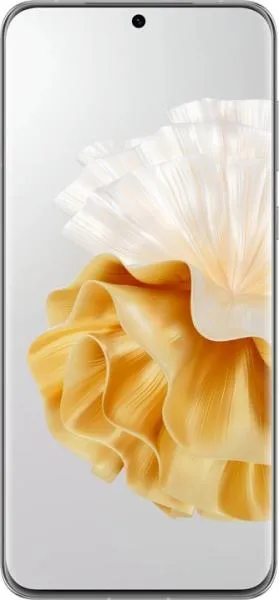
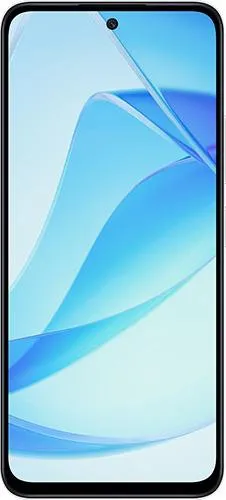
1. Specifications Comparison
| Feature | Huawei P60 Pro | Xiaomi Redmi 12 5G | Practical Impact |
|---|---|---|---|
| Design | |||
| Dimensions (mm) | 161 x 74.5 x 8.3 | 168.6 x 76.3 x 8.2 | P60 Pro is slightly smaller and thinner. Redmi 12 5G is slightly taller. |
| Weight (g) | 200 | 199 | Negligible weight difference. |
| Build | Missing | Missing | Build quality and materials cannot be compared. |
| Display | |||
| Display Type | LTPO OLED | IPS LCD | P60 Pro offers superior contrast, deeper blacks, and potentially better power efficiency due to LTPO. Redmi 12 5G's IPS LCD is generally less vibrant. |
| Display Size (inches) | 6.67 | 6.79 | Redmi 12 5G has a slightly larger display. |
| Resolution | 1220 x 2700 | 1080 x 2460 | P60 Pro has a sharper display with higher pixel density (444 ppi vs 396 ppi), resulting in crisper text and images. |
| Refresh Rate (Hz) | 120 | 90 | P60 Pro offers smoother scrolling and animations thanks to the higher refresh rate. |
| Performance | |||
| Chipset | Snapdragon 8+ Gen 1 4G (4 nm) | Snapdragon 4 Gen 2 (4 nm) | P60 Pro boasts a significantly more powerful processor, leading to much faster performance in demanding tasks, gaming, and multitasking. |
| CPU | Octa-core (1x3.19 GHz Cortex-X2 & 3x2.75 GHz Cortex-A710 & 4x2.0 GHz Cortex-A510) | Octa-core (2x2.2 GHz Cortex-A78 & 6x1.95 GHz Cortex-A55) | P60 Pro's CPU architecture is superior, offering higher clock speeds and more powerful cores. |
| GPU | Adreno 730 | Adreno 613 | P60 Pro's GPU is considerably more powerful, resulting in significantly better gaming performance and graphics rendering. |
| RAM | 8GB/12GB | 4GB/6GB/8GB | P60 Pro offers more RAM in its higher-end configurations, enabling better multitasking and app performance. |
| Camera | |||
| Main Camera (MP) | 48 | 50 | Megapixel count doesn't tell the whole story. P60 Pro utilizes a larger sensor (1/1.4") and wider aperture (f/1.4) for significantly better low-light performance and depth of field. |
| Telephoto | Yes (48MP) | No | P60 Pro offers optical zoom capabilities, absent in the Redmi 12 5G. |
| DXOMARK Score | 156 | 63 | P60 Pro's significantly higher DXOMARK score indicates superior overall camera quality. |
| Battery | |||
| Capacity (mAh) | 4815 | 5000 | Redmi 12 5G has a slightly larger battery capacity. |
| Fast Charging | 88W | 18W | P60 Pro charges significantly faster. |
| Wireless Charging | 50W | No | P60 Pro supports fast wireless charging, a feature absent in the Redmi 12 5G. |
2. Key Differences Analysis
Huawei P60 Pro Advantages:
- Significantly superior performance: The Snapdragon 8+ Gen 1 outclasses the Snapdragon 4 Gen 2 in all aspects.
- Much better display: The LTPO OLED offers higher resolution, refresh rate, and superior image quality.
- Faster charging and wireless charging: 88W wired and 50W wireless charging provide unmatched convenience.
- Superior camera system: Larger sensor, wider aperture, and telephoto lens result in much better image quality.
Xiaomi Redmi 12 5G Advantages:
- Lower price: Significantly more affordable.
- Slightly larger battery: Potentially longer battery life, though impacted by the less efficient display.
- 5G Connectivity: Supports 5G networks, while P60 Pro is limited to 4G.
3. User Profiles & Recommendations
Huawei P60 Pro: Users who prioritize performance, display quality, camera capabilities, and fast charging. Ideal for demanding tasks, gaming, content creation, and photography enthusiasts. Price is a secondary concern.
Xiaomi Redmi 12 5G: Budget-conscious users who prioritize affordability and basic functionality. Suitable for everyday tasks, social media, web browsing, and light gaming. Camera quality and performance are less critical.
4. Decision Framework
Key Questions:
- What is your budget? The P60 Pro is a premium flagship, while the Redmi 12 5G is a budget device.
- What are your primary use cases? Demanding tasks and gaming benefit from the P60 Pro's performance. Basic usage is well-served by the Redmi 12 5G.
- Which features are most important to you? Prioritize camera, display, and performance if choosing the P60 Pro. Prioritize affordability and battery life if choosing the Redmi 12 5G.
My Choice: Huawei P60 Pro
While significantly more expensive, the Huawei P60 Pro offers a vastly superior user experience due to its flagship-level performance, stunning display, advanced camera system, and fast charging capabilities. The Redmi 12 5G is a decent budget option, but the compromises in performance, display, and camera are too significant for my needs. The lack of 5G in the P60 Pro is a drawback, but 4G speeds are still sufficient for most tasks, and the overall performance and feature set of the P60 Pro make it the clear winner for me.
