
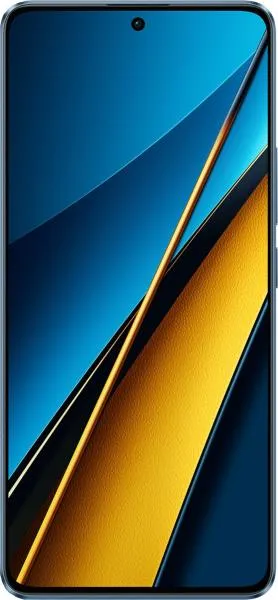
1. Specifications Comparison
| Feature | Huawei P60 Pro | Xiaomi Poco X6 | Practical Impact |
|---|---|---|---|
| Design | |||
| Dimensions (mm) | 161 x 74.5 x 8.3 | 161.2 x 74.3 x 8 | Virtually identical in size |
| Weight (g) | 200 | 181 | Poco X6 is noticeably lighter, improving one-handed use |
| Build | Material information missing for both, limiting comparison | ||
| Display | |||
| Display Type | LTPO OLED | AMOLED | P60 Pro's LTPO allows for dynamic refresh rate, saving battery |
| Size (inches) | 6.67 | 6.67 | Same size |
| Resolution | 1220 x 2700 | 1220 x 2712 | Negligible difference in resolution |
| Refresh Rate (Hz) | 120 | 120 | Both offer smooth scrolling and animations |
| Peak Brightness (nits) | Missing | 1800 | Poco X6 likely offers better visibility in sunlight |
| Color Depth | 1B | 68B | Poco X6 supports a wider color gamut, resulting in more vibrant visuals |
| HDR | No Dolby Vision | Dolby Vision | Poco X6 offers better HDR video playback quality |
| Performance | |||
| Chipset | Snapdragon 8+ Gen 1 4G | Snapdragon 7s Gen 2 | P60 Pro has a significantly more powerful processor, enabling smoother multitasking and demanding gaming |
| CPU | Octa-core (1x3.19 GHz X2 & 3x2.75 GHz A710 & 4x2.0 GHz A510) | Octa-core (4x2.40 GHz A78 & 4x1.95 GHz A55) | P60 Pro's CPU architecture is superior, offering better performance |
| GPU | Adreno 730 | Adreno 710 | P60 Pro's GPU offers a considerable performance advantage in graphics-intensive tasks |
| RAM | 8GB / 12GB | 8GB/12GB | Both offer ample RAM for multitasking |
| Camera | |||
| Main Camera (MP) | 48 | 64 | Higher megapixel count on Poco X6 doesn't guarantee better image quality; sensor size and processing are crucial |
| Other Cameras | 13MP Wide, 48MP Telephoto | 8MP Wide, 2MP Macro | P60 Pro offers a more versatile camera setup with a dedicated telephoto lens |
| Camera Features | Variable Aperture, 100x Digital Zoom | P60 Pro offers unique camera features enhancing creative control | |
| Battery | |||
| Capacity (mAh) | 4815 | 5100 | Poco X6 has a slightly larger battery capacity, potentially offering longer battery life |
| Fast Charging | 88W Wired, 50W Wireless | 67W Wired | P60 Pro offers significantly faster wired and wireless charging |
2. Key Differences Analysis
Huawei P60 Pro Advantages:
- Superior Performance: The Snapdragon 8+ Gen 1 significantly outperforms the Snapdragon 7s Gen 2, resulting in smoother performance for demanding tasks and gaming.
- More Versatile Camera System: The inclusion of a telephoto lens provides greater flexibility for different photography scenarios.
- Faster Charging: Significantly faster wired and wireless charging capabilities minimize downtime.
- LTPO Display: More power-efficient display technology.
Xiaomi Poco X6 Advantages:
- Lower Price: Significantly more affordable.
- Larger Battery: Slightly larger battery capacity potentially resulting in longer usage time.
- Brighter Display: Higher peak brightness improves outdoor visibility.
- Wider Color Gamut: More vibrant and accurate color representation for media consumption.
- Dolby Vision: Enhanced HDR video playback.
- 5G Connectivity: Supports faster cellular data speeds.
3. User Profiles & Recommendations
Huawei P60 Pro: Users who prioritize performance, camera versatility, and fast charging, and are willing to pay a premium price. Ideal for demanding tasks, mobile gaming, and photography enthusiasts.
Xiaomi Poco X6: Budget-conscious users who prioritize a long-lasting battery, vibrant display, and 5G connectivity. Suitable for everyday use, media consumption, and users seeking excellent value for their money.
4. Decision Framework
Key Questions for Buyers:
- What is your budget? The P60 Pro is significantly more expensive.
- What are your performance requirements? For demanding tasks and gaming, the P60 Pro is superior.
- What are your primary use cases? Photography enthusiasts will appreciate the P60 Pro's camera system, while media consumers might prefer the Poco X6's display and Dolby Vision.
My Choice: Xiaomi Poco X6
While the Huawei P60 Pro boasts superior performance and camera capabilities, the Xiaomi Poco X6 offers exceptional value for its price. The slightly larger battery, brighter display with Dolby Vision, and 5G connectivity cater well to my typical usage: media consumption, web browsing, and communication. The performance difference, while noticeable, isn't a deal-breaker for my needs. The significant price difference makes the Poco X6 a more compelling choice for me. If I were a heavy mobile gamer or required the absolute best camera system, the P60 Pro would be a stronger contender, but for my needs, the Poco X6 strikes the best balance between features, performance, and price. Furthermore, the lack of specific details about the P60 Pro's build materials and display brightness makes it difficult to fully assess its value proposition. The Poco X6's clear advantages in price, battery, display brightness, and 5G connectivity, combined with a satisfactory performance level for everyday use, solidify it as my preferred choice.
