1. Specifications Comparison
| Feature | Huawei P60 Pro | Xiaomi Poco M6 4G | Practical Impact |
|---|---|---|---|
| Design | |||
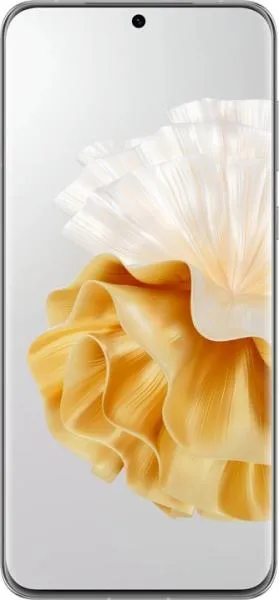
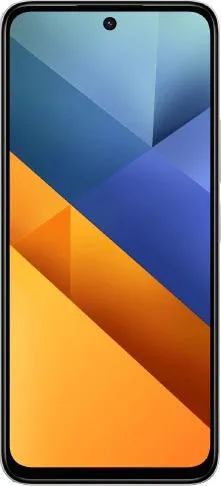
| Dimensions (mm) | 161 x 74.5 x 8.3 | 168.6 x 76.3 x 8.3 | P60 Pro is slightly smaller and potentially more pocketable. |
| Weight (g) | 200 | 205 | Negligible weight difference. |
| Build | Material information missing for both, limiting comparison. | ||
| Display | |||
| Display Type | LTPO OLED | IPS LCD | P60 Pro's OLED offers superior contrast, deeper blacks, and potentially better power efficiency due to LTPO. |
| Display Size (inches) | 6.67 | 6.79 | Poco M6 has a slightly larger screen. |
| Resolution | 1220 x 2700 | 1080 x 2460 | P60 Pro has a sharper display with higher pixel density (444 ppi vs 396 ppi), resulting in crisper text and images. |
| Refresh Rate (Hz) | 120 | 90 | P60 Pro offers smoother scrolling and animations. |
| Performance | |||
| Chipset | Snapdragon 8+ Gen 1 4G (4nm) | Mediatek Helio G91 Ultra (12nm) | P60 Pro boasts a significantly more powerful processor built on a more advanced process node, leading to much faster performance and better efficiency. |
| CPU | Octa-core (1x3.19 GHz Cortex-X2 & 3x2.75 GHz Cortex-A710 & 4x2.0 GHz Cortex-A510) | Octa-core (2x2.0 GHz Cortex-A75 & 6x1.8 GHz Cortex-A55) | P60 Pro has a more powerful CPU architecture, enabling faster multitasking and demanding applications. |
| GPU | Adreno 730 | Mali-G52 MC2 | P60 Pro's GPU offers significantly better gaming and graphics performance. |
| RAM | 8GB/12GB | 6GB/8GB | P60 Pro offers more RAM in its higher-end configuration, improving multitasking. |
| Camera | |||
| Main Camera | 48MP, f/1.4, Sony IMX888 | 108MP, f/1.75, Samsung HM6 | While Poco M6 has higher resolution, P60 Pro uses a larger sensor (1/1.4") and wider aperture, potentially resulting in better low-light performance and depth of field. Sensor quality information is missing for Poco M6. |
| Telephoto | 48MP, f/2.1, 3.5x Optical Zoom | None | P60 Pro offers optical zoom for better quality zoomed images. |
| Ultrawide | 13MP, f/2.2 | None explicitly listed, potentially the 2MP Macro lens | P60 Pro has a dedicated ultrawide lens. The Poco M6's macro lens functionality is unclear. |
| Video | Up to 4K@60fps with EIS | 1080p@30fps | P60 Pro offers higher resolution and frame rate video recording with Electronic Image Stabilization. |
| Battery | |||
| Capacity (mAh) | 4815 | 5030 | Poco M6 has a slightly larger battery capacity. |
| Charging | 88W Wired, 50W Wireless | 33W Wired | P60 Pro offers significantly faster wired and wireless charging. |
2. Key Differences Analysis
Huawei P60 Pro Advantages:
- Superior Performance: Significantly faster processor and GPU for demanding tasks and gaming.
- Higher Quality Display: OLED with higher resolution, refresh rate, and better color reproduction.
- More Versatile Camera System: Includes telephoto and ultrawide lenses, larger main sensor, and superior video recording capabilities.
- Faster Charging: Significantly faster wired and wireless charging.
Xiaomi Poco M6 4G Advantages:
- Larger Battery: Slightly larger battery capacity for potentially longer battery life.
- Lower Price: Significantly more affordable.
3. User Profiles & Recommendations
Huawei P60 Pro: Users who prioritize performance, display quality, camera versatility, and fast charging. Ideal for:
- Photography enthusiasts: Excellent camera system with versatile lenses and features.
- Mobile gamers: Powerful hardware for smooth gaming experience.
- Power users: Demanding tasks and multitasking handled with ease.
Xiaomi Poco M6 4G: Budget-conscious users who prioritize battery life and basic functionality. Ideal for:
- Casual users: Primarily using phone for calls, messaging, and web browsing.
- Students: Affordable option with decent performance for everyday tasks.
- Users on a tight budget: Prioritizing affordability over premium features.
4. Decision Framework
Key Questions for Buyers:
- What is your budget? The P60 Pro is significantly more expensive.
- What are your primary use cases? Gaming, photography, or basic functionality?
- Which features are most important to you? Performance, display, camera, battery life, or price?
Scenario-Based Recommendations:
- Limited budget: Poco M6 4G
- Best overall performance: P60 Pro
- Photography focused: P60 Pro
- Gaming focused: P60 Pro
My Choice: Huawei P60 Pro
While the Xiaomi Poco M6 4G offers excellent value for its price, the Huawei P60 Pro is the clear winner for me. The significantly superior performance, stunning display, versatile camera system, and fast charging outweigh the price difference and slightly smaller battery. I prioritize a smooth and responsive user experience, high-quality visuals, and the ability to capture excellent photos and videos. The P60 Pro excels in all these areas, making it the better choice despite the higher cost. The Poco M6 4G is a solid budget option, but the P60 Pro offers a significant jump in overall quality and capabilities. The lack of 5G in the P60 Pro is a drawback, but considering my usage patterns and the overall package, it's not a dealbreaker for me.
