
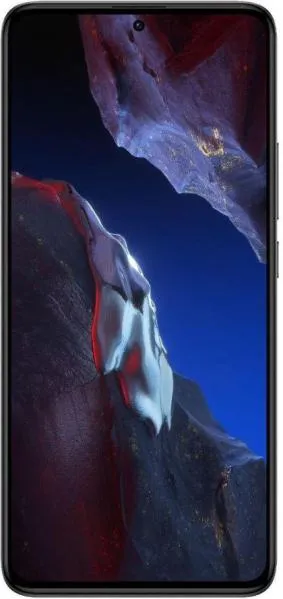
1. Specifications Comparison
| Feature | Huawei P60 Pro | Xiaomi Poco F5 Pro | Practical Impact |
|---|---|---|---|
| Design | |||
| Dimensions (mm) | 161 x 74.5 x 8.3 | 162.8 x 75.4 x 8.6 | Poco F5 Pro slightly larger and thicker. Negligible difference in daily use. |
| Weight (g) | 200 | 204 | Poco F5 Pro slightly heavier. Negligible difference in daily use. |
| Display | |||
| Size (inches) | 6.67 | 6.67 | Same screen size. |
| Resolution (px) | 1220 x 2700 | 1440 x 3200 | Poco F5 Pro significantly sharper due to higher resolution, resulting in crisper text and images. |
| Type | LTPO OLED | AMOLED | Both offer excellent contrast and vibrant colors. LTPO on P60 Pro enables more granular refresh rate control for power saving. |
| Refresh Rate (Hz) | 120 | 120 | Both offer smooth scrolling and animations. |
| Color Depth | 1B | 68B | Poco F5 Pro supports a wider color gamut leading to more accurate and nuanced color representation. |
| HDR | No HDR10/Dolby Vision | HDR10+, Dolby Vision | Poco F5 Pro offers superior HDR support resulting in better video quality with compatible content. |
| Peak Brightness (nits) | Unspecified | 1400 | Poco F5 Pro's higher peak brightness improves outdoor visibility. Lack of data for P60 Pro hinders comparison. |
| Performance | |||
| Chipset | Snapdragon 8+ Gen 1 4G | Snapdragon 8+ Gen 1 | Similar performance expected, but P60 Pro lacks 5G connectivity. Significant disadvantage for future-proofing. |
| CPU | Slightly higher clock speeds | Slightly lower clock speeds | Performance differences likely negligible in everyday tasks, potentially noticeable in demanding applications. |
| GPU | Adreno 730 | Adreno 730 | Same GPU. |
| RAM (GB) | 8/12 | 8/12 | Both offer ample RAM for multitasking. |
| Camera | |||
| Main Camera (MP) | 48 | 64 | Poco F5 Pro boasts higher resolution, potentially capturing more detail. Practical difference depends on sensor quality. |
| Telephoto | 48MP Periscope | None | P60 Pro offers superior zoom capabilities. |
| Ultrawide | 13MP | 8MP | P60 Pro offers higher resolution ultrawide. |
| Battery | |||
| Capacity (mAh) | 4815 | 5160 | Poco F5 Pro has a larger battery capacity, likely resulting in longer battery life. |
| Charging (W) | 88W Wired, 50W Wireless | 67W Wired, 30W Wireless | P60 Pro offers faster wired charging, but slower wireless charging. Poco F5 Pro offering decent charging speeds overall. |
2. Key Differences Analysis
Huawei P60 Pro Advantages:
- Superior Camera System: Notably better zoom capabilities due to the periscope telephoto lens. Potentially better low-light performance thanks to the variable aperture. DxOMark score indicates superior image quality.
- Faster Wired Charging: Significantly faster wired charging speed.
- LTPO Display: More power-efficient display technology.
Xiaomi Poco F5 Pro Advantages:
- Sharper Display: Higher resolution display provides a noticeably crisper viewing experience.
- 5G Connectivity: Future-proofed with 5G support.
- Larger Battery: Longer battery life expected.
- Lower Price: Significantly more affordable.
- Wider Color Gamut and HDR: Superior display for consuming media.
3. User Profiles & Recommendations
Huawei P60 Pro: Ideal for users who prioritize camera quality and fast charging, and are willing to compromise on 5G and price. Excellent for photography enthusiasts.
Xiaomi Poco F5 Pro: Ideal for users who prioritize value, a sharp display for media consumption, and future-proof 5G connectivity. Excellent for general users, gamers, and media consumers.
4. Decision Framework
Key Questions for Buyers:
- Is 5G connectivity essential? If yes, the Poco F5 Pro is the only option.
- Is camera quality the top priority? If yes, the P60 Pro is likely the better choice.
- What is your budget? The Poco F5 Pro offers significantly better value.
My Choice: Xiaomi Poco F5 Pro
While the Huawei P60 Pro boasts an impressive camera system, the lack of 5G is a significant drawback in 2023, especially considering the long-term investment a smartphone represents. The Poco F5 Pro offers a compelling combination of performance, a beautiful high-resolution display with wider color gamut and HDR, and a large battery, all at a significantly lower price. The slightly slower wired charging and potentially less impressive camera are acceptable trade-offs for the overall value and future-proofing offered by the Poco F5 Pro. The inclusion of 5G alone makes it a more sensible long-term purchase. The superior display also makes it a better device for media consumption. Unless photography is the absolute top priority, the Poco F5 Pro offers a more well-rounded package.
