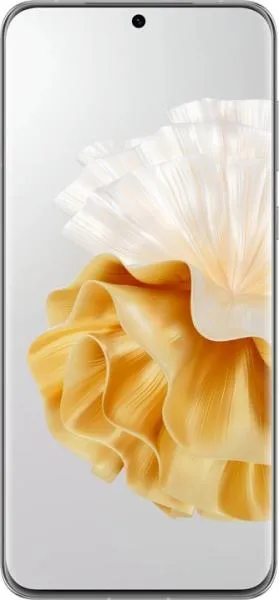
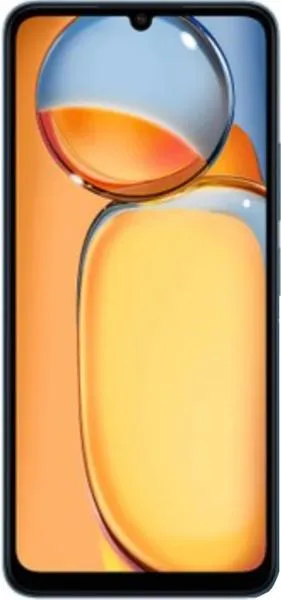
1. Specifications Comparison
| Feature | Huawei P60 Pro | Xiaomi Poco C65 | Practical Impact |
|---|---|---|---|
| Design | |||
| Dimensions (mm) | 161 x 74.5 x 8.3 | 168 x 78 x 8.1 | Poco C65 is larger and slightly thicker. P60 Pro is more pocketable. |
| Weight (g) | 200 | 192 | Negligible weight difference in practical use. |
| Build | Material information missing for both. Impacts durability and premium feel. | ||
| Display | |||
| Display Type | LTPO OLED | IPS LCD | P60 Pro offers superior contrast, deeper blacks, and potentially better power efficiency due to LTPO. |
| Display Size (inches) | 6.67 | 6.74 | Poco C65 has a slightly larger screen. |
| Resolution | 1220 x 2700 | 720 x 1600 | P60 Pro boasts significantly sharper visuals due to much higher resolution. |
| Refresh Rate (Hz) | 120 | 90 | P60 Pro offers smoother scrolling and animations. |
| PPI | 444 | 260 | P60 Pro's display is much sharper and clearer due to the higher pixel density. |
| Performance | |||
| Chipset | Snapdragon 8+ Gen 1 4G | MediaTek Helio G85 | P60 Pro offers significantly faster processing, better gaming, and smoother multitasking. |
| CPU | Octa-core (1x3.19 GHz Cortex-X2 & 3x2.75 GHz Cortex-A710 & 4x2.0 GHz Cortex-A510) | Octa-core (2x2.0 GHz Cortex-A75 & 6x1.8 GHz Cortex-A55) | P60 Pro has a more powerful and efficient CPU architecture. |
| GPU | Adreno 730 | Mali-G52 MC2 | P60 Pro provides a far superior gaming and graphics rendering experience. |
| RAM | 8GB/12GB | 4GB/6GB/8GB | P60 Pro offers more RAM in its higher-end configurations, enabling better multitasking and app performance. |
| Camera | |||
| Main Camera | 48MP, f/1.4 | 50MP, f/1.8 | P60 Pro likely produces better low-light images due to wider aperture; however, image quality depends on sensor and processing which requires real-world testing. |
| Telephoto | 48MP, f/2.1 with 3.5x Optical Zoom | None | P60 Pro offers optical zoom for better quality zoomed images, a significant advantage. |
| Ultrawide | 13MP, f/2.2 | None | P60 Pro offers an ultrawide lens for capturing wider scenes. |
| Video | Up to 4K@60fps with EIS | 1080p@30fps | P60 Pro offers higher resolution and frame rate video recording with electronic image stabilization. |
| Battery | |||
| Capacity (mAh) | 4815 | 5000 | Poco C65 has slightly higher battery capacity, but real-world battery life depends on software optimization and display efficiency. |
| Fast Charging | 88W Wired, 50W Wireless | 18W Wired | P60 Pro offers significantly faster wired and wireless charging. |
2. Key Differences Analysis
Huawei P60 Pro Advantages:
- Significantly better performance: The Snapdragon 8+ Gen 1 outperforms the Helio G85 by a large margin.
- Superior display: The OLED display with higher resolution and refresh rate provides a far better visual experience.
- More versatile camera system: Optical zoom, ultrawide lens, and potentially better low-light performance due to wider aperture.
- Faster charging: Significantly faster wired and wireless charging capabilities.
Xiaomi Poco C65 Advantages:
- Lower price: Significantly more affordable.
- Slightly larger battery: Potentially longer battery life, but real-world usage will vary.
3. User Profiles & Recommendations
Huawei P60 Pro: Users who prioritize performance, a premium display, a versatile camera system, and fast charging. Ideal for demanding tasks, gaming, photography enthusiasts, and those who value a flagship experience.
Xiaomi Poco C65: Budget-conscious users who prioritize basic functionality and long battery life. Suitable for light usage, social media browsing, and communication. Not recommended for demanding tasks or gaming.
4. Decision Framework
Key Questions for Buyers:
- What is your budget? The P60 Pro is a high-end phone, while the Poco C65 is budget-friendly.
- What are your primary use cases? Gaming, photography, and demanding tasks require the P60 Pro's performance.
- How important is display quality? The P60 Pro's OLED display is vastly superior.
Scenario-Based Recommendations:
- Heavy user, gamer, photographer: P60 Pro
- Budget-conscious, light user: Poco C65
My Choice: Huawei P60 Pro
While significantly more expensive, the Huawei P60 Pro offers a vastly superior user experience in almost every aspect. The performance difference is substantial, the display is in a different league, and the camera system is much more versatile. The faster charging is a significant convenience. While the Poco C65 offers a larger battery and lower price, the compromises in performance, display, and camera are too significant for me. The P60 Pro's superior user experience justifies the higher price for my needs. The lack of 5G in the P60 Pro is a notable drawback, but depending on location and network availability, this might not be a dealbreaker.
