
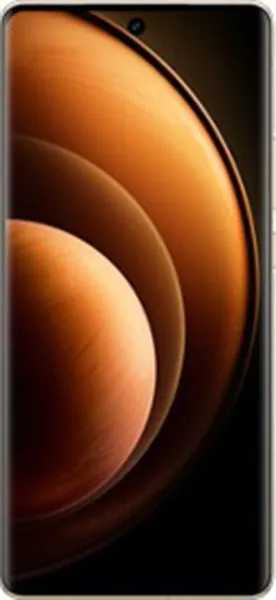
1. Specifications Comparison
| Feature | Huawei P60 Pro | vivo X100 Pro | Practical Impact |
|---|---|---|---|
| Design | |||
| Dimensions (mm) | 161 x 74.5 x 8.3 | 164.1 x 75.3 x 8.9 | X100 Pro is slightly larger and thicker. |
| Weight (g) | 200 | 221 | P60 Pro is noticeably lighter, enhancing one-handed use. |
| Display | |||
| Size (inches) | 6.67 | 6.78 | X100 Pro offers a slightly larger screen for more immersive content consumption. |
| Resolution (px) | 1220 x 2700 | 1260 x 2800 | Both offer sharp displays; X100 Pro's slightly higher resolution provides marginal improvement. |
| Type | LTPO OLED | LTPO AMOLED | Negligible real-world difference in display quality for most users. |
| Refresh Rate (Hz) | 120 | 120 | Both offer smooth scrolling and animations. |
| Peak Brightness (nits) | Not specified | 3000 | X100 Pro's higher peak brightness ensures better visibility in sunlight. |
| Performance | |||
| Chipset | Snapdragon 8+ Gen 1 4G | Dimensity 9300 | Dimensity 9300 generally benchmarks higher in CPU performance. Snapdragon 8+ Gen 1 may still offer superior GPU performance in some scenarios. |
| CPU | Octa-core (Cortex-X2, A710, A510) | Octa-core (Cortex-X4, A720) | X100 Pro likely offers better multi-core performance due to newer Cortex-X4 and A720 cores. |
| GPU | Adreno 730 | Immortalis-G720 MC12 | Performance differences depend on specific applications and games; more real-world testing is needed to determine a clear winner. |
| RAM (GB) | 8/12 | 12/16 | X100 Pro offers higher RAM configurations, beneficial for multitasking and demanding applications. |
| Camera | |||
| Main Sensor | 48MP Sony IMX888 | 50MP Sony IMX989 | X100 Pro boasts a larger sensor size (1") which typically results in better low-light performance and depth of field. |
| Telephoto | 48MP OmniVision | 50MP OmniVision OV64B | Both have high-resolution telephoto lenses, but practical zoom quality depends on lens optics and image processing, which are not fully specified. |
| Ultrawide | 13MP | 50MP Samsung S5KJN1 | X100 Pro offers a significantly higher resolution ultrawide camera, capturing more detail. |
| Battery | |||
| Capacity (mAh) | 4815 | 5400 | X100 Pro offers a larger battery capacity, likely translating to longer battery life. |
| Fast Charging (W) | 88 | 100 | X100 Pro supports slightly faster wired charging. |
2. Key Differences Analysis
Huawei P60 Pro Advantages:
- Lighter and more compact: Easier to handle and carry.
- Potentially better GPU performance: Advantageous for certain gaming and graphics-intensive tasks.
vivo X100 Pro Advantages:
- Larger, brighter display: More immersive visual experience, especially in outdoor environments.
- More powerful CPU: Better for demanding tasks and multitasking.
- Higher resolution cameras, including ultrawide: Captures more detailed photos and videos.
- Larger battery: Longer usage between charges.
- Faster wired charging: Less downtime.
- 5G Connectivity: Future-proofed for faster mobile data.
3. User Profiles & Recommendations
Huawei P60 Pro: Users prioritizing a compact and lightweight phone with potentially superior GPU performance. Suitable for one-handed use and gaming enthusiasts who value portability.
vivo X100 Pro: Users prioritizing a large, bright display, longer battery life, powerful performance, and cutting-edge camera technology. Suitable for multimedia consumption, productivity, and photography enthusiasts.
4. Decision Framework
Key Questions for Buyers:
- Is 5G connectivity essential? (X100 Pro offers 5G, P60 Pro does not).
- Do you prioritize portability or a larger screen and battery? (P60 Pro is lighter and more compact; X100 Pro has a larger display and battery.)
- Is camera quality a primary concern? (X100 Pro has a significant advantage in camera hardware.)
Scenario-Based Recommendations:
- Heavy user needing long battery life and 5G: vivo X100 Pro
- Gamer who prioritizes portability: Huawei P60 Pro
- Photography enthusiast: vivo X100 Pro
My Choice: vivo X100 Pro
While the Huawei P60 Pro offers a compelling compact design and potentially superior GPU performance, the vivo X100 Pro is the more well-rounded device for my needs. The larger battery, brighter display, significantly improved camera system (especially the ultrawide), faster charging, and crucial 5G connectivity make it a more future-proof and versatile choice. The slightly larger size and weight are acceptable trade-offs for the substantial gains in other areas. Furthermore, the price difference, with the vivo being in the "medium price" range compared to the Huawei's "high price," makes the X100 Pro offer better value overall.
