
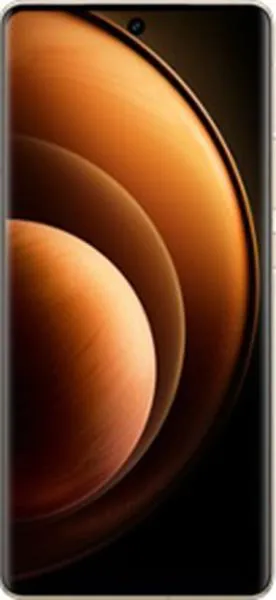
1. Specifications Comparison
| Feature | Huawei P60 Pro | vivo X100 | Practical Impact |
|---|---|---|---|
| Design | |||
| Dimensions (mm) | 161 x 74.5 x 8.3 | 164.1 x 75.2 x 8.5 | Vivo X100 is slightly larger and thicker. |
| Weight (g) | 200 | 202 | Negligible weight difference in practical use. |
| Display | |||
| Size (inches) | 6.67 | 6.78 | Vivo X100 offers a slightly larger screen. |
| Resolution (pixels) | 1220 x 2700 | 1260 x 2800 | Both have similar sharpness, Vivo X100 slightly sharper due to higher resolution and larger size. |
| Type | LTPO OLED | LTPO AMOLED | Both offer excellent color accuracy and power efficiency due to LTPO technology. |
| Refresh Rate (Hz) | 120 | 120 | Both offer smooth scrolling and animations. |
| Peak Brightness (nits) | Not specified | 3000 | Vivo X100's higher peak brightness improves outdoor visibility. |
| Performance | |||
| Chipset | Snapdragon 8+ Gen 1 4G (4 nm) | Dimensity 9300 (4 nm) | Dimensity 9300 is newer and benchmarks suggest superior performance in some areas. However, real-world performance differences might be subtle for average users. |
| CPU | Octa-core (1x3.19 GHz X2 & 3x2.75 GHz A710 & 4x2.0 GHz A510) | Octa-core (1x3.25 GHz X4 & 3x2.85 GHz X4 & 4x2.0 GHz A720) | Dimensity 9300 boasts newer core architecture, potentially offering better multi-core performance. |
| GPU | Adreno 730 | Immortalis-G720 MC12 | Immortalis-G720 MC12 is generally considered more powerful, beneficial for demanding gaming. |
| RAM (GB) | 8/12 | 12/16 | Vivo X100 offers higher RAM configurations for better multitasking. |
| Camera | |||
| Main Camera (MP) | 48 | 50 | Vivo X100 has a higher resolution main sensor and a larger sensor size, potentially capturing more detail. |
| Telephoto (MP) | 48 | 64 | Vivo X100 has a higher resolution telephoto lens. |
| Ultrawide (MP) | 13 | 50 | Vivo X100 has a significantly higher resolution ultrawide lens. |
| Battery | |||
| Capacity (mAh) | 4815 | 5000 | Vivo X100 has a slightly larger battery capacity. |
| Fast Charging (W) | 88 | 120 | Vivo X100 supports significantly faster charging. |
2. Key Differences Analysis
Huawei P60 Pro Advantages:
- Established Camera Performance: While specific DxOMark scores for Vivo X100 are missing, Huawei's P series is known for excellent camera performance, particularly in low light and zoom capabilities.
- Potentially Better Software Optimization for Photography: Huawei's expertise in image processing could result in superior image quality despite slightly lower resolution sensors in some areas.
vivo X100 Advantages:
- More Powerful Chipset and GPU: The Dimensity 9300 and Immortalis-G720 MC12 generally outperform the Snapdragon 8+ Gen 1 in benchmarks, potentially providing a smoother experience in demanding tasks and gaming.
- Faster Charging: 120W fast charging significantly reduces charging time compared to 88W.
- Larger Battery: Offers potentially longer battery life.
- Higher Resolution Ultrawide Camera: A significant advantage for landscape and group photos.
- 5G Connectivity: Offers faster mobile data speeds and lower latency compared to Huawei's 4G.
Trade-offs:
- Huawei's Lack of Google Services: A significant drawback for users reliant on Google apps and services.
- Price: Huawei P60 Pro is positioned in a higher price range.
3. User Profiles & Recommendations
Huawei P60 Pro: Users prioritizing camera quality, especially zoom and low-light performance, who are not reliant on Google services and willing to pay a premium. Suitable for photography enthusiasts.
vivo X100: Users seeking a powerful, well-rounded phone with excellent performance, fast charging, and a good camera system at a more competitive price. Suitable for gamers, power users, and those who value 5G connectivity.
4. Decision Framework
Key Questions:
- How important are Google Mobile Services to you? If essential, the Vivo X100 is the only option.
- What is your budget? The Vivo X100 offers better value for its price.
- What are your primary use cases? Photography enthusiasts might prefer the P60 Pro, while gamers and power users might lean towards the X100.
Scenario-Based Recommendations:
- Heavy Gamer: Vivo X100
- Photography Enthusiast: Huawei P60 Pro (if Google services are not a concern)
- Budget-Conscious User: Vivo X100
My Choice: vivo X100
While the Huawei P60 Pro boasts a strong camera reputation, the lack of Google Services is a dealbreaker for me. The Vivo X100 offers a compelling package with a newer, more powerful chipset, faster charging, 5G connectivity, a competitive camera system with a superior ultrawide lens, and a more attractive price point. The slightly larger battery is a bonus. Overall, the Vivo X100 provides greater value and a more future-proof experience.
