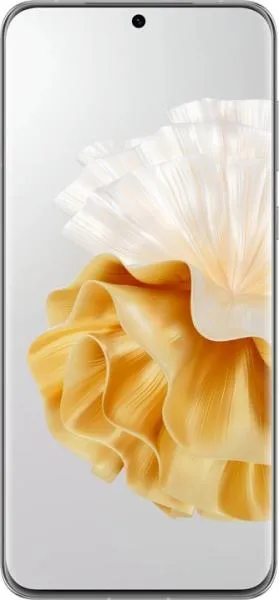
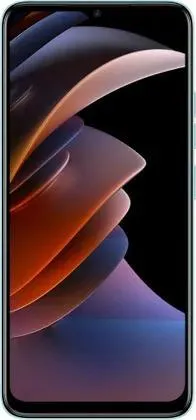
1. Specifications Comparison
| Feature | Huawei P60 Pro | Tecno Spark 10 5G | Practical Impact |
|---|---|---|---|
| Design | |||
| Dimensions (mm) | 161 x 74.5 x 8.3 | 164.4 x 75.5 x 8.4 | Spark 10 5G is slightly larger |
| Weight (g) | 200 | 0 (Missing data) | Cannot compare weight |
| Build | Build materials and quality unknown for both devices | ||
| Display | |||
| Display Type | LTPO OLED | IPS LCD | P60 Pro offers superior contrast, deeper blacks, and potentially better power efficiency due to LTPO. |
| Size (inches) | 6.67 | 6.6 | Negligible size difference |
| Resolution | 1220 x 2700 | 720 x 1612 | P60 Pro has a significantly sharper display with much higher pixel density (444 ppi vs 267 ppi), resulting in clearer text and images. |
| Refresh Rate | 120Hz | 90Hz | P60 Pro offers smoother scrolling and animations. |
| Performance | |||
| Chipset | Snapdragon 8+ Gen 1 4G | MediaTek Dimensity 6020 | P60 Pro has a significantly more powerful processor, leading to faster app loading, smoother multitasking, and better gaming performance. |
| CPU | Octa-core (1x3.19 GHz Cortex-X2 & 3x2.75 GHz Cortex-A710 & 4x2.0 GHz Cortex-A510) | Octa-core (2x2.2 GHz Cortex-A76 & 6x2.0 GHz Cortex-A55) | P60 Pro's CPU architecture is more powerful and efficient. |
| GPU | Adreno 730 | Mali-G57 MC2 | P60 Pro's GPU offers significantly better graphics performance for demanding games and applications. |
| RAM | 8GB | 8GB | Both have the same amount of RAM. |
| Camera | |||
| Main Camera | 48MP, f/1.4, Sony IMX888 | 50MP, f/1.6 | P60 Pro likely has better low-light performance and overall image quality due to the larger sensor and wider aperture, though megapixel count isn't everything. The specific sensor in the Spark 10 5G is unknown. |
| Telephoto | 48MP, f/2.1, 3.5x Optical Zoom | None | P60 Pro offers optical zoom for better image quality at longer distances. Spark 10 5G only offers digital zoom. |
| Ultrawide | 13MP, f/2.2 | None listed | P60 Pro offers an ultrawide lens for capturing wider field of view shots. It's unclear if the Spark 10 5G's "Macro Lens" can function as a basic ultrawide. |
| Battery | |||
| Capacity | 4815 mAh | 5000 mAh | Spark 10 5G has a slightly larger battery capacity, potentially offering longer battery life. |
| Fast Charging | 88W | 18W | P60 Pro charges significantly faster. |
2. Key Differences Analysis
Huawei P60 Pro Advantages:
- Significantly superior display: Higher resolution, OLED technology, higher refresh rate.
- Much more powerful performance: Flagship-level chipset, CPU, and GPU.
- Versatile camera system: High-quality primary sensor, telephoto lens with optical zoom, ultrawide lens.
- Faster Charging: Charges significantly faster than the Spark 10 5G.
Tecno Spark 10 5G Advantages:
- Potentially longer battery life: Slightly larger battery capacity.
- Lower price: Belongs to a lower price range.
- 5G Connectivity: Offers 5G connectivity while the P60 Pro is limited to 4G.
Trade-offs:
- P60 Pro: Higher price, lacks 5G connectivity.
- Spark 10 5G: Lower performance, lower quality display, less versatile camera.
3. User Profiles & Recommendations
Huawei P60 Pro: Users who prioritize performance, display quality, camera versatility, and fast charging, and are willing to pay a premium price. Ideal for demanding tasks like gaming, photography, and content creation.
Tecno Spark 10 5G: Budget-conscious users who prioritize basic functionality, long battery life, and 5G connectivity. Suitable for everyday tasks like web browsing, social media, and communication.
4. Decision Framework
Key Questions:
- What is your budget? The P60 Pro is significantly more expensive.
- What are your performance requirements? For demanding tasks, the P60 Pro is vastly superior.
- What are your priorities? Camera, display quality, battery life, 5G connectivity - prioritize your needs.
Scenario-based recommendations:
- Heavy user, gamer, photographer: P60 Pro
- Budget-conscious user with basic needs: Spark 10 5G
My Choice: Huawei P60 Pro
While the Tecno Spark 10 5G offers a lower price and 5G connectivity, the Huawei P60 Pro's significantly superior performance, stunning display, and versatile camera system make it the clear winner for me. I prioritize a smooth and responsive user experience, high-quality visuals, and the ability to capture great photos. The faster charging is a significant bonus. The lack of 5G is a drawback, but 4G speeds are still sufficient for most tasks in many areas. The price difference is significant, but I believe the P60 Pro offers a much better overall value proposition for my needs. The missing weight specification for the Spark 10 5G further hinders a comprehensive comparison.
