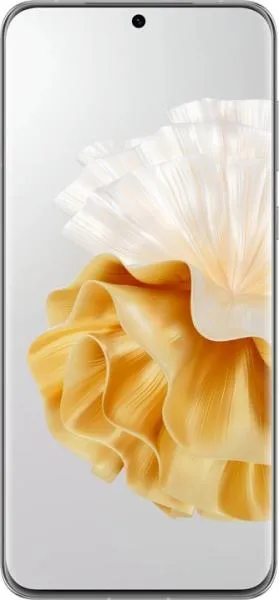
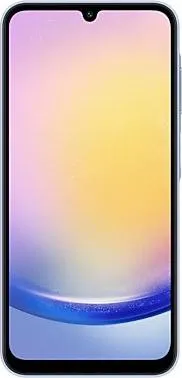
1. Specifications Comparison
| Feature | Huawei P60 Pro | Samsung Galaxy A25 | Practical Impact |
|---|---|---|---|
| Design | |||
| Dimensions (mm) | 161 x 74.5 x 8.3 | 161 x 76.5 x 8.3 | A25 slightly wider |
| Weight (g) | 200 | 197 | Negligible weight difference |
| Build | Unspecified | Unspecified | Build quality comparison not possible |
| Display | |||
| Size (inches) | 6.67 | 6.5 | P60 Pro offers a slightly larger screen |
| Resolution | 1220 x 2700 | 1080 x 2340 | P60 Pro significantly sharper; noticeable difference in clarity |
| Type | LTPO OLED | Super AMOLED | Both offer vibrant colors and deep blacks, but LTPO allows for dynamic refresh rate adjustment, saving battery on P60 Pro |
| Refresh Rate (Hz) | 120 | 120 | Both offer smooth scrolling and animations |
| Peak Brightness (nits) | Unspecified | 1000 | A25's known high brightness ensures better outdoor visibility; P60 Pro's unspecified brightness limits comparison |
| Performance | |||
| Chipset | Snapdragon 8+ Gen 1 4G | Exynos 1280 | P60 Pro has a significantly more powerful processor, resulting in faster app loading, smoother multitasking, and better gaming performance. |
| CPU | Octa-core (1x3.19 GHz X2 & 3x2.75 GHz A710 & 4x2.0 GHz A510) | Octa-core (2x2.4 GHz A78 & 6x2.0 GHz A55) | P60 Pro's superior CPU architecture and clock speeds contribute to its overall performance advantage. |
| GPU | Adreno 730 | Mali-G68 | P60 Pro's GPU provides a significant advantage in graphics-intensive tasks like gaming. |
| RAM (GB) | 8/12 | 6/8 | More RAM in higher-end P60 Pro configurations enables better multitasking. |
| Camera | |||
| Main Camera (MP) | 48 | 50 | Pixel count alone doesn't determine image quality; P60 Pro's larger sensor (1/1.4") and wider aperture (f/1.4) likely result in better low-light performance and depth of field. A25's sensor details are missing. |
| Telephoto | 48MP with 3.5x Optical Zoom | None | P60 Pro offers superior zoom capabilities. |
| Ultrawide | 13MP | 8MP | P60 Pro likely offers a wider field of view and better low-light performance. |
| Video | 4K@60fps with EIS | 4K@30fps with EIS | P60 Pro can record higher resolution and smoother video. |
| Battery | |||
| Capacity (mAh) | 4815 | 5000 | A25 has slightly larger battery capacity. |
| Fast Charging | 88W Wired, 50W Wireless | 25W Wired | P60 Pro offers significantly faster charging. |
2. Key Differences Analysis
Huawei P60 Pro Advantages:
- Significantly more powerful: Superior chipset, CPU, and GPU translate to a much smoother and faster user experience across all tasks.
- Superior camera system: Larger sensor, wider aperture on the main camera, dedicated telephoto lens, and higher resolution video recording capabilities.
- Faster charging: Significantly faster wired and wireless charging.
- Sharper display: Higher resolution and pixel density for a noticeably clearer viewing experience. LTPO provides battery efficiency.
Samsung Galaxy A25 Advantages:
- Lower price: Significantly more affordable.
- Slightly larger battery: Potentially longer battery life, though P60 Pro's LTPO display might offset this.
- 5G Connectivity: Offers faster mobile data speeds in areas with 5G coverage. P60 Pro is limited to 4G.
Trade-offs:
- P60 Pro's higher performance and advanced features come at a significantly higher price.
- A25 sacrifices performance and camera quality for affordability. P60 Pro lacks 5G.
3. User Profiles & Recommendations
Huawei P60 Pro: Users who prioritize performance, camera quality, a premium display, and fast charging, and are willing to pay a premium price. Ideal for demanding tasks like gaming, photography, and video editing.
Samsung Galaxy A25: Budget-conscious users who prioritize affordability and battery life over top-tier performance and camera features. Suitable for everyday tasks like web browsing, social media, and casual photography.
4. Decision Framework
Key Questions for Buyers:
- What is your budget? The P60 Pro is a high-end flagship, while the A25 is a mid-range device.
- What are your most important smartphone features? Prioritize performance, camera, display, or battery life?
- Do you need 5G connectivity? This is a key differentiator, as the P60 Pro lacks 5G.
Scenario-Based Recommendations:
- Heavy user, no budget constraints: Huawei P60 Pro
- Budget-conscious user, moderate usage: Samsung Galaxy A25
- Photographer/videographer: Huawei P60 Pro
- Gamer: Huawei P60 Pro
My Choice: Huawei P60 Pro
While the Samsung Galaxy A25 offers excellent value for its price, I would choose the Huawei P60 Pro. The significantly superior performance, higher quality camera system, beautiful and sharp display, and incredibly fast charging outweigh the price difference for me. The lack of 5G is a consideration, but where I live 5G coverage is still spotty and not a deciding factor. I value a smooth, responsive user experience and high-quality photography capabilities, making the P60 Pro the better choice for my needs. I acknowledge the higher price, but I prioritize the premium user experience it offers.
