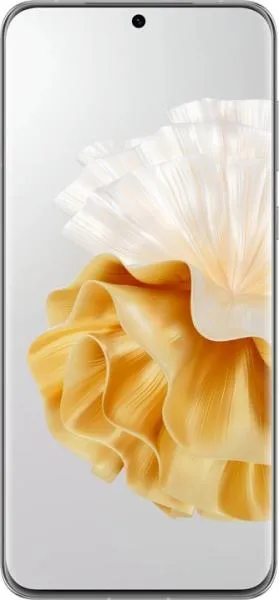
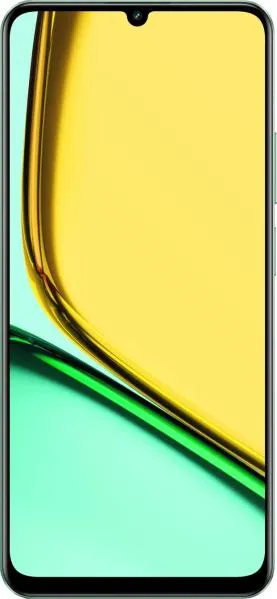
1. Specifications Comparison
| Feature | Huawei P60 Pro | Realme C61 | Practical Impact |
|---|---|---|---|
| Design | |||
| Dimensions (mm) | 161 x 74.5 x 8.3 | 167.3 x 76.7 x 7.8 | P60 Pro is slightly smaller and thinner. |
| Weight (g) | 200 | 188 | Realme C61 is slightly lighter. Negligible difference in daily use. |
| Build | Glass front, glass back | (Missing) | Build materials impact durability and premium feel. Information is missing for Realme C61. |
| Display | |||
| Display Type | LTPO OLED | IPS LCD | P60 Pro offers superior contrast, deeper blacks, and potentially better power efficiency due to LTPO. |
| Size (inches) | 6.67 | 6.74 | Realme C61 has a slightly larger display. |
| Resolution | 1220 x 2700 | 720 x 1600 | P60 Pro offers significantly sharper visuals due to much higher resolution. |
| Refresh Rate (Hz) | 120 | 90 | P60 Pro provides smoother scrolling and animations. |
| PPI | 444 | 260 | P60 Pro's display is much sharper and more detailed. |
| Performance | |||
| Chipset | Snapdragon 8+ Gen 1 4G (4 nm) | Unisoc Tiger T612 (12 nm) | P60 Pro boasts significantly more powerful CPU and GPU, leading to much faster performance in demanding tasks and games. |
| CPU | Octa-core (1x3.19 GHz Cortex-X2 & 3x2.75 GHz Cortex-A710 & 4x2.0 GHz Cortex-A510) | Octa-core (2x1.8 GHz Cortex-A75 & 6x1.8 GHz Cortex-A55) | P60 Pro's CPU architecture is more modern and powerful. |
| GPU | Adreno 730 | Mali-G57 | P60 Pro's GPU is significantly faster, enabling smoother gaming and graphics-intensive tasks. |
| RAM | 8/12GB | 4/6/8GB | More RAM in certain P60 Pro versions allows for better multitasking. |
| Camera | |||
| Main Camera | 48MP, f/1.4 | 32MP, f/1.8 | P60 Pro likely offers better low-light performance and potentially better overall image quality due to larger sensor and wider aperture. |
| Telephoto | 48MP, f/2.1, 3.5x optical zoom | None | P60 Pro offers optical zoom for better image quality at longer distances. Realme C61 relies on digital zoom, which results in quality loss. |
| Ultrawide | 13MP, f/2.2 | None | P60 Pro offers ultrawide photography for capturing wider scenes. |
| Video | 4K@60fps | 1080p@30fps | P60 Pro allows for higher resolution and frame rate video recording. |
| Battery | |||
| Capacity (mAh) | 4815 | 5000 | Realme C61 has a slightly larger battery capacity. |
| Charging | 88W Wired, 50W Wireless | 45W wired | P60 Pro charges significantly faster, both wired and wirelessly. |
2. Key Differences Analysis
Huawei P60 Pro Advantages:
- Significantly superior performance: The Snapdragon 8+ Gen 1 outclasses the Unisoc Tiger T612 by a large margin.
- Much better display: Higher resolution, refresh rate, and OLED technology provide a far superior visual experience.
- More versatile camera system: Optical zoom, ultrawide lens, and potentially better overall image quality.
- Faster charging: Significantly faster wired and wireless charging.
Realme C61 Advantages:
- Lower price: Positioned in the budget segment.
- Slightly larger battery: Potentially longer battery life, although this depends on usage and optimization.
3. User Profiles & Recommendations
Huawei P60 Pro: Users who prioritize performance, a premium display, a versatile camera system, and fast charging. Ideal for demanding tasks, gaming, content creation, and photography enthusiasts.
Realme C61: Budget-conscious users who prioritize basic functionality and long battery life. Suitable for light usage, web browsing, social media, and casual photography.
4. Decision Framework
Key Questions:
- What is your budget? The P60 Pro is a high-end phone, while the Realme C61 is a budget device.
- What are your primary use cases? Gaming, photography, and demanding tasks favor the P60 Pro. Basic communication and light usage favor the Realme C61.
- Which features are most important to you? Prioritize display quality, performance, camera, or battery life based on your needs.
My Choice: Huawei P60 Pro
While the Realme C61 offers excellent value for its price, the Huawei P60 Pro is the clear winner for me. The significantly superior performance, stunning display, versatile camera system, and fast charging are crucial factors in my decision. I prioritize a smooth and enjoyable user experience, and the P60 Pro delivers that in spades. While the higher price tag is a consideration, the substantial upgrade in features and performance justifies the investment for my needs. I am willing to compromise on a slightly smaller battery for the overall superior package offered by the P60 Pro. The lack of 5G in the P60 Pro is a drawback, but considering the other strengths, it's not a deal-breaker for me.
