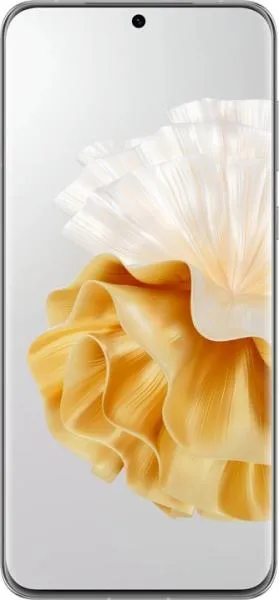
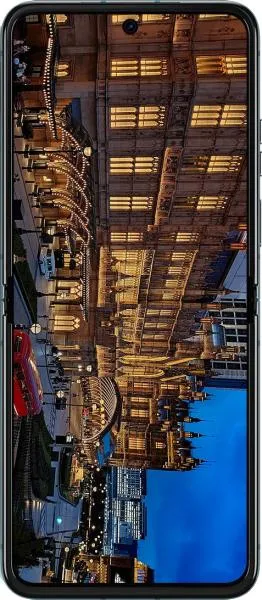
1. Specifications Comparison
| Feature | Huawei P60 Pro | Motorola Razr 40 | Practical Impact |
|---|---|---|---|
| Design | |||
| Dimensions (mm) | 161 x 74.5 x 8.3 | 170.8 x 74 x 7.4 | Razr 40 is taller and slightly thinner when unfolded, significantly smaller when folded. P60 Pro is a more traditional slab design. |
| Weight (g) | 200 | 188.6 | Razr 40 is slightly lighter. |
| Foldable | No | Yes | Razr 40 offers portability due to its folding design. P60 Pro is a more traditional candybar form factor. |
| Display | |||
| Size (inches) | 6.67 | 6.9 | Razr 40 has a slightly larger main screen. |
| Resolution (px) | 1220 x 2700 | 1080 x 2640 | P60 Pro has a sharper display with higher pixel density, resulting in crisper text and images. |
| Display Type | LTPO OLED | Foldable LTPO AMOLED | Both are high-quality displays with excellent color reproduction. Razr 40's folding capability introduces a crease but allows for a larger screen in a smaller form factor. |
| Refresh Rate (Hz) | 120 | 144 | Razr 40 offers smoother scrolling and animations due to its higher refresh rate. |
| Performance | |||
| Chipset | Snapdragon 8+ Gen 1 4G | Snapdragon 7 Gen 1 | P60 Pro boasts a significantly more powerful processor, leading to faster app loading, smoother multitasking, and better gaming performance. |
| CPU | Octa-core (1x3.19 GHz Cortex-X2 & 3x2.75 GHz Cortex-A710 & 4x2.0 GHz Cortex-A510) | Octa-core (1x2.4 GHz Cortex-A710 & 3x2.36 GHz Cortex-A710 & 4x1.8 GHz Cortex-A510) | P60 Pro has a more powerful CPU configuration. |
| GPU | Adreno 730 | Adreno 644 | P60 Pro's GPU provides superior graphics performance for demanding games and applications. |
| RAM (GB) | 8/12 | 8/12 | Both offer ample RAM for multitasking, though specific configurations may vary. |
| Camera | |||
| Main Camera (MP) | 48 | 64 | Razr 40 has a higher megapixel count on the main camera. However, megapixels alone don't determine image quality; sensor size and processing play crucial roles. P60 Pro boasts a larger sensor (1/1.4") and variable aperture (f/1.4-f4.0). |
| Telephoto | Yes (48MP with OIS) | No | P60 Pro offers optical zoom capabilities, allowing for clearer zoomed-in shots. Razr 40 lacks a dedicated telephoto lens. |
| Battery | |||
| Capacity (mAh) | 4815 | 4200 | P60 Pro has a larger battery capacity, potentially offering longer battery life. |
| Fast Charging (W) | 88 | 33 | P60 Pro supports significantly faster charging, minimizing downtime. |
2. Key Differences Analysis
Huawei P60 Pro Advantages:
- Superior Performance: The Snapdragon 8+ Gen 1 provides a significant performance advantage for demanding tasks and gaming.
- Better Camera System: While Razr 40 has a higher resolution main sensor, the P60 Pro's larger sensor size, variable aperture, and dedicated telephoto lens likely deliver superior overall image quality, especially in low light and zoom scenarios. DxOMark score of 156 supports this.
- Longer Battery Life: Larger battery capacity suggests longer usage time.
- Faster Charging: Significantly faster charging speeds.
Motorola Razr 40 Advantages:
- Foldable Design: Offers unparalleled portability and a unique form factor.
- Higher Refresh Rate Display: Smoother scrolling and animations.
- Lower Price: Significantly more affordable.
3. User Profiles & Recommendations
Huawei P60 Pro: Ideal for users who prioritize performance, camera quality, and battery life. Suitable for power users, mobile gamers, and photography enthusiasts.
Motorola Razr 40: Best suited for users who value portability and a unique design above all else. The lower price makes it attractive for budget-conscious buyers who still want a stylish and functional device.
4. Decision Framework
Key Questions for Buyers:
- Is portability your top priority? If yes, the Razr 40's foldable design is a compelling choice.
- How important is raw performance and camera quality? If crucial, the P60 Pro is the clear winner.
- What's your budget? The Razr 40 offers excellent value for its price, while the P60 Pro commands a premium.
Scenario-Based Recommendations:
- Heavy User: P60 Pro for its performance and battery life.
- Casual User: Razr 40 if portability and style are paramount; P60 Pro if camera and overall quality are more important.
- Budget-Conscious User: Razr 40.
My Choice: Huawei P60 Pro
While the Razr 40's foldable design is intriguing, the P60 Pro's superior performance, camera system (validated by DxOMark), and battery life are more important to me. I prioritize a smooth, powerful user experience and high-quality photography. The faster charging is a significant bonus. While the Razr 40 offers great value, I am willing to pay the premium for the P60 Pro's significant advantages in key areas. The lack of 5G in the P60 Pro is a concern, but given the current state of 5G rollout and its battery consumption, it's not a deal-breaker for me.
