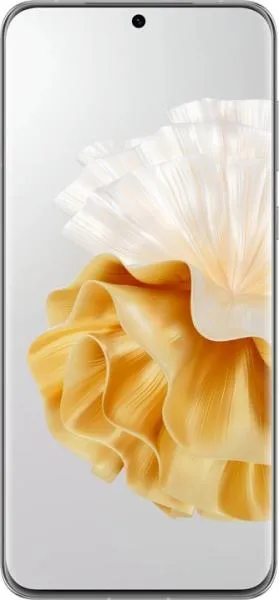
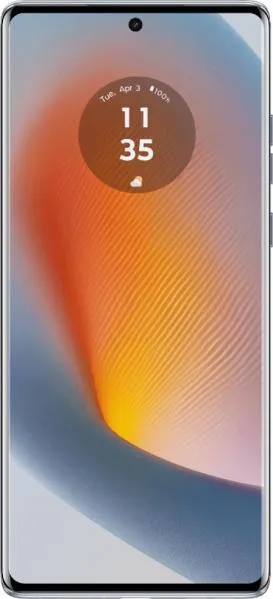
1. Specifications Comparison
| Feature | Huawei P60 Pro | Motorola Edge 50 Fusion | Practical Impact |
|---|---|---|---|
| Design | |||
| Dimensions (mm) | 161 x 74.5 x 8.3 | 161.9 x 73.1 x 7.9 | P60 Pro slightly shorter and wider, both very similar in size. |
| Weight (g) | 200 | 174.9 | Edge 50 Fusion noticeably lighter, improving one-hand usage. |
| Build | Unspecified | Unspecified | Build quality unknown, impacting durability and premium feel. |
| Display | |||
| Display Type | LTPO OLED | P-OLED | P60 Pro's LTPO allows for variable refresh rate, saving battery. |
| Size (inches) | 6.67 | 6.7 | Negligible size difference. |
| Resolution | 1220 x 2700 | 1080 x 2400 | P60 Pro significantly sharper (444 ppi vs 393 ppi). Impacts clarity of text and images. |
| Refresh Rate (Hz) | 120 | 120/144 (region dependent) | Edge 50 Fusion may offer smoother scrolling in some regions with 144Hz. |
| Peak Brightness (nits) | Unspecified | 1600 | Edge 50 Fusion likely more visible in direct sunlight. Missing P60 Pro data limits comparison. |
| Performance | |||
| Chipset | Snapdragon 8+ Gen 1 4G | Snapdragon 7s Gen 2 | P60 Pro has a significantly more powerful processor, leading to faster app loading, smoother multitasking, and better gaming performance. |
| CPU | Octa-core (1x3.19 GHz Cortex-X2 & 3x2.75 GHz Cortex-A710 & 4x2.0 GHz Cortex-A510) | Octa-core (4x2.40 GHz Cortex-A78 & 4x1.95 GHz Cortex-A55) | P60 Pro's superior CPU architecture provides a substantial performance advantage. |
| GPU | Adreno 730 | Adreno 710 | P60 Pro's GPU offers notably better graphics performance for demanding games and applications. |
| RAM | 8GB | 8GB | Same RAM capacity. |
| Camera | |||
| Main Camera | 48MP, f/1.4 | 50MP, f/1.8 | P60 Pro's wider aperture allows for better low-light performance and depth of field control. Sensor quality unspecified for both, limiting comparison. |
| Telephoto | 48MP, f/2.1, 3.5x optical zoom | None | P60 Pro offers superior zoom capabilities. |
| Ultrawide | 13MP, f/2.2 | 13MP, f/2.2 | Similar ultrawide specifications, but real-world performance depends on lens quality and software processing. |
| Battery | |||
| Capacity (mAh) | 4815 | 5000 | Edge 50 Fusion has a slightly larger battery, potentially offering longer battery life. |
| Fast Charging | 88W | 68W | P60 Pro charges significantly faster. |
| Wireless Charging | 50W | None | P60 Pro supports fast wireless charging, Edge 50 Fusion does not. |
2. Key Differences Analysis
Huawei P60 Pro Advantages:
- Superior Performance: Significantly faster processor and GPU for demanding tasks and gaming.
- Sharper Display: Higher resolution and pixel density for crisper visuals.
- Faster Charging: Both wired and wireless charging are considerably faster.
- Advanced Camera System: Includes a telephoto lens for optical zoom and a wider aperture main lens for better low-light photography. Variable aperture on the main lens offers greater creative control.
Motorola Edge 50 Fusion Advantages:
- Lighter Weight: More comfortable for extended use.
- Potentially Longer Battery Life: Larger battery capacity.
- Lower Price: Positioned in the mid-range price segment.
- 5G Connectivity: Offers faster cellular data speeds compared to P60 Pro's 4G. Newer Bluetooth generation (5.3 vs 5.2) offers better power efficiency and range.
Trade-offs:
- P60 Pro sacrifices battery capacity and 5G for performance and camera features.
- Edge 50 Fusion compromises on performance, camera quality, and charging speeds for a lower price point.
3. User Profiles & Recommendations
Huawei P60 Pro: Ideal for users who prioritize performance, camera quality, a sharp display, and fast charging. Suitable for demanding tasks, gaming, and mobile photography enthusiasts.
Motorola Edge 50 Fusion: Best suited for budget-conscious users who need a reliable phone with good battery life and 5G connectivity. Suitable for everyday tasks, web browsing, social media, and light gaming.
4. Decision Framework
Key Questions for Buyers:
- What is your budget? The P60 Pro is significantly more expensive.
- What are your performance needs? For demanding tasks and gaming, the P60 Pro is far superior.
- How important is camera quality? The P60 Pro boasts a more versatile and potentially higher-quality camera system.
Scenario-Based Recommendations:
- Heavy user, gamer, photographer: P60 Pro
- Budget-conscious, casual user: Edge 50 Fusion
- Prioritizes future-proofing with 5G: Edge 50 Fusion
My Choice: Huawei P60 Pro
While lacking 5G is a drawback, the P60 Pro's superior performance, stunning display, faster charging, and versatile camera system are decisive factors for me. I prioritize a smooth and responsive user experience, and the P60 Pro's powerful hardware delivers that. The significantly better camera system also aligns with my interest in mobile photography. The higher price is justified by the significant advantages in key areas. The lack of 5G is mitigated by the fact that 4G networks still offer sufficient speeds for most tasks in many regions, and Wi-Fi is widely available for high-bandwidth needs.
