1. Specifications Comparison
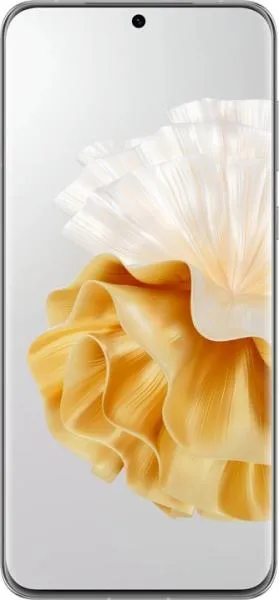
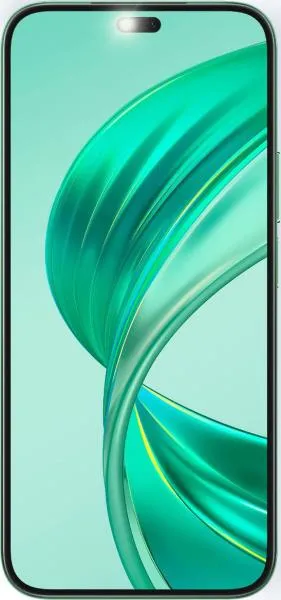
| Feature | Huawei P60 Pro | Honor X8b | Practical Impact |
|---|---|---|---|
| Design | |||
| Dimensions (mm) | 161 x 74.5 x 8.3 | 161.1 x 74.6 x 6.8 | P60 Pro slightly thinner. Negligible difference in overall size. |
| Weight (g) | 200 | 166 | Honor X8b noticeably lighter, more comfortable for extended use. |
| Build Materials | Unspecified | Unspecified | Build quality and durability cannot be compared without further information. |
| Display | |||
| Display Type | LTPO OLED | AMOLED | P60 Pro's LTPO OLED allows for dynamic refresh rate adjustment, saving battery. Both offer vibrant colors and deep blacks. |
| Display Size (inches) | 6.67 | 6.7 | Virtually identical screen sizes. |
| Resolution | 1220 x 2700 | 1080 x 2412 | P60 Pro has a sharper display with higher pixel density (444 ppi vs 394 ppi), resulting in crisper text and images. |
| Refresh Rate (Hz) | 120 | 90 | P60 Pro offers smoother animations and scrolling with its higher refresh rate. |
| Peak Brightness (nits) | Unspecified | 2000 | Honor X8b's specified peak brightness suggests better outdoor visibility. However, without P60 Pro's data, a definitive comparison can't be made. |
| Performance | |||
| Chipset | Snapdragon 8+ Gen 1 4G | Snapdragon 680 4G | P60 Pro boasts a significantly more powerful processor, resulting in much faster performance for demanding tasks and gaming. |
| CPU | Octa-core (1x3.19 GHz Cortex-X2 & 3x2.75 GHz Cortex-A710 & 4x2.0 GHz Cortex-A510) | Octa-core (4x2.4 GHz Kryo 265 Gold & 4x1.9 GHz Kryo 265 Silver) | P60 Pro's CPU architecture is superior, providing a substantial performance advantage. |
| GPU | Adreno 730 | Adreno 610 | P60 Pro has a much more capable GPU, delivering significantly better gaming and graphics performance. |
| RAM | 8GB | 6GB/8GB | Both offer ample RAM for multitasking, though P60 Pro configurations can offer more. |
| Camera | |||
| Main Camera (MP) | 48 | 108 | While Honor X8b has higher megapixels, sensor size and other factors (unspecified for both) ultimately determine image quality. |
| Telephoto Lens | Yes (48MP) | No | P60 Pro offers optical zoom capabilities, while Honor X8b relies on digital zoom. |
| Ultrawide Lens | Yes (13MP) | Yes (5MP) | P60 Pro likely offers a wider field of view and higher resolution ultrawide shots. |
| Video Recording | Up to 4K@60fps with EIS | Up to 1080p@30fps | P60 Pro supports higher resolution and frame rate video recording with electronic image stabilization. |
| Battery | |||
| Capacity (mAh) | 4815 | 4500 | P60 Pro has slightly larger battery capacity. |
| Fast Charging | 88W | 35W | P60 Pro offers significantly faster charging speeds. |
| Wireless Charging | 50W | No | P60 Pro supports fast wireless charging, Honor X8b does not. |
2. Key Differences Analysis
Huawei P60 Pro Advantages:
- Superior Performance: Significantly faster processor and GPU for demanding tasks and gaming.
- Higher Quality Display: Sharper, smoother, and more power-efficient due to LTPO technology.
- Faster Charging: 88W wired and 50W wireless charging significantly reduces downtime.
- Advanced Camera System: Optical zoom capabilities and potentially better image quality due to larger sensor (unconfirmed).
Honor X8b Advantages:
- Lower Price: Significantly more affordable.
- Lighter Weight: More comfortable for one-handed use and extended periods.
- Higher Resolution Main Camera Sensor: Potentially better detail in good lighting conditions, although overall camera performance depends on various factors not specified.
3. User Profiles & Recommendations
Huawei P60 Pro: Ideal for users who prioritize performance, a high-quality display, fast charging, and advanced camera features. Suitable for demanding tasks, gaming, content creation, and photography enthusiasts.
Honor X8b: Suitable for budget-conscious users who prioritize affordability and a large display for everyday tasks like web browsing, social media, and media consumption. Less demanding gamers and casual photographers might also find it acceptable.
4. Decision Framework
Key Questions for Buyers:
- What is your budget? The P60 Pro is a premium device, while the Honor X8b is significantly more affordable.
- What are your primary use cases? Demanding tasks, gaming, and photography benefit from the P60 Pro's power. Casual use is well-served by the Honor X8b.
- Which features are most important to you? Prioritize performance, display quality, and camera features with the P60 Pro, or affordability and battery life with the Honor X8b.
My Choice: Huawei P60 Pro
While the Honor X8b offers excellent value for its price, the Huawei P60 Pro is the clear winner for me. The significantly superior performance, higher quality display, faster charging, and more versatile camera system justify the higher price. As someone who values a smooth and responsive user experience, enjoys mobile gaming, and appreciates a good camera, the P60 Pro's advantages are compelling. The lack of 5G might be a concern for some, but 4G speeds are still sufficient for most tasks. The slightly heavier weight is a minor trade-off for the premium build and powerful hardware.
