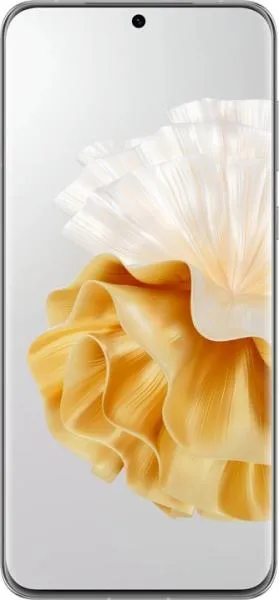
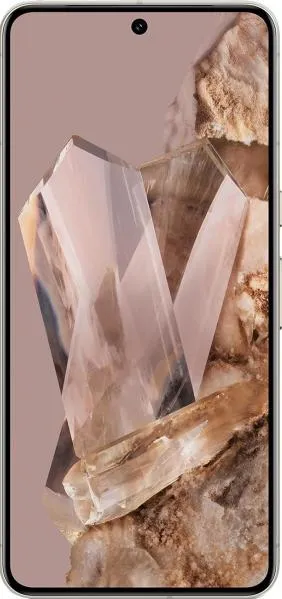
1. Specifications Comparison
| Feature | Huawei P60 Pro | Google Pixel 8 Pro | Practical Impact |
|---|---|---|---|
| Design | |||
| Dimensions (mm) | 161 x 74.5 x 8.3 | 162.6 x 76.5 x 8.8 | Pixel 8 Pro slightly larger and thicker. |
| Weight (g) | 200 | 213 | Pixel 8 Pro noticeably heavier. |
| Build | Missing | Missing | Build quality and materials cannot be compared. |
| Display | |||
| Display Type | LTPO OLED | LTPO OLED | Both offer excellent color accuracy and power efficiency. |
| Size (inches) | 6.67 | 6.7 | Negligible size difference. |
| Resolution | 1220 x 2700 | 1344 x 2992 | Pixel 8 Pro has a sharper display (higher pixel density). |
| Refresh Rate (Hz) | 120 | 120 | Both offer smooth scrolling and animations. |
| Peak Brightness (nits) | Missing | 2400 (peak) | Pixel 8 Pro likely offers better outdoor visibility. |
| HDR | No Dolby Vision | HDR10+, Dolby Vision Missing | Pixel 8 Pro supports wider HDR standards for enhanced video playback. |
| Performance | |||
| Chipset | Snapdragon 8+ Gen 1 4G (4 nm) | Google Tensor G3 (4 nm) | Tensor G3 focuses on AI and ML performance, Snapdragon 8+ Gen 1 on general performance. |
| CPU | Octa-core (1x3.19 GHz Cortex-X2...) | Nona-core (1x3.0 GHz Cortex-X3...) | Both offer top-tier performance, though benchmarks are needed for real-world comparison. |
| GPU | Adreno 730 | Immortalis-G715s MC10 | Gaming performance comparison requires further benchmarks. Immortalis G715 should offer competent performance. |
| RAM (GB) | 8/12 | 12 | Pixel 8 Pro offers more RAM for better multitasking. |
| OS | Missing | Android 14 | OS version for Huawei P60 Pro is unavailable for comparison. Pixel 8 Pro will receive longer OS updates. |
| Camera | |||
| Main Camera (MP) | 48 | 50 | Pixel's larger sensor potentially captures more light. |
| Telephoto (MP) | 48 | 48 | Similar telephoto capabilities, but lens quality and zoom range need clarification. |
| Ultrawide (MP) | 13 | 48 | Pixel 8 Pro offers a significantly higher resolution ultrawide. |
| DXOMARK Score | 156 | 153 | Scores are close, suggesting comparable overall camera quality, though individual category scores vary. |
| Battery | |||
| Capacity (mAh) | 4815 | 5050 | Pixel 8 Pro has a larger battery, potentially leading to longer battery life. |
| Fast Charging (W) | 88 | 30 | Huawei P60 Pro charges significantly faster. |
| Wireless Charging (W) | 50 | 23 | Huawei P60 Pro supports faster wireless charging. |
2. Key Differences Analysis
Huawei P60 Pro Advantages:
- Faster Charging: Significantly faster wired and wireless charging.
- Camera Performance: Comparable overall camera quality to Pixel, with potentially superior low-light performance according to DxOMark Photo score.
Google Pixel 8 Pro Advantages:
- Sharper Display: Higher resolution and pixel density.
- Larger Battery: Potentially longer battery life.
- Software Updates: Guaranteed longer software updates and newer Android version out-of-the-box.
- 5G Connectivity: Offers 5G connectivity for faster data speeds.
- Wider HDR Support: Supports HDR10+ for enhanced video playback.
3. User Profiles & Recommendations
Huawei P60 Pro: Users who prioritize fast charging, excellent camera performance, and don't heavily rely on Google services. Best for photography enthusiasts.
Google Pixel 8 Pro: Users who prioritize latest software, longer software updates, 5G connectivity, a sharp display, and all-around performance. Best for users deeply integrated into the Google ecosystem.
4. Decision Framework
Key Questions for Buyers:
- How important is 5G connectivity? (Pixel 8 Pro advantage)
- Is access to Google services crucial? (Pixel 8 Pro advantage)
- Which is more important: faster charging or longer battery life? (P60 Pro for charging, Pixel 8 Pro for battery life)
My Choice: Google Pixel 8 Pro
While the Huawei P60 Pro offers compelling camera performance and blazing fast charging, the Google Pixel 8 Pro's access to Google services, guaranteed software updates, 5G connectivity, and larger battery make it a more compelling choice for me. The sharper display and broader HDR support are also valuable additions. The lack of Google services on the Huawei P60 Pro is a major drawback for many users, myself included. Although the P60 Pro boasts faster charging, I prioritize the longevity and peace of mind that come with timely software updates and a robust ecosystem. Furthermore, 5G connectivity is becoming increasingly important for future-proofing.
