
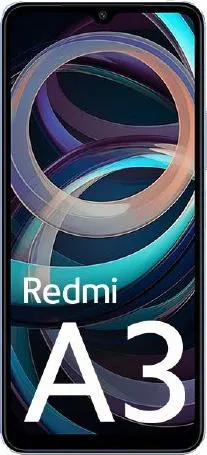
1. Specifications Comparison
| Feature | Huawei nova 11 | Xiaomi Redmi A3 | Practical Impact |
|---|---|---|---|
| Design | |||
| Dimensions (mm) | 161.3 x 75 x 6.9 | 168.3 x 76.3 x 8.3 | Nova 11 is significantly thinner and lighter, making it more pocketable and comfortable for one-handed use. |
| Weight (g) | 168 | 193 | |
| Build Material | Not specified | Not specified | Cannot compare build quality without material information. |
| Display | |||
| Display Type | OLED | IPS LCD | Nova 11's OLED offers deeper blacks, richer colors, and potentially higher brightness compared to Redmi A3's LCD. |
| Size (inches) | 6.7 | 6.71 | Negligible size difference. |
| Resolution | 1084 x 2412 | 720 x 1650 | Nova 11 has a much sharper display, resulting in clearer text and images. Redmi A3's lower resolution might appear pixelated. |
| Refresh Rate (Hz) | 120 | 90 | Nova 11 will offer smoother scrolling and animations, especially noticeable in games and fast-paced content. |
| Performance | |||
| Chipset | Snapdragon 778G 4G (6nm) | Mediatek Helio G36 (12nm) | Nova 11's 778G is significantly more powerful, enabling smoother multitasking, faster app loading, and better gaming performance. |
| CPU | Octa-core (4x2.4 GHz & 4x1.8 GHz) | Octa-core (4x2.2 GHz & 4x1.6 GHz) | |
| GPU | Adreno 642L | PowerVR GE8320 | Nova 11's GPU further enhances gaming and graphics-intensive tasks compared to the Redmi A3. |
| RAM | 8GB | 3GB/4GB/6GB | 8GB RAM on the Nova 11 allows for more apps to run in the background without performance slowdowns. Redmi A3's RAM options are more limited, especially the 3GB variant. |
| Camera | |||
| Main Camera | 50MP | 8MP | Nova 11's 50MP sensor likely captures significantly more detail and offers better low-light performance. |
| Selfie Camera | 60MP | 5MP | Nova 11's selfie camera offers higher resolution for detailed self-portraits. |
| Video Recording | 720p@960fps | 1080p@30fps | While Nova 11 offers significantly higher frame rate slow-motion, Redmi A3 allows for higher resolution standard video recording. |
| Battery | |||
| Capacity (mAh) | 4500 | 5000 | Redmi A3 boasts a larger battery, potentially offering longer usage time. However, real-world battery life depends on various factors, including software optimization and display type. |
2. Key Differences Analysis
Huawei nova 11 Advantages:
- Significantly more powerful: Superior chipset and GPU for smoother performance across all tasks.
- Sharper and smoother display: Higher resolution and refresh rate OLED for a superior visual experience.
- Higher resolution cameras: Potentially better image and video quality.
- Sleeker and lighter design: More comfortable for one-handed use and portability.
Xiaomi Redmi A3 Advantages:
- Larger battery: Potential for longer battery life.
- Lower price: Significantly more affordable.
- Higher resolution standard video recording: Captures more detailed videos at standard speed.
Trade-offs:
- Nova 11: Higher price for significantly better performance and display. Lack of 5G might be a concern for future-proofing.
- Redmi A3: Lower performance and display quality for a budget-friendly price. Limited RAM options might hinder multitasking.
3. User Profiles & Recommendations
Huawei nova 11: Users who prioritize performance, display quality, camera capabilities, and a premium design. Ideal for gaming, content consumption, photography, and multitasking.
Xiaomi Redmi A3: Users on a tight budget who prioritize basic functionality and long battery life. Suitable for calling, texting, web browsing, and light social media usage. Not recommended for demanding tasks or users seeking a high-quality visual experience.
4. Decision Framework
Key Questions for Buyers:
- What is your budget? The Redmi A3 is significantly cheaper, while the Nova 11 comes at a premium.
- What are your primary use cases? Gaming, photography, and demanding tasks favor the Nova 11. Basic communication and light usage suit the Redmi A3.
- How important are performance and display quality? The Nova 11 vastly outperforms the Redmi A3 in these areas.
Scenario-Based Recommendations:
- Student on a budget: Redmi A3.
- Professional who needs a powerful device: Nova 11.
- Casual user who prioritizes battery life: Redmi A3 might seem appealing, but real-world usage needs to be considered.
- Mobile gamer: Nova 11.
My Choice: Huawei nova 11
While the Redmi A3 offers a larger battery and significantly lower price, the Nova 11's superior performance, display, and camera capabilities make it the clear winner for me. I prioritize a smooth and enjoyable user experience, and the Nova 11's powerful hardware and high-quality OLED display deliver on that front. The difference in price is justified by the significant leap in overall quality and capabilities. The lack of 5G is a consideration, but 4G is still widely available and sufficient for most current needs. The Redmi A3 feels too compromised in key areas for a truly satisfying smartphone experience.
