
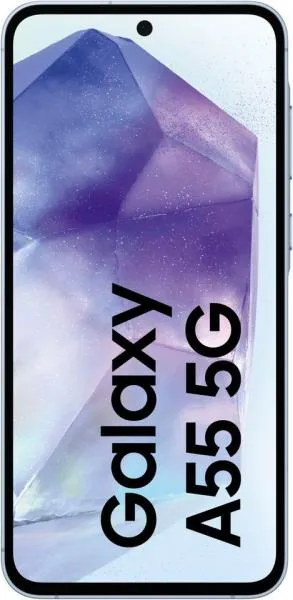
1. Specifications Comparison
| Feature | Huawei nova 11 | Samsung Galaxy A55 | Practical Impact |
|---|---|---|---|
| Design | |||
| Dimensions (mm) | 161.3 x 75 x 6.9 | 161.1 x 77.4 x 8.2 | A55 slightly wider and thicker, Nova 11 significantly thinner |
| Weight (g) | 168 | 213 | Nova 11 noticeably lighter, potentially more comfortable for one-handed use |
| Display | |||
| Display Type | OLED, 120Hz | Super AMOLED, 120Hz | Both offer smooth scrolling and vibrant colors; Super AMOLED generally has better contrast and outdoor visibility |
| Display Size (inches) | 6.7 | 6.6 | Negligible size difference in real-world usage |
| Resolution | 1084 x 2412 | 1080 x 2340 | Similar sharpness; Nova 11 slightly higher pixel density but practically indistinguishable |
| HDR | HDR10 | HDR10+ | A55 supports slightly wider dynamic range in HDR content |
| Performance | |||
| Chipset | Snapdragon 778G 4G (6nm) | Exynos 1480 (4nm) | Exynos 1480 likely offers better performance and power efficiency due to newer architecture and smaller process node |
| CPU | Octa-core (4x2.4 GHz & 4x1.8 GHz) | Octa-core (4x2.75 GHz & 4x2.0 GHz) | A55 has faster CPU clock speeds, translating to smoother multitasking and faster app loading |
| GPU | Adreno 642L | Xclipse 530 | Performance difference unclear without benchmarks. Both should handle everyday tasks and moderate gaming well. |
| RAM | 8GB | 8GB/12GB | A55 offers a 12GB RAM option for even smoother multitasking and demanding applications |
| OS | Unknown | Android 14 | A55 benefits from newer Android features, security updates, and wider app compatibility. Lack of OS info for Nova 11 is a significant gap. |
| Camera | |||
| Rear Camera | 50MP Main, 8MP Wide+Macro | 50MP Main (OIS), 13MP Wide, 5MP Macro | A55 boasts Optical Image Stabilization (OIS) for sharper photos and videos, especially in low light. Dedicated 13MP wide-angle likely superior to Nova 11's 8MP combined wide/macro. |
| Front Camera | 60MP | 32MP | Higher megapixel count on Nova 11 doesn't guarantee better selfies; image quality depends on sensor and processing. |
| Video | 720p@960fps (slow-mo) | 4K@30fps, 1080p@60fps | A55 offers superior video resolution and frame rate options. |
| Battery | |||
| Capacity | 4500 mAh | 5000 mAh | A55 has larger battery capacity, likely translating to longer battery life |
2. Key Differences Analysis
Huawei Nova 11 Advantages:
- Lighter and Thinner: More comfortable for extended use and one-handed operation.
- Higher Resolution Front Camera: Potentially better for detailed selfies, but dependent on sensor quality which is not fully specified.
Samsung Galaxy A55 Advantages:
- 5G Connectivity: Future-proofed for faster data speeds and lower latency.
- Optical Image Stabilization (OIS): Significantly improves image and video quality, especially in low light.
- Larger Battery: Potentially longer battery life.
- Newer and more powerful chipset and CPU: Smoother overall performance.
- Confirmed Operating System with upgrade path: Ensures software support and security updates.
3. User Profiles & Recommendations
Huawei Nova 11: Users prioritizing a lightweight, stylish design who primarily use their phone for social media, casual photography, and don't require 5G.
Samsung Galaxy A55: Users who value performance, camera quality, battery life, and future-proof features like 5G. Suitable for a wider range of users, including mobile gamers, content creators, and those who rely heavily on their phone for various tasks.
4. Decision Framework
Key Questions:
- Is 5G connectivity essential? If yes, the A55 is the only option.
- How important is camera quality? A55 offers OIS and more versatile camera setup.
- What is your budget and preferred OS? While both are mid-range, specific pricing and OS preference (given the unknown OS of the Nova 11) will influence the decision.
My Choice: Samsung Galaxy A55
The Samsung Galaxy A55 is the clear winner for me. The confirmed Android OS with updates, 5G connectivity, superior camera system with OIS, more powerful processor, and larger battery are significant advantages. While the Nova 11 is lighter and has a higher resolution front camera, these benefits don't outweigh the A55's comprehensive superiority in crucial areas like performance, connectivity, and long-term software support. The lack of clear OS information for the Nova 11 is a major drawback. The A55 offers better value and a more future-proof device overall.
