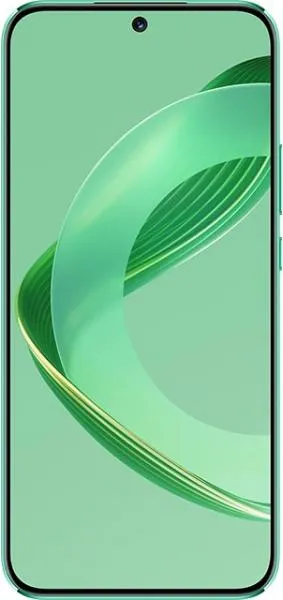
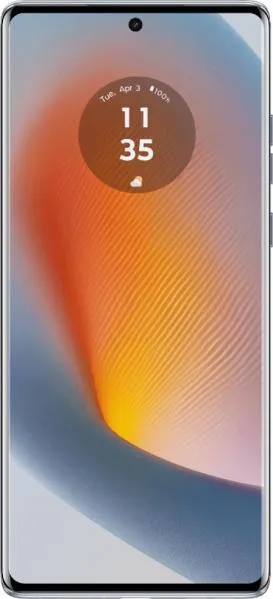
1. Specifications Comparison
| Feature | Huawei nova 11 | Motorola Edge 50 Fusion | Practical Impact |
|---|---|---|---|
| Design | |||
| Dimensions (mm) | 161.3 x 75 x 6.9 | 161.9 x 73.1 x 7.9 | Nova 11 is slightly smaller and significantly thinner. Fusion is slightly wider and heavier. Nova 11 will likely feel more premium and pocketable. |
| Weight (g) | 168 | 174.9 | Noticeable difference in hand; Nova 11 will be more comfortable for extended use. |
| Display | |||
| Display Type | OLED | P-OLED | Both offer vibrant colors and deep blacks. P-OLED in Fusion might be slightly more power efficient. Differences in real-world usage might be negligible. |
| Size (inches) | 6.7 | 6.7 | Identical screen sizes. |
| Resolution | 1084 x 2412 | 1080 x 2400 | Virtually indistinguishable in sharpness. |
| Refresh Rate (Hz) | 120 | 120/144 (INT) | Smoother scrolling and animations on both, with the Fusion potentially offering even smoother performance in some regions with the 144Hz variant. |
| Peak Brightness (nits) | 950 | 1600 | Fusion offers significantly higher peak brightness, improving outdoor visibility. |
| Performance | |||
| Chipset | Snapdragon 778G 4G (6nm) | Snapdragon 7s Gen 2 (4nm) | Fusion's newer processor built on a smaller node likely provides better performance and power efficiency, though real-world differences might be subtle in this mid-range tier. |
| CPU | Octa-core (4x2.4 GHz & 4x1.8 GHz) | Octa-core (4x2.4 GHz & 4x1.95 GHz) | Similar CPU configurations. Fusion may offer slight performance gains. |
| GPU | Adreno 642L | Adreno 710 | Fusion's GPU should offer better gaming performance. |
| RAM (GB) | 8 | 8 | Same RAM capacity. Multitasking performance should be similar. |
| OS | Unspecified | Android 14 | Significant disadvantage for the Nova 11. Not knowing the OS hinders evaluation and raises concerns about updates and app compatibility. |
| Camera | |||
| Main Camera (MP) | 50 | 50 | Similar resolution; image quality will depend on sensor and processing. |
| Selfie Camera (MP) | 60 | 32 | Higher resolution on Nova 11. Practical impact depends on image processing. More megapixels don't necessarily equal better photos. |
| Video Recording | 720p@960fps with EIS | 4K@30fps with EIS | Fusion offers significantly better video resolution. Nova's 960fps slow-motion is a niche feature. |
| Battery | |||
| Capacity (mAh) | 4500 | 5000 | Larger battery in the Fusion suggests longer battery life. |
2. Key Differences Analysis
Huawei nova 11 Advantages:
- Thinner and Lighter: More pocketable and comfortable for one-handed use.
- Higher Resolution Selfie Camera: Potentially better for detailed selfies, but dependent on sensor quality and processing.
Motorola Edge 50 Fusion Advantages:
- Brighter Display: Superior outdoor visibility.
- More Powerful Processor and GPU: Smoother performance, potentially better for gaming.
- Larger Battery: Likely longer battery life.
- Newer and specified OS: Ensures software updates, security, and app compatibility.
- Better Video Recording Capabilities: 4K recording is a significant advantage over 720p.
- 5G Connectivity: Future-proofs the device for faster data speeds.
Trade-offs:
- Nova 11: Thinner design may come at the expense of battery capacity. Lack of OS information is a major drawback.
- Fusion: Slightly heavier and thicker.
3. User Profiles & Recommendations
Huawei nova 11: Users prioritizing a slim and lightweight design who primarily use their phone for casual tasks and social media. However, the lack of OS information makes it difficult to recommend this phone.
Motorola Edge 50 Fusion: Users who need a well-rounded phone with good performance, battery life, a bright display, and 5G connectivity. Suitable for gaming, media consumption, and general use.
4. Decision Framework
Key Questions:
- Is 5G connectivity crucial? Fusion offers 5G, while Nova 11 is limited to 4G.
- How important is battery life? Fusion's larger battery likely provides longer usage.
- What is your budget and how important is software support? Fusion is a safer bet with a known OS, implying longer software support. The Nova 11's lack of OS information is a serious concern.
Scenario-Based Recommendations:
- Heavy user needing performance and battery: Motorola Edge 50 Fusion.
- Casual user prioritizing portability: Potentially the Huawei nova 11, but only if the OS and software support situation is clarified and deemed acceptable.
My Choice: Motorola Edge 50 Fusion
The lack of OS information for the Huawei nova 11 is a deal-breaker. It's impossible to recommend a phone without knowing its software foundation. The Motorola Edge 50 Fusion offers a more comprehensive package with a modern processor, a larger battery, a brighter display, 5G connectivity, and a known and current Android OS. While slightly heavier, the Fusion's advantages in key areas like performance, battery life, and guaranteed software support outweigh the Nova 11's slimmer profile.
