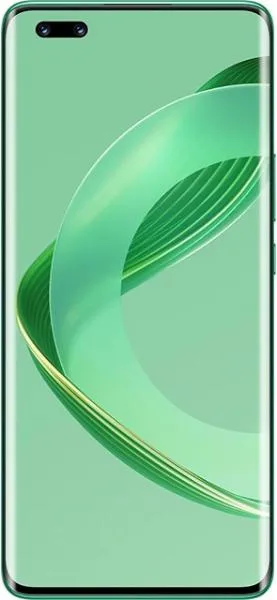
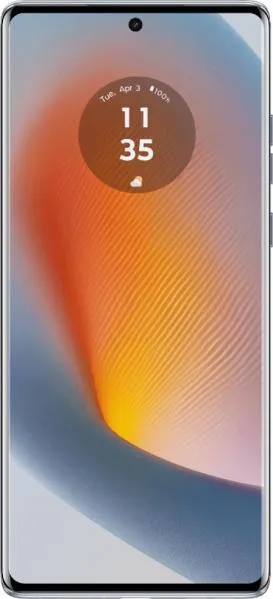
1. Specifications Comparison
| Feature | Huawei nova 11 Pro | Motorola Edge 50 Fusion | Practical Impact |
|---|---|---|---|
| Design | |||
| Dimensions (mm) | 164.3 x 74.4 x 7.9 | 161.9 x 73.1 x 7.9 | Nova 11 Pro slightly taller and wider |
| Weight (g) | 188 | 174.9 | Edge 50 Fusion noticeably lighter, more comfortable for extended use |
| Build Material | Not specified | Not specified | Cannot compare build quality and durability |
| Display | |||
| Display Type | OLED | P-OLED | Both offer excellent contrast and deep blacks. Subjective preference for color vibrancy may vary. |
| Size (inches) | 6.78 | 6.7 | Negligible size difference in real-world usage |
| Resolution | 1200 x 2652 | 1080 x 2400 | Nova 11 Pro noticeably sharper due to higher pixel density, especially beneficial for text and image clarity. |
| Refresh Rate (Hz) | 120 | Up to 144 (INT) | Smoother animations and scrolling on the Edge 50 Fusion (International version), particularly in supported games. |
| Peak Brightness (nits) | 950 | 1600 | Edge 50 Fusion significantly brighter, enhancing outdoor visibility. |
| Performance | |||
| Chipset | Snapdragon 778G 4G (6nm) | Snapdragon 7s Gen 2 (4nm) | Edge 50 Fusion likely offers better performance and efficiency due to newer, more powerful chipset built on a smaller process node. |
| CPU | Octa-core (4x2.4 GHz & 4x1.8 GHz) | Octa-core (4x2.4 GHz Cortex-A78 & 4x1.95 GHz Cortex-A55) | Edge 50 Fusion's Cortex-A78 cores should provide a performance advantage in demanding tasks. |
| GPU | Adreno 642L | Adreno 710 | Edge 50 Fusion expected to have better gaming and graphics performance due to a more powerful GPU. |
| RAM (GB) | 6/8/12 (variant dependent) | 8/12 (variant dependent) | More RAM generally allows for smoother multitasking. Practical difference depends on specific RAM configuration chosen. |
| Camera | |||
| Main Camera (MP) | 50 | 50 | Similar resolution, but sensor details suggest the Edge 50 Fusion might have larger sensor size (1/1.56" vs unspecified), potentially capturing more light. |
| Ultrawide (MP) | 8 | 13 | Edge 50 Fusion offers a higher resolution ultrawide camera for wider shots with potentially more detail. |
| Selfie (MP) | 60 | 32 | Nova 11 Pro boasts a much higher resolution selfie camera, potentially beneficial for detailed self-portraits. However, high megapixel count doesn't guarantee better image quality. |
| Video | 720p@960fps | 4K@30fps, 1080p@120fps | Edge 50 Fusion provides significantly better video recording capabilities with higher resolution and frame rates. |
| Battery | |||
| Capacity (mAh) | 4500 | 5000 | Edge 50 Fusion likely offers longer battery life due to larger capacity. |
| Charging Speed | Not specified | Not specified | Cannot compare charging speeds. |
2. Key Differences Analysis
Huawei nova 11 Pro Advantages:
- Sharper Display: Higher resolution display for crisper visuals.
- Higher Resolution Selfie Camera: Potentially more detailed self-portraits.
Motorola Edge 50 Fusion Advantages:
- Better Performance: More powerful and efficient chipset and GPU.
- Brighter Display: Superior outdoor visibility.
- Superior Video Recording: 4K recording and higher slow-motion capabilities.
- Larger Battery: Potential for longer battery life.
- More Recent OS: Starts with Android 14, offering longer software support and newer features.
3. User Profiles & Recommendations
Huawei nova 11 Pro: Users prioritizing a sharp display and high-resolution selfies, less concerned with demanding gaming or the latest Android features.
Motorola Edge 50 Fusion: Users who value overall performance, a bright display, strong battery life, good video recording capabilities, and the latest Android experience. Suitable for gaming, content creation, and general use.
4. Decision Framework
Key Questions for Buyers:
- What is your budget and how important is the price-to-performance ratio?
- What are your primary smartphone usage patterns (e.g., gaming, photography, social media)?
- How important are software updates and long-term support?
My Choice: Motorola Edge 50 Fusion
Reasoning: The Motorola Edge 50 Fusion offers a more well-rounded package with its superior performance, brighter display, larger battery, better video capabilities, and newer Android OS. While the Nova 11 Pro has a sharper display and higher-resolution selfie camera, these advantages are outweighed by the Fusion's stronger overall performance and feature set for my needs. The longer software support provided by a newer Android version is also crucial. I prioritize a smooth, future-proof experience over marginally better screen sharpness or selfie resolution. The Fusion's lighter weight is also appealing for daily use.
