
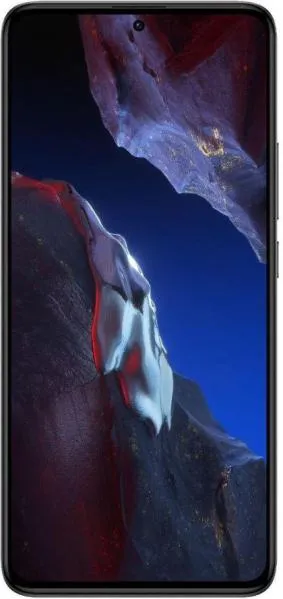
1. Specifications Comparison
| Feature | Huawei Mate X3 | Xiaomi Poco F5 Pro | Practical Impact |
|---|---|---|---|
| Design | |||
| Dimensions (mm) | 156.9 x 141.5 x 5.3 (folded) | 162.8 x 75.4 x 8.6 | Mate X3 significantly thinner and slightly shorter when folded, but wider. Poco F5 Pro is a traditional slab design. Foldability offers portability advantage for Mate X3, but potential durability concerns. |
| Weight (g) | 239 | 204 | Mate X3 noticeably heavier due to folding mechanism and dual displays. |
| Foldable | Yes | No | Mate X3 offers a larger screen real estate in a smaller folded size, enhancing multitasking and media consumption on the go. |
| Display | |||
| Display Type | Foldable OLED, 120Hz | AMOLED, 120Hz, Dolby Vision, HDR10+ | Both offer smooth refresh rates. Mate X3's folding OLED provides a unique, expansive experience. Poco F5 Pro's AMOLED with Dolby Vision and HDR10+ delivers superior visual quality with brighter highlights and richer colors for media consumption. |
| Display Size (inches) | 7.85 (unfolded), ~6.4" (outer) | 6.67 | Mate X3 offers significantly larger screen real estate when unfolded, beneficial for productivity and media. Poco F5 Pro offers a large, standard size screen. |
| Resolution | 2224 x 2496 (unfolded), 1080 x 2504 (outer) | 1440 x 3200 | Both offer sharp displays. Mate X3's unfolded resolution provides more detail for multitasking. |
| Performance | |||
| Chipset | Snapdragon 8+ Gen 1 4G (4 nm) | Snapdragon 8+ Gen 1 (4 nm) | Virtually identical performance expected in most tasks. However, Mate X3 lacks 5G connectivity, a significant disadvantage in areas with 5G coverage. |
| CPU | Octa-core (1x3.19 GHz X2 & 3x2.75 GHz A710 & 4x2.0 GHz A510) | Octa-core (1x3.0 GHz X2 & 3x2.5 GHz A710 & 4x1.80 GHz A510) | Minor clock speed differences likely negligible in real-world usage. |
| GPU | Adreno 730 | Adreno 730 | Same GPU, similar graphics performance expected. |
| RAM | 8GB/12GB | 8GB/12GB | Both offer ample RAM for smooth multitasking. |
| Camera | |||
| Main Camera | 50MP, f/1.8, Sony IMX766 | 64MP, f/1.79, Omnivision OV64B | Poco F5 Pro has a higher resolution main sensor, but sensor size and image processing play a larger role in final image quality. Real-world comparison needed. |
| Ultrawide | 13MP, f/2.2 | 8MP, f/2.2 | Mate X3 offers a slightly higher resolution ultrawide, though practical differences may be minimal. |
| Telephoto | 12MP Periscope, f/3.4, 5x Optical Zoom | No dedicated telephoto | Mate X3's dedicated telephoto lens allows for significantly better optical zoom capabilities compared to Poco F5 Pro's digital zoom. |
| Battery | |||
| Capacity | 4800 mAh | 5160 mAh | Poco F5 Pro has a larger battery capacity, potentially offering longer battery life. However, Mate X3's larger display may consume more power, offsetting the difference. |
2. Key Differences Analysis
Huawei Mate X3 Advantages:
- Foldable Design: Offers larger screen real estate in a portable form factor, enabling enhanced multitasking and media consumption.
- Superior Zoom Capabilities: Dedicated periscope telephoto lens provides significantly better optical zoom than the Poco F5 Pro.
- Outer Display: Allows for quick tasks without unfolding.
Xiaomi Poco F5 Pro Advantages:
- 5G Connectivity: Future-proofs the device and enables faster download/upload speeds in areas with 5G coverage.
- Larger Battery: Potentially longer battery life compared to the Mate X3.
- Lower Price: Significantly more affordable than the Mate X3.
- Dolby Vision and HDR10+: Superior display technology for a more immersive visual experience.
3. User Profiles & Recommendations
Huawei Mate X3: Ideal for users who prioritize portability and a large screen for multitasking and media consumption and are willing to pay a premium price. Best suited for professionals, content creators, or heavy media consumers who value the unique form factor and are in an area with limited or no 5G coverage.
Xiaomi Poco F5 Pro: Ideal for users seeking a powerful, well-rounded smartphone with excellent performance, a great display, and long battery life at a more affordable price. Best for users who prioritize 5G connectivity, value for money, and multimedia consumption.
4. Decision Framework
Key Questions for Buyers:
- Is foldability a priority? Are you willing to pay a significant premium for the portability and larger screen offered by a foldable device?
- How important is 5G connectivity? Do you live in an area with 5G coverage, or do you anticipate needing it in the near future?
- What's your budget? The Mate X3 falls in the "high price" range, while the Poco F5 Pro is in the "medium price" range.
My Choice: Xiaomi Poco F5 Pro
While the Mate X3's folding technology is impressive, the lack of 5G is a significant drawback for a 2023 flagship device. The Poco F5 Pro provides a compelling combination of performance, display quality, battery life, and affordability. For the vast majority of users, the Poco F5 Pro offers better value. The price difference is substantial, and the Poco F5 Pro still delivers a high-quality user experience without compromising on essential features. Unless foldability is an absolute necessity, the Poco F5 Pro is the more sensible choice. Furthermore, the inclusion of 5G future-proofs the device for several years.
