
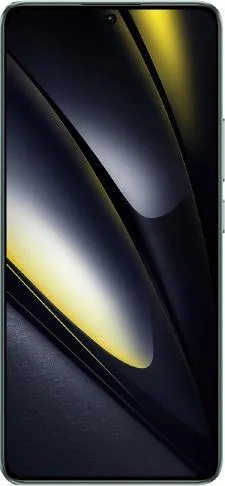
1. Specifications Comparison
| Feature | HTC U23 Pro | Xiaomi Poco F6 | Practical Impact |
|---|---|---|---|
| Design | |||
| Dimensions (mm) | 166.6 x 77.1 x 8.9 | 160.5 x 74.5 x 8.0 | Poco F6 is slightly smaller and thinner, potentially easier to handle. |
| Weight (g) | 205 | 179 | Poco F6 is noticeably lighter, reducing hand fatigue during extended use. |
| Display | |||
| Size (inches) | 6.7 | 6.67 | Negligible size difference. |
| Resolution (px) | 1080 x 2400 | 1220 x 2712 | Poco F6 has a sharper display with significantly higher pixel density, resulting in crisper text and images. |
| Type | OLED, 120Hz | AMOLED, 120Hz, HDR10+, Dolby Vision | Both offer smooth scrolling with 120Hz. Poco F6's AMOLED with HDR10+ and Dolby Vision provides superior color accuracy, contrast, and dynamic range for a more immersive viewing experience. |
| Peak Brightness (nits) | Not specified | 2400 | Poco F6's much higher peak brightness ensures better visibility in direct sunlight. Lack of specified brightness for the U23 Pro makes direct comparison impossible. |
| Performance | |||
| Chipset | Snapdragon 7 Gen 1 | Snapdragon 8s Gen 3 | Poco F6 boasts a significantly more powerful processor, leading to faster app loading, smoother multitasking, and better gaming performance. |
| CPU | Octa-core (1x2.4 GHz A710 & 3x2.36 GHz A710 & 4x1.8 GHz A510) | Octa-core (1x3.0 GHz X4 & 4x2.8 GHz A720 & 3x2.0 GHz A520) | Poco F6's CPU architecture and higher clock speeds deliver a substantial performance advantage. |
| GPU | Adreno 644 | Adreno 735 | Poco F6's more powerful GPU translates to smoother graphics and higher frame rates in demanding games. |
| RAM (GB) | 8/12 | 8/12 | Both offer configurations with ample RAM for multitasking. |
| Camera | |||
| Main Camera (MP) | 108 | 50 | While U23 Pro has higher megapixels, Poco F6 uses a larger Sony IMX882 sensor with larger pixel size (when binned) and wider aperture (f/1.6), potentially capturing more light and detail in various conditions. Megapixel count alone is not indicative of overall camera quality. |
| Video Capabilities | 4K@30fps | Up to 8K Video, 4k@60fps, Slow Motion 240fps | Poco F6 supports higher resolution and frame rate video recording, including 8K and 4K@60fps, providing smoother and more detailed videos. Its 240fps slow-motion capability is significantly better than U23 Pro's 120fps. |
| Battery | |||
| Capacity (mAh) | 4600 | 5000 | Poco F6's larger battery capacity suggests longer battery life. |
2. Key Differences Analysis
HTC U23 Pro Advantages:
- Potentially wider availability: Being an older model, it might be more readily available in certain regions.
Xiaomi Poco F6 Advantages:
- Significantly better performance: The Snapdragon 8s Gen 3 chip provides a substantial performance advantage for demanding tasks and gaming.
- Superior display: The AMOLED display with HDR10+ and Dolby Vision offers richer colors, deeper blacks, and higher brightness.
- More advanced camera system: Despite lower megapixel count on the main sensor, the Poco F6 likely delivers better image quality due to a larger sensor, wider aperture, and advanced features.
- Larger battery: The 5000mAh battery potentially provides longer usage time.
- More recent software: Ships with Android 14 and has a longer software update roadmap.
3. User Profiles & Recommendations
HTC U23 Pro:
- Casual users: Suitable for users with basic needs like calling, texting, browsing, and light social media usage.
- Budget-conscious buyers: Might be a more affordable option if found at a discounted price.
Xiaomi Poco F6:
- Power users: Ideal for users who demand high performance for gaming, multitasking, and demanding applications.
- Content creators: The superior camera and display make it suitable for photography and videography enthusiasts.
- Tech enthusiasts: Those who appreciate the latest hardware and software features.
4. Decision Framework
Key Questions for Buyers:
- What is your budget? The Poco F6, while offering more value, might be slightly more expensive.
- What are your primary use cases? For demanding tasks, the Poco F6 is clearly superior. For basic usage, the U23 Pro might suffice.
- How important are display quality and camera performance? The Poco F6 significantly outperforms the U23 Pro in these areas.
Scenario-Based Recommendations:
- Tight budget, basic usage: HTC U23 Pro
- Prioritize performance and latest features: Xiaomi Poco F6
- Focus on multimedia consumption and creation: Xiaomi Poco F6
My Choice: Xiaomi Poco F6
Reasons:
The Xiaomi Poco F6 offers a compelling package with significantly better performance, a superior display, a more advanced camera system, and a larger battery. While the HTC U23 Pro might be a viable option for budget-conscious buyers with basic needs, the Poco F6's superior hardware and future-proof features make it a much better investment for most users. The performance difference alone, driven by the Snapdragon 8s Gen 3, would greatly enhance daily usage and provide a smoother, more responsive experience. The improved display and camera are substantial bonuses. Even if the Poco F6 is slightly more expensive, the value proposition is significantly stronger.
