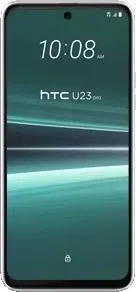

1. Specifications Comparison
| Feature | HTC U23 Pro | Google Pixel 8 Pro | Practical Impact |
|---|---|---|---|
| Design | |||
| Dimensions (mm) | 166.6 x 77.1 x 8.9 | 162.6 x 76.5 x 8.8 | Pixel 8 Pro is slightly smaller and more compact. |
| Weight (g) | 205 | 213 | Negligible weight difference in practical use. |
| Build Material | Not specified | Not specified | Unable to compare build quality and durability. |
| Display | |||
| Size (inches) | 6.7 | 6.7 | Same screen size. |
| Resolution (pixels) | 1080 x 2400 | 1344 x 2992 | Pixel 8 Pro has a significantly sharper display with higher pixel density (489 vs 393 ppi), resulting in crisper text and images. |
| Panel Type | OLED, 120Hz | LTPO OLED, 120Hz, HDR10+ | Both offer smooth scrolling with 120Hz. Pixel 8 Pro benefits from LTPO for better power efficiency and HDR10+ for enhanced dynamic range in supported content. Pixel 8 Pro also boasts much higher peak brightness. |
| Performance | |||
| Chipset | Snapdragon 7 Gen 1 | Google Tensor G3 | Tensor G3 is generally considered more powerful, particularly in AI tasks, but real-world performance differences need further benchmarking. |
| CPU | Octa-core (1x2.4 GHz Cortex-A710 & 3x2.36 GHz Cortex-A710 & 4x1.8 GHz Cortex-A510) | Nona-core (1x3.0 GHz Cortex-X3 & 4x2.45 GHz Cortex-A715 & 4x2.15 GHz Cortex-A510) | Pixel 8 Pro has a more modern CPU architecture, potentially offering better performance and efficiency. |
| RAM (GB) | 8/12 | 12 | Pixel 8 Pro offers more RAM in its base configuration, enabling better multitasking. |
| Camera | |||
| Rear Camera (MP) | 108MP Main, 8MP Wide, 5MP Depth, 2MP Macro | 50MP Main, 48MP Wide/Macro, 48MP Telephoto | Pixel 8 Pro utilizes fewer, but higher-quality sensors, especially the main and telephoto lenses. Pixel's advanced computational photography should result in superior image quality. |
| Video Recording | 4K@30fps | Up to 4K@60fps | Pixel 8 Pro offers more versatile video recording options with higher frame rates and HDR support. |
| Battery | |||
| Capacity (mAh) | 4600 | 5050 | Pixel 8 Pro has a larger battery capacity, likely leading to longer battery life. |
2. Key Differences Analysis
HTC U23 Pro Advantages:
- Potentially lower price.
Google Pixel 8 Pro Advantages:
- Superior Display: Sharper, more vibrant, and more power-efficient.
- More Powerful Performance: Faster processor and more RAM for smoother multitasking.
- Advanced Camera System: Higher quality sensors and Google's computational photography should deliver significantly better photos and videos.
- Larger Battery: Potentially longer battery life.
- Latest Software: Ships with Android 14 and guaranteed longer updates.
3. User Profiles & Recommendations
HTC U23 Pro: Budget-conscious users who prioritize basic smartphone functionality and a large screen.
Google Pixel 8 Pro: Users who value a premium smartphone experience with top-tier camera performance, a stunning display, and long-term software support. Excellent for photography enthusiasts, content creators, and power users.
4. Decision Framework
Key Questions for Buyers:
- What is your budget? The Pixel 8 Pro is significantly more expensive.
- What are your primary smartphone usage patterns? (e.g., photography, gaming, social media)
- How important are software updates and long-term support?
Scenario-Based Recommendations:
- Limited Budget: HTC U23 Pro
- Best Camera and Overall Experience: Google Pixel 8 Pro
My Choice: Google Pixel 8 Pro
While pricing information is variable and the HTC U23 Pro might be more affordable, the Google Pixel 8 Pro offers a significant upgrade in almost every aspect. The superior display, powerful performance, cutting-edge camera system, larger battery, and the promise of longer software updates make it the clear winner for me. I prioritize a smooth, premium user experience and excellent photography capabilities, and the Pixel 8 Pro delivers on both fronts. The advancements in camera technology and AI processing, coupled with the sharper display and faster performance, justify the higher price for my needs.
