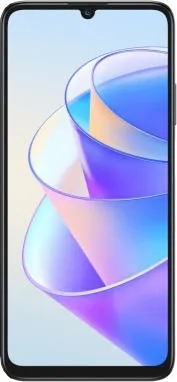
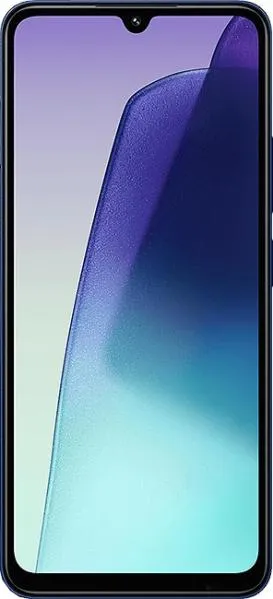
Honor X7a vs. Xiaomi Redmi 14C: A Deep Dive for the Discerning Smartphone Buyer
The mid-range smartphone market is fiercely competitive, with manufacturers constantly vying for your attention. Today, we'll dissect two contenders: the Honor X7a and the Xiaomi Redmi 14C. By blending technical expertise with real-world insights, we'll equip you to choose the device that best aligns with your needs.
1. Specifications Breakdown
| Feature | Honor X7a | Xiaomi Redmi 14C | Real-World Implications |
|---|---|---|---|
| Design | |||
| Dimensions (mm) | 167.5 x 76.9 x 8.3 | 171.9 x 77.8 x 8.2 | Redmi 14C is slightly larger and heavier. Negligible difference in daily use. |
| Weight (g) | 196 | 211 | X7a is noticeably lighter, enhancing one-handed use and reducing pocket fatigue. |
| Display | |||
| Size (inches) | 6.75 | 6.88 | Redmi 14C offers a marginally larger screen, but both are large enough for media consumption. |
| Resolution (px) | 720 x 1600 | 720 x 1640 | Virtually identical pixel density; sharpness will be indistinguishable to the naked eye. |
| Refresh Rate (Hz) | - | 120 | Redmi 14C's 120Hz refresh rate delivers noticeably smoother scrolling and animations, a major advantage. |
| Display Type | TFT LCD | IPS LCD | IPS LCD generally offers better color accuracy and viewing angles than TFT LCD. A significant difference. |
| Performance | |||
| Chipset | Helio G37 | Helio G81 Ultra | G81 Ultra offers significantly better CPU and GPU performance, translating to faster app loading and smoother gaming. |
| CPU | Octa-core (4x2.3 GHz Cortex-A53 & 4x1.7 GHz Cortex-A53) | Octa-core (2x2.0 GHz Cortex-A75 & 6x1.8 GHz Cortex-A55) | Redmi 14C's CPU architecture is more modern and efficient, resulting in better performance. |
| RAM (GB) | 4/6 | 4/6/8 | Both offer ample RAM for everyday tasks. The Redmi 14C's 8GB option provides headroom for future-proofing. |
| OS | Android 12 | Android 14 | Redmi 14C ships with a newer Android version, offering potential feature and security advantages. |
| Camera | |||
| Main Camera (MP) | 50 | 50 | Comparable main camera resolution. Image quality will depend on sensor and software processing; details are limited. |
| Selfie Camera (MP) | 8 | 13 | Redmi 14C boasts a higher resolution selfie camera. |
| Battery Life | |||
| Capacity (mAh) | 6000 | 5160 | Honor X7a has a significantly larger battery, promising longer usage time. |
2. Key Insights
- Performance: The Redmi 14C's Helio G81 Ultra chipset significantly outperforms the Honor X7a's Helio G37. This translates to a smoother, more responsive user experience, especially in demanding tasks like gaming or multitasking.
- Display: While both phones have similar resolutions, the Redmi 14C's 120Hz refresh rate and IPS LCD technology provide a superior visual experience with smoother animations and better color reproduction. The X7a's TFT LCD is a noticeable downgrade.
- Battery: The Honor X7a boasts a significantly larger battery, likely resulting in considerably longer usage time between charges. This could be a deciding factor for heavy users.
- Software: The Redmi 14C comes with Android 14, giving it a two-generation advantage in software updates and features over the X7a's Android 12.
- Price: Both phones target the mid-range market, but specific pricing will vary by region and configuration. Considering the performance and feature differences, the Redmi 14C offers better value if the price difference is minimal.
3. User Profiles and Recommendations
- Honor X7a: Best suited for budget-conscious users who prioritize long battery life and basic smartphone functionality. Light users who primarily use their phones for calling, texting, and social media will find the X7a adequate.
- Xiaomi Redmi 14C: Ideal for users who value performance, a smooth display, and a more up-to-date software experience. Gamers, multitaskers, and those who consume a lot of media will appreciate the Redmi 14C's superior capabilities.
4. Buying Decision Framework
- What is your budget? If price is the primary concern, the Honor X7a might be more appealing. However, a small price difference might make the Redmi 14C the better value proposition.
- What are your primary smartphone usage patterns? For basic tasks, the X7a suffices. For demanding applications and media consumption, the Redmi 14C's performance and display are crucial.
- How important is battery life to you? If all-day battery life is non-negotiable, the X7a's larger battery capacity is a significant advantage.
My Choice: Xiaomi Redmi 14C
While the Honor X7a's battery life is tempting, the Xiaomi Redmi 14C is the clear winner for me. The significantly improved performance thanks to the Helio G81 Ultra, the smoother 120Hz IPS display, and the newer Android 14 software make it a more future-proof and enjoyable device to use. These advantages outweigh the smaller battery, especially considering the advancements in fast charging technology. In the fast-paced world of mobile technology, I prioritize a responsive and enjoyable user experience, and the Redmi 14C delivers precisely that. The slightly larger size wouldn't deter me, and the potential price premium would be a worthwhile investment for the long term.
