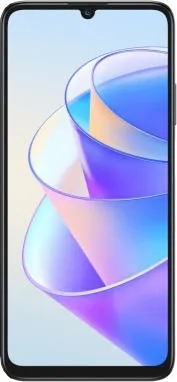
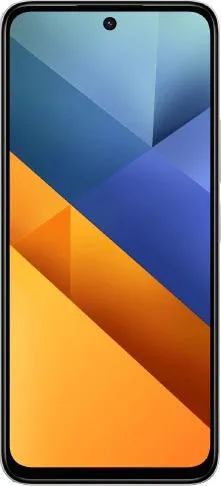
Honor X7a vs. Xiaomi Poco M6 4G: A Detailed Comparison
Let's dive into a head-to-head comparison of the Honor X7a and the Xiaomi Poco M6 4G, dissecting their specs and uncovering what they truly offer in real-world usage.
1. Specifications Breakdown
| Feature | Honor X7a | Xiaomi Poco M6 4G | Real-World Implications |
|---|---|---|---|
| Design | |||
| Dimensions (mm) | 167.5 x 76.9 x 8.3 | 168.6 x 76.3 x 8.3 | Poco M6 4G is slightly taller and thicker. Negligible difference in hand feel. |
| Weight (g) | 196 | 205 | Poco M6 4G is slightly heavier. |
| Display | |||
| Size (inches) | 6.75 | 6.79 | Both offer large screens suitable for media consumption. |
| Resolution | 720 x 1600 | 1080 x 2460 | Poco M6 4G boasts significantly sharper visuals and more screen real estate. |
| Type | TFT LCD | IPS LCD, 90Hz | Poco M6 4G's IPS LCD with a 90Hz refresh rate delivers smoother animations and scrolling. |
| Density (PPI) | 260 | 396 | Poco M6 4G's higher pixel density results in crisper text and images. |
| Performance | |||
| Chipset | Helio G37 | Helio G91 Ultra | Poco M6 4G offers noticeably better CPU and GPU performance for demanding tasks and gaming. |
| CPU | Octa-core (4x2.3 GHz Cortex-A53 & 4x1.7 GHz Cortex-A53) | Octa-core (2x2.0 GHz Cortex-A75 & 6x1.8 GHz Cortex-A55) | Poco M6 4G has a more powerful and efficient CPU architecture. |
| GPU | PowerVR GE8320 | Mali-G52 MC2 | Poco M6 4G offers superior graphics performance for gaming. |
| RAM | 4GB/6GB | 6GB/8GB | Poco M6 4G provides more RAM for multitasking and smoother performance. |
| Camera | |||
| Rear Main | 50MP | 108MP | Poco M6 4G boasts a higher resolution main sensor, potentially capturing more detail. |
| Front | 8MP | 13MP | Poco M6 4G has a higher resolution selfie camera. |
| Battery Life | |||
| Capacity (mAh) | 6000 | 5030 | Honor X7a offers a larger battery capacity, potentially lasting longer. |
2. Key Insights
- Display: The Poco M6 4G's higher resolution, IPS LCD technology, and 90Hz refresh rate provide a vastly superior visual experience compared to the Honor X7a's TFT LCD.
- Performance: The Poco M6 4G significantly outperforms the Honor X7a in processing power and graphics capabilities due to its more advanced chipset, CPU, and GPU. This translates to smoother multitasking, faster app loading, and better gaming performance.
- Camera: While the Poco M6 4G has a higher resolution main camera sensor, real-world image quality depends on factors beyond megapixels. However, its improved sensor and processing capabilities suggest better overall photo and video quality.
- Battery Life: The Honor X7a's larger battery likely provides longer usage time, but the Poco M6 4G's more efficient processor could offset this difference. Real-world battery life will depend on individual usage patterns.
3. User Profiles and Recommendations
- Honor X7a: Best suited for budget-conscious users prioritizing long battery life and basic smartphone functionality. Ideal for calling, texting, social media browsing, and light media consumption.
- Xiaomi Poco M6 4G: A better choice for users who value performance, a smooth display, and better camera capabilities. Suitable for gaming, demanding apps, media creation, and those seeking a more responsive user experience.
4. Buying Decision Framework
- What is your budget? The Honor X7a is generally more affordable.
- What are your primary smartphone uses? If it's basic communication and light tasks, the X7a might suffice. For demanding tasks and gaming, the Poco M6 4G is superior.
- How important is display quality? If a smooth, sharp display is crucial, the Poco M6 4G is the clear winner.
My Choice: I would choose the Xiaomi Poco M6 4G. While the Honor X7a offers a larger battery, the Poco M6 4G's superior performance, significantly better display, more modern OS, and enhanced camera capabilities outweigh the battery advantage for me. I prioritize a smooth and responsive user experience, which the Poco M6 4G delivers. The price difference is modest considering the substantial performance gap. The Poco M6 4G represents a better long-term investment due to its future-proof features.
