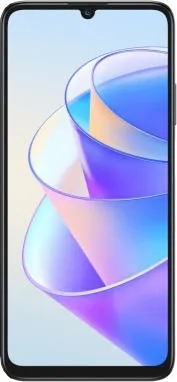
Honor X7a vs. realme 8: A Deep Dive for the Discerning Smartphone Buyer
The mid-range smartphone market is fiercely competitive, with manufacturers vying for your attention with a dizzying array of features and specifications. Today, we'll dissect two contenders – the Honor X7a and the realme 8 – to help you navigate this landscape and choose the device that best fits your needs.
1. Specifications Breakdown
| Feature | Honor X7a | realme 8 | Real-World Implications |
|---|---|---|---|
| Design | |||
| Dimensions (mm) | 167.5 x 76.9 x 8.3 | 162 x 75.1 x 8.7 | X7a is taller and slightly wider, realme 8 is thicker. |
| Weight (g) | 196 | 191 | Negligible difference in weight; both feel substantial in hand. |
| Display | |||
| Size (inches) | 6.75 | 6.78 | Virtually identical screen real estate. |
| Resolution (px) | 720 x 1600 | 1264 x 2780 | Realme 8 offers significantly sharper visuals due to much higher resolution. |
| Display Type | TFT LCD | LTPO AMOLED | Realme 8's AMOLED delivers vibrant colors, deeper blacks, and improved power efficiency; LTPO enables adaptive refresh rate for smoother scrolling and battery savings. |
| Refresh Rate (Hz) | - (assumed 60Hz) | 120 | Realme 8 will feel much smoother and more responsive, especially for gaming and scrolling. |
| Performance | |||
| Chipset | Mediatek Helio G37 | Qualcomm Snapdragon 7+ Gen 3 | Realme 8 boasts a vastly more powerful processor, enabling significantly faster performance in demanding tasks and games. |
| CPU | Octa-core (4x2.3 GHz Cortex-A53 & 4x1.7 GHz Cortex-A53) | Octa-core (1x2.8 GHz Cortex-X4 & 4x2.6 GHz Cortex-A720 & 3x1.9 GHz Cortex-A520) | The realme 8's CPU architecture is far more advanced, offering superior single-core and multi-core performance. |
| RAM (GB) | 4/6 | 12 | Realme 8 offers substantially more RAM for effortless multitasking and smooth app switching. |
| Camera | Incomplete data for realme 8 prevents detailed comparison. | ||
| Main Camera (MP) | 50 | - | |
| Battery Life | |||
| Capacity (mAh) | 6000 | 5500 | Honor X7a offers a larger battery, but real-world battery life depends on optimization and usage patterns. Realme 8's LTPO display can help conserve power. |
2. Key Insights
The realme 8 emerges as the clear winner in terms of performance and display. Its Snapdragon 7+ Gen 3 chipset, coupled with 12GB of RAM and a 120Hz LTPO AMOLED display, delivers a premium user experience. This translates to smoother gaming, faster app loading, vibrant visuals, and potentially longer battery life thanks to the adaptive refresh rate.
The Honor X7a, on the other hand, focuses on battery capacity and affordability. Its massive 6000mAh battery will likely appeal to users who prioritize all-day endurance. However, its less powerful processor and lower resolution TFT LCD screen result in a noticeable performance gap compared to the realme 8.
3. User Profiles and Recommendations
Honor X7a: Best suited for budget-conscious users who prioritize long battery life and primarily use their phones for basic tasks like calling, texting, social media browsing, and light web browsing.
realme 8: Ideal for users who demand a smooth and responsive experience, enjoy mobile gaming, consume multimedia content, and value a vibrant display. Power users and those looking for a future-proof device will find the realme 8 more appealing.
4. Buying Decision Framework
- What is your budget? The Honor X7a is likely more affordable.
- What are your primary phone usage patterns? Basic tasks vs. demanding applications and gaming.
- How important is display quality and overall performance? The realme 8 significantly outperforms the Honor X7a in these areas.
My Choice: I would choose the realme 8. While the Honor X7a offers a larger battery, the superior performance, vibrant display, and future-proof specifications of the realme 8 make it a far more compelling device for my needs. I prioritize a smooth user experience, fast app loading, and a high-quality display, and I am willing to compromise slightly on battery capacity to achieve this. The significant jump in processing power and the inclusion of a 120Hz LTPO AMOLED display are game-changers that significantly enhance daily usability and enjoyment. Even with slightly less battery capacity, the realme 8's power-efficient display and chipset likely result in comparable, if not better, real-world battery performance.
