1. Specifications Comparison
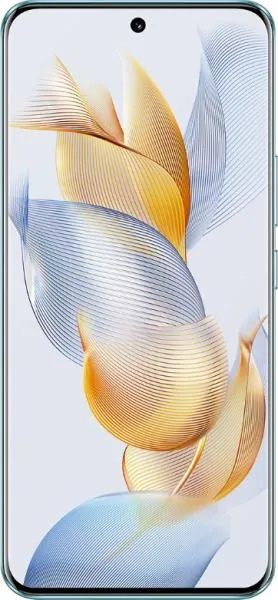
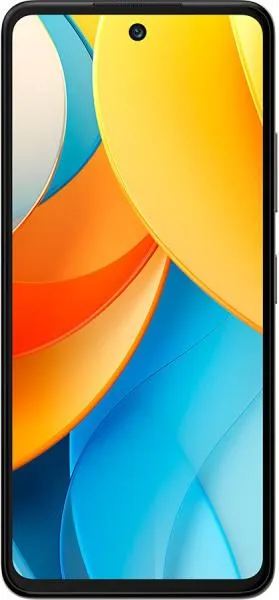
| Feature | Honor 90 | ZTE Blade V60 Design | Practical Impact |
|---|---|---|---|
| Design | |||
| Dimensions (mm) | 161.9 x 74.1 x 7.8 | 164.2 x 75.3 x 8.6 | The Honor 90 is noticeably thinner and slightly shorter. The ZTE is wider and heavier overall. |
| Weight (g) | 183 | 198 | The Honor 90 will feel significantly lighter and more comfortable for extended use. |
| Build | Not specified | Not specified | Build quality impact on durability and premium feel cannot be assessed. |
| Display | |||
| Display Type | AMOLED, 120Hz | IPS LCD, 90Hz | The Honor 90's AMOLED offers deeper blacks, more vibrant colors, and better power efficiency. Its higher refresh rate provides smoother animations and scrolling. |
| Resolution | 1200 x 2664 | 720 x 1612 | The Honor 90 has a significantly sharper and more detailed display. The ZTE's lower resolution will result in noticeable pixelation, especially with text and images. |
| Pixel Density (PPI) | 435 | 267 | Reinforces the sharpness difference; the Honor 90's display is much crisper. |
| Peak Brightness | 1600 nits | Not specified | Honor 90's high peak brightness ensures better visibility in direct sunlight. The lack of data for the ZTE prevents comparison. |
| Performance | |||
| Chipset | Snapdragon 7 Gen 1 Accelerated | Unisoc T606 | The Snapdragon chip in the Honor 90 provides significantly better performance and efficiency for demanding tasks, gaming, and multitasking. |
| CPU | Octa-core (1x2.5 GHz A710 & 3x2.36 GHz A710 & 4x1.8 GHz A510) | Octa-core (2x1.6 GHz A75 & 6x1.6 GHz A55) | The Honor 90 has a more powerful CPU architecture, resulting in faster app loading, smoother performance, and better handling of demanding applications. |
| GPU | Adreno 644 | Mali-G57 MP1 | The Honor 90's GPU delivers superior graphics performance for gaming and visually intensive tasks. |
| RAM | 8GB (listed example) | 4/6GB | While the specific Honor 90 version wasn't specified, 8GB offers smoother multitasking compared to 4GB, though less crucial than the chipset difference. 6GB on the ZTE bridges the gap slightly. |
| Camera | |||
| Main Camera | 200MP, f/1.9 | 50MP, f/1.8 | The Honor 90 boasts a much higher resolution main sensor. However, megapixels alone don't guarantee better image quality. Practical image comparison is needed. |
| Ultrawide | 12MP, f/2.2 | Not specified | The Honor 90 offers ultrawide photography, allowing for broader shots. The ZTE's ultrawide capabilities are unclear. |
| Video | 4K@30fps with EIS | 1080p@30fps | The Honor 90 can record higher resolution video with electronic image stabilization. |
| Battery | |||
| Capacity | 5000mAh | 5000mAh | Both phones have the same battery capacity, but real-world battery life will depend on software optimization and display efficiency. |
2. Key Differences Analysis
Honor 90 Advantages:
- Significantly better performance: The Snapdragon chip and superior CPU/GPU provide a much smoother and more responsive user experience.
- Superior display: The AMOLED with 120Hz offers vibrant colors, deep blacks, and smooth scrolling. The higher resolution makes a huge difference in clarity.
- More capable camera system: Higher resolution main sensor and confirmed ultrawide lens offer more versatility. 4K video recording is also a plus.
ZTE Blade V60 Design Advantages:
- Lower price: Significantly more affordable.
3. User Profiles & Recommendations
Honor 90: Users who prioritize performance, a high-quality display, and a versatile camera. Suitable for demanding tasks like gaming, content creation, and media consumption.
ZTE Blade V60 Design: Budget-conscious users who primarily use their phone for basic tasks like calling, texting, social media browsing, and light web browsing. Not recommended for demanding users.
4. Decision Framework
Key Questions for Buyers:
- What is your budget? The ZTE is significantly cheaper.
- What are your primary phone usage patterns? For basic tasks, the ZTE might suffice. Demanding users will need the Honor 90.
- How important is display quality and performance? The Honor 90 significantly outperforms the ZTE in these areas.
My Choice: Honor 90
Why? Although more expensive, the Honor 90 offers a vastly superior user experience due to its significantly better performance, stunning display, and more capable camera system. The difference in chipset alone would heavily sway me towards the Honor 90. For the long-term usability and enjoyment of a smartphone, the investment in the Honor 90 seems justified. The ZTE, while budget-friendly, compromises too much on crucial aspects like the display and performance, which would lead to a frustrating user experience in the long run.
