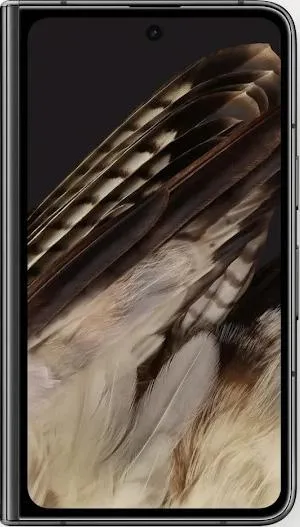
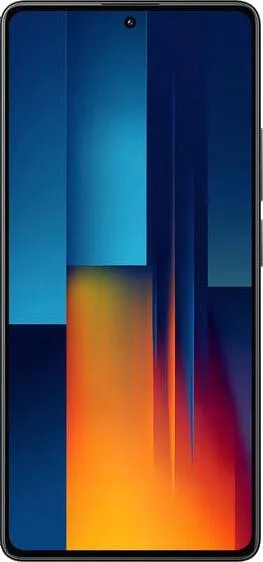
1. Specifications Comparison
| Feature | Google Pixel Fold | Xiaomi Poco M6 Pro | Practical Impact |
|---|---|---|---|
| Design | |||
| Form Factor | Foldable | Standard | Pixel Fold offers greater versatility with its folding screen, enabling tablet-like functionality and compact portability. Poco M6 Pro is a traditional slab phone. |
| Dimensions (mm) | 139.7 x 158.7 x 5.8 (folded) | 161.1 x 75 x 8 | Pixel Fold is significantly wider unfolded but thinner when folded. Poco M6 Pro is taller and thicker overall. Foldability impacts pocketability and one-handed usage. |
| Weight (g) | 283 | 179 | Pixel Fold is noticeably heavier due to its complex hinge mechanism and larger display. Poco M6 Pro offers a lighter, more comfortable in-hand feel. |
| Display | |||
| Display Type | Foldable OLED | AMOLED | Pixel Fold's folding OLED allows for a larger screen in a smaller device. Both offer vibrant colors and deep blacks thanks to OLED technology. |
| Size (inches) | 7.6 (unfolded), 5.8 (cover) | 6.67 | Pixel Fold offers a significantly larger main display for multitasking and media consumption, while the cover display provides standard phone functionality. |
| Resolution | 1840 x 2208 (unfolded), 1080 x 2092 (cover) | 1080 x 2400 | Pixel Fold's unfolded display offers higher resolution for sharper images and text. The cover display resolution is comparable to the Poco M6 Pro. |
| Refresh Rate (Hz) | 120 | 120 | Both phones offer smooth scrolling and animations with a 120Hz refresh rate. |
| Peak Brightness (nits) | 1450 | 1300 | Pixel Fold boasts slightly higher peak brightness, potentially offering better visibility in direct sunlight. |
| Performance | |||
| Chipset | Google Tensor G2 (5 nm) | Mediatek Helio G99 Ultra | Tensor G2 is generally considered a more powerful chipset, potentially offering better performance in demanding tasks and AI processing. |
| CPU | Octa-core (2x2.85 GHz Cortex-X1 & 2x2.35 GHz Cortex-A78 & 4x1.80 GHz Cortex-A55) | Octa-core (2x2.2 GHz Cortex-A76 & 6x2.0 GHz Cortex-A55) | Pixel Fold's CPU configuration suggests superior performance in demanding applications and multitasking. |
| GPU | Mali-G710 MP7 | Mali-G57 MC2 | Pixel Fold's GPU is significantly more powerful, enabling smoother gaming and faster graphics rendering. |
| RAM (GB) | 12 | 8 (in this configuration) | Pixel Fold offers more RAM for improved multitasking and app switching performance. Note that Poco M6 Pro has other configurations with varying RAM. |
| Camera | |||
| Rear Cameras | 48MP Main, 10.8MP Wide, 10.8MP Telephoto | 64MP Main, 8MP Wide, 2MP Depth | Pixel Fold's camera system, combined with Google's image processing, generally produces higher quality images, especially in challenging lighting conditions. Poco M6 Pro offers a higher resolution main sensor but may lack in overall image quality. |
| Video Recording | Up to 4K@60fps with HDR | Up to 1080p@60fps with EIS | Pixel Fold supports higher resolution and frame rate video recording with HDR, resulting in significantly better video quality. |
| Battery | |||
| Capacity (mAh) | 4821 | 5000 | Poco M6 Pro has a slightly larger battery capacity, potentially offering longer battery life. However, real-world battery life depends on various factors including usage patterns and software optimization. Pixel Fold's larger, higher resolution display will likely consume more power. |
2. Key Differences Analysis
Google Pixel Fold Advantages:
- Foldable Form Factor: Offers versatility and a larger screen in a pocketable device.
- Superior Performance: Tensor G2 chipset and more RAM provide a smoother user experience.
- Higher Quality Cameras: Google's computational photography and powerful hardware result in excellent image and video quality.
- Brighter Display: Enhanced visibility in bright sunlight.
Xiaomi Poco M6 Pro Advantages:
- Lower Price: Significantly more affordable.
- Lighter Weight: More comfortable for extended use.
- Larger Battery Capacity: Potentially longer battery life.
- Simpler Design: Less complex and potentially more durable than a foldable phone.
Trade-offs:
- Pixel Fold: Higher price, heavier weight, potential durability concerns associated with foldable displays.
- Poco M6 Pro: Lower performance, less capable cameras, less versatile form factor.
3. User Profiles & Recommendations
Google Pixel Fold: Ideal for users who value versatility, a large screen for productivity and media consumption, top-tier camera performance, and are willing to pay a premium for cutting-edge technology. Use Cases: Multitasking, media consumption, content creation, mobile gaming.
Xiaomi Poco M6 Pro: Suited for budget-conscious users who prioritize battery life and affordability over top-end performance and features. Use Cases: Everyday communication, social media browsing, light gaming, casual photography.
4. Decision Framework
Key Questions for Buyers:
- What is your budget? The Pixel Fold is significantly more expensive.
- How important is portability versus screen size? The foldable design of the Pixel Fold offers a unique balance.
- What are your primary use cases? Demanding tasks and content creation benefit from the Pixel Fold's performance, while basic usage is well-served by the Poco M6 Pro.
My Choice: Google Pixel Fold
While significantly more expensive, the Google Pixel Fold offers a compelling combination of innovation, performance, and versatility that aligns with my personal preferences. The foldable form factor provides a unique user experience that transitions seamlessly between a compact phone and a mini-tablet. The superior camera system, powerful Tensor G2 chip, and bright, high-refresh-rate display further solidify its position as a premium device. I prioritize performance, camera quality, and a cutting-edge user experience, making the Pixel Fold the clear winner for me, despite its higher price and weight. The Poco M6 Pro is a solid budget option, but it lacks the "wow" factor and premium experience I am looking for.
