1. Specifications Comparison
| Feature | Google Pixel Fold | Xiaomi Poco F6 Pro | Practical Impact |
|---|---|---|---|
| Design | |||
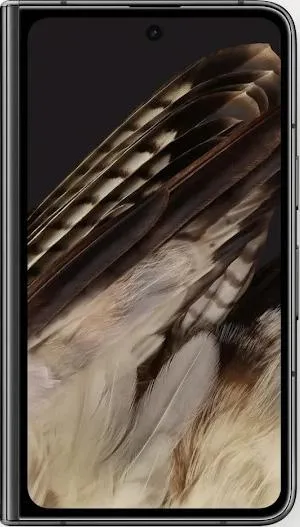
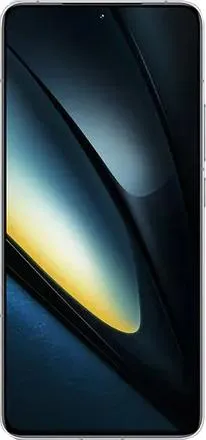
| Form Factor | Foldable | Slab | Pixel Fold offers greater portability when folded and a larger screen when unfolded, but is thicker and heavier. Poco F6 Pro provides a more traditional, pocketable design. |
| Dimensions (mm) | 139.7 x 158.7 x 5.8 (folded) | 160.9 x 75 x 8.2 | See above. |
| Weight (g) | 283 | 209 | Pixel Fold's weight might be noticeable in prolonged use. |
| Display | |||
| Display Type | Foldable OLED | AMOLED | Pixel Fold's folding display allows for tablet-like multitasking and content consumption. Poco F6 Pro's traditional AMOLED offers a brighter display (4000 nits peak vs 1450 nits). |
| Size (inches) | 7.6 (unfolded), 5.8 (cover) | 6.67 | Larger unfolded screen on Pixel Fold benefits productivity and media. Poco F6 Pro's screen is larger than Pixel Fold's cover screen. |
| Resolution (px) | 1840 x 2208 (unfolded), 1080 x 2092 (cover) | 1440 x 3200 | Both offer sharp displays. Pixel Fold's unfolded screen has a slightly lower pixel density due to its larger size but remains crisp. |
| Refresh Rate (Hz) | 120 | 120 | Both offer smooth scrolling and animations. |
| HDR | HDR10+ | HDR10+, Dolby Vision | Poco F6 Pro supports Dolby Vision, potentially offering better HDR performance in compatible content. |
| Performance | |||
| Chipset | Google Tensor G2 (5 nm) | Snapdragon 8 Gen 2 (4 nm) | Snapdragon 8 Gen 2 generally benchmarks higher in raw performance and efficiency than Tensor G2. This translates to faster app loading, smoother gaming, and potentially better battery life in the Poco F6 Pro. |
| CPU | Octa-core (2x2.85 GHz Cortex-X1 & 2x2.35 GHz Cortex-A78 & 4x1.80 GHz Cortex-A55) | Octa-core (1x3.2 GHz Cortex-X3 & 2x2.8 GHz Cortex-A715 & 2x2.8 GHz Cortex-A710 & 3x2.0 GHz Cortex-A510) | See above. |
| GPU | Mali-G710 MP7 | Adreno 740 | Adreno 740 generally provides a significant advantage in graphics performance compared to the Mali-G710 MP7, making the Poco F6 Pro better for demanding games. |
| RAM | 12GB | 12GB/16GB | Both offer ample RAM for multitasking; Poco F6 Pro offers a 16GB option for even more demanding users. |
| Camera | |||
| Main Camera (MP) | 48 | 50 | Both offer high-resolution main cameras. More megapixels don't guarantee better image quality, but the Poco F6 Pro's larger sensor (1/1.55") likely performs better in low light. |
| Video | Up to 4K@60fps with HDR | Up to 8K@24fps with EIS | Poco F6 Pro offers higher resolution video recording but Tensor G2 might offer better video processing capabilities in certain scenarios. |
| Battery | |||
| Capacity (mAh) | 4821 | 5000 | Poco F6 Pro has a slightly larger battery capacity, potentially offering longer battery life. However, real-world usage will depend on factors like screen usage and processing demands. |
2. Key Differences Analysis
Google Pixel Fold Advantages:
- Form Factor: The foldable design allows for unique use cases like tablet-style multitasking, watching videos on a larger screen, and improved portability.
- Software Experience: Pixel phones generally receive faster and longer software updates directly from Google, often with exclusive features.
Xiaomi Poco F6 Pro Advantages:
- Performance: The Snapdragon 8 Gen 2 offers a noticeable performance advantage, beneficial for gaming, demanding applications, and overall responsiveness.
- Display Brightness: Significantly brighter display for better outdoor visibility.
- Price: While both are in the "medium price" range, the Poco F6 Pro is generally more affordable.
- 8K video recording: Offers higher resolution video recording capabilities.
3. User Profiles & Recommendations
Google Pixel Fold Ideal User:
- Early adopters who value innovation and a unique form factor.
- Users who prioritize portability and a large screen for productivity and entertainment on the go.
- Users who heavily rely on Google services and timely software updates.
Xiaomi Poco F6 Pro Ideal User:
- Performance enthusiasts seeking the best possible speed and gaming experience.
- Budget-conscious users who want flagship-level performance at a lower price.
- Users who prioritize a bright, vibrant display for outdoor use.
4. Decision Framework
Key Questions for Buyers:
- Form Factor Priority: Is a foldable design with its unique benefits essential, or is a traditional slab phone preferred?
- Performance Needs: Is top-tier processing power for demanding tasks and gaming a primary requirement?
- Budget Constraints: How much are you willing to spend, considering the price difference between the two devices?
My Choice: Xiaomi Poco F6 Pro
While the Pixel Fold's foldable design is intriguing, the Poco F6 Pro's superior performance, brighter display, more affordable price, and excellent battery life make it the better overall choice for me. I prioritize a smooth and responsive user experience, particularly for gaming and multitasking, and the Snapdragon 8 Gen 2 delivers in this regard. The brighter display is also crucial for comfortable outdoor use. While I appreciate the innovation of foldable phones, the current price premium and potential durability concerns make the Poco F6 Pro a more practical and compelling option for my needs. The lack of a DxOMark score for the Poco F6 Pro doesn't deter me, as real-world camera comparisons and user reviews would be more informative in assessing image quality.
