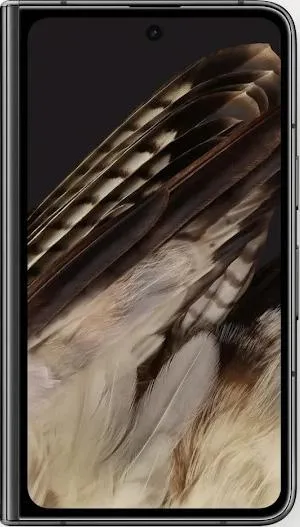
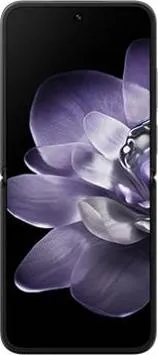
1. Specifications Comparison
| Feature | Google Pixel Fold | Xiaomi Mix Flip | Practical Impact |
|---|---|---|---|
| Design | |||
| Dimensions (mm) | 139.7 x 158.7 x 5.8 | 167.5 x 74 x 7.6 | Pixel Fold is wider unfolded, Mix Flip is taller and thinner folded. Mix Flip likely more pocketable. |
| Weight (g) | 283 | 190 | Mix Flip significantly lighter, reducing hand fatigue. |
| Foldable | Yes | Yes | Both offer large screen in a compact form factor. |
| Display | |||
| Display Type | Foldable OLED | Foldable LTPO AMOLED | Both high-quality; LTPO on Mix Flip potentially offers better power efficiency with dynamic refresh rate (although spec sheet doesn't confirm dynamic refresh rate functionality). |
| Display Size (inches) | 7.6 | 6.86 | Pixel Fold offers larger screen real estate for multitasking and media consumption. |
| Resolution | 1840 x 2208 | 1224 x 2912 | Mix Flip has a taller, narrower aspect ratio and higher pixel density (sharper image). Pixel Fold's aspect ratio is closer to a square, better for some apps. |
| Refresh Rate (Hz) | 120 | 120 | Both offer smooth scrolling and animations. |
| Peak Brightness (nits) | 1450 | 3000 | Mix Flip significantly brighter, improving outdoor visibility. |
| Performance | |||
| Chipset | Google Tensor G2 (5 nm) | Snapdragon 8 Gen 3 (4 nm) | Snapdragon 8 Gen 3 generally considered more powerful, leading to faster performance and better gaming. |
| CPU | Octa-core (2x2.85 GHz Cortex-X1 & 2x2.35 GHz Cortex-A78 & 4x1.80 GHz Cortex-A55) | Octa-core (1x3.3 GHz Cortex-X4 & 3x3.2 GHz Cortex-A720 & 2x3.0 GHz Cortex-A720 & 2x2.3 GHz Cortex-A520) | Mix Flip's newer architecture CPU likely offers better performance and efficiency. |
| GPU | Mali-G710 MP7 | Adreno 750 | Adreno 750 expected to provide superior graphics performance for demanding games and applications. |
| RAM (GB) | 12 | 12 | Both offer ample RAM for multitasking. |
| Camera | |||
| Rear Camera | 48MP Main, 10.8MP Wide, 10.8MP Telephoto | 50MP Main, 60MP Telephoto | Mix Flip boasts higher resolution telephoto; specific sensor performance needs further review (DxOMark missing for Mix Flip). Pixel Fold known for excellent image processing. |
| Video Capabilities | Up to 4K@60fps with HDR | Up to 8K@24fps with HDR | Mix Flip offers higher resolution video recording. |
| Battery | |||
| Capacity (mAh) | 4821 | 4780 | Similar battery capacities, real-world battery life depends on optimization and usage. |
| USB Version | 3.2 | 2.0 | Faster data transfer speeds on Pixel Fold. |
2. Key Differences Analysis
Pixel Fold Advantages:
- Larger main display: Better for multitasking and media consumption.
- Wider availability of global bands for international use.
- Google's software experience: Known for timely updates and AI integration.
- Faster data transfer with USB 3.2.
- Proven camera performance with Google's image processing.
Mix Flip Advantages:
- Significantly lighter and more pocketable.
- Brighter display for better outdoor visibility.
- More powerful processor and GPU for improved performance.
- Higher resolution telephoto camera and 8K video recording.
- Potentially more power efficient with LTPO display (though dynamic refresh rate not confirmed).
3. User Profiles & Recommendations
Pixel Fold: Users who prioritize a large foldable screen for productivity, multitasking, and media consumption. Travelers who need wider network band support.
Mix Flip: Users who value portability and a lightweight design. Content creators who need high-resolution video recording. Users who prioritize raw performance for gaming and demanding applications.
4. Decision Framework
Key Questions:
- Screen size vs. portability: Do you prioritize a larger screen for productivity or a smaller, more pocketable device?
- Performance vs. software experience: Is raw processing power crucial, or do you prefer a smooth, well-integrated software experience with timely updates?
- Camera needs: Do you require the best possible telephoto lens and high-resolution video recording, or is overall image quality and Google's computational photography more important?
My Choice: Xiaomi Mix Flip
While the Pixel Fold offers a compelling large-screen experience, I would choose the Xiaomi Mix Flip. The significantly lighter weight and more pocketable design are major factors for me in a foldable phone. The superior performance of the Snapdragon 8 Gen 3, along with the brighter display and higher resolution telephoto camera, further solidify my choice. While the lack of DxOMark scores and confirmation on dynamic refresh rate for the Mix Flip are slight concerns, the overall package leans heavily in its favor for my personal preferences. I prioritize portability and performance in a daily driver, and the Mix Flip seems to deliver excellently on those fronts.
