
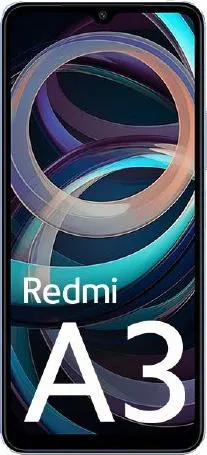
Google Pixel 8 vs. Xiaomi Redmi A3: A Deep Dive
Let's dissect the Google Pixel 8 and the Xiaomi Redmi A3, two smartphones targeting different segments of the market. My goal is to provide you with a clear understanding of their strengths, weaknesses, and ultimately, which one might be the right fit for you.
1. Specifications Breakdown
| Feature | Google Pixel 8 | Xiaomi Redmi A3 | Real-World Implications |
|---|---|---|---|
| Design | |||
| Dimensions | 150.5 x 70.8 x 8.9 mm | 168.3 x 76.3 x 8.3 mm | Pixel 8 is noticeably smaller and potentially easier to handle one-handed. Redmi A3 might feel bulkier. |
| Weight | 187g | 193g | Negligible weight difference in real-world usage. |
| Display | |||
| Display Type | OLED, 120Hz, HDR10+ | IPS LCD, 90Hz | Pixel 8's OLED offers deeper blacks, vibrant colors, and smoother scrolling thanks to the 120Hz refresh rate. Redmi A3's IPS LCD is less power-efficient and offers a lower refresh rate. |
| Resolution | 1080 x 2400 | 720 x 1650 | Pixel 8 boasts sharper visuals and clearer text due to higher resolution. |
| Peak Brightness | 2000 nits | 500 nits | Pixel 8's display will be significantly more visible in direct sunlight. |
| Performance | |||
| Chipset | Google Tensor G3 (4nm) | Mediatek Helio G36 (12nm) | Pixel 8's Tensor G3, built on a more advanced process, offers significantly faster performance, improved AI capabilities, and better power efficiency. Redmi A3's Helio G36 is a budget-focused chip with lower performance. |
| CPU | Octa-core (3.0 GHz X3...) | Octa-core (2.2 GHz A53...) | Pixel 8's CPU configuration is designed for high performance and demanding tasks. Redmi A3's CPU focuses on basic functionality and lighter apps. |
| GPU | Immortalis-G715s MC10 | PowerVR GE8320 | Pixel 8 provides a much more powerful graphical experience, enabling smooth gaming and faster rendering. Redmi A3's GPU will struggle with demanding games. |
| RAM/Storage | 256GB/8GB | 128GB/4GB or 6GB | Pixel 8 offers significantly more storage and RAM, enabling smoother multitasking and allowing you to keep more apps and files. |
| Battery | |||
| Capacity | 4575 mAh | 5000 mAh | While Redmi A3 has a larger battery, the Pixel 8's superior power efficiency might result in comparable or even better battery life. |
| Other | |||
| OS | Android 14 | Android 14 | Both run the latest Android version at launch. |
| USB | USB Type-C 3.2 | USB Type-C 2.0 | Pixel 8 offers faster data transfer speeds. |
2. Key Insights
The Pixel 8 is a clear flagship contender. Its Tensor G3 chip delivers blistering performance, the OLED display is stunning, and the camera system (not detailed here, but typically excellent in Pixel phones) is expected to be top-notch.
The Redmi A3 is a budget-friendly device prioritizing affordability. While it offers a large battery and the latest Android OS, its performance and display are significantly less impressive than the Pixel 8.
3. User Profiles and Recommendations
Pixel 8: For users who demand top-tier performance, a premium display, and a smooth user experience. Ideal for power users, gamers, photographers, and those who value a polished and feature-rich smartphone.
Redmi A3: Best suited for budget-conscious users who prioritize basic communication, web browsing, and light app usage. It's a good option for students, seniors, or anyone seeking a simple and affordable Android device.
4. Buying Decision Framework
- What is your budget? The Pixel 8 is a medium-priced phone; the Redmi A3 is a low-priced phone.
- What is your primary use case? Demanding tasks and multimedia consumption? Choose the Pixel 8. Basic communication and simple apps? The Redmi A3 might suffice.
- How important is long-term performance and software updates? The Pixel 8, with its powerful hardware and Google's commitment to updates, will likely offer a better long-term experience.
My Choice: Google Pixel 8
If I were choosing between these two phones, I would opt for the Google Pixel 8 without hesitation. While the Redmi A3 offers excellent value for its price, the Pixel 8's superior performance, vibrant display, and likely impressive camera capabilities are decisive factors for me. I value a smooth and responsive user experience, and the Pixel 8's powerful hardware and optimized software promise just that. The higher initial investment is justified by the long-term benefits of a more capable and future-proof device. The difference in build quality, display, and overall user experience would be significant enough to make the Pixel 8 the clear winner for my needs.
