
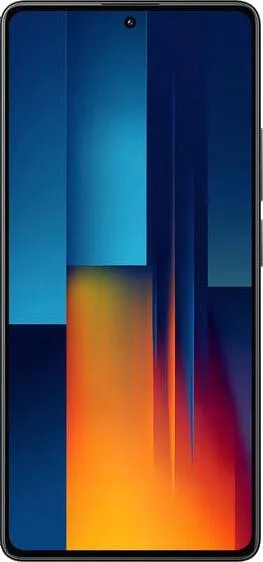
Let's dissect the Google Pixel 8 and the Xiaomi Poco M6 Pro, two intriguing contenders in the mid-range smartphone arena. My goal is to equip you with the knowledge to decide which phone best fits your needs.
1. Specifications Breakdown
| Feature | Google Pixel 8 | Xiaomi Poco M6 Pro | Real-World Implications |
|---|---|---|---|
| Design | |||
| Dimensions | 150.5 x 70.8 x 8.9 mm | 161.1 x 75 x 8 mm | Pixel 8 is noticeably more compact and pocketable. Poco M6 Pro is larger, potentially less comfortable for one-handed use. |
| Weight | 187g | 179g | Negligible weight difference in real-world usage. |
| Build Materials | (Missing Data) | (Missing Data) | Build quality impacts durability and premium feel; information needed for comprehensive comparison. |
| Display | |||
| Display Type | OLED, 120Hz, HDR10+ | AMOLED, 120Hz | Both offer smooth scrolling and vibrant colors. Pixel's HDR10+ support provides better contrast and color accuracy in compatible content. |
| Size | 6.2 inches | 6.67 inches | Poco M6 Pro offers a larger screen for more immersive media consumption; Pixel 8 prioritizes one-handed usability. |
| Resolution | 1080 x 2400 | 1080 x 2400 | Equivalent sharpness on both devices due to similar pixel density, though Pixel 8's slightly smaller size results in a marginally sharper image. |
| Peak Brightness | 2000 nits | 1300 nits | Pixel 8 significantly brighter outdoors, ensuring better visibility in direct sunlight. |
| Performance | |||
| Chipset | Google Tensor G3 (4nm) | Mediatek Helio G99 Ultra | Tensor G3 expected to deliver superior performance in AI tasks, complex applications, and gaming due to its more advanced architecture and manufacturing process. |
| CPU | Nona-core (1x3.0 GHz Cortex-X3 & 4x2.45 GHz Cortex-A715 & 4x2.15 GHz Cortex-A510) | Octa-core (2x2.2 GHz Cortex-A76 & 6x2.0 GHz Cortex-A55) | Pixel 8's CPU configuration suggests a significant performance advantage in demanding tasks and multitasking. |
| GPU | Immortalis-G715s MC10 | Mali-G57 MC2 | Pixel 8's GPU likely provides significantly better gaming performance and smoother graphics rendering. |
| RAM | 8GB | 12GB | While Poco M6 Pro has more RAM, the efficiency of Pixel's software and Tensor G3 might offset this advantage in real-world usage. |
| Storage | 256GB | 512GB | Poco M6 Pro offers double the storage for users who need ample space for photos, videos, and apps. |
| Battery Life | |||
| Capacity | 4575 mAh | 5000 mAh | Poco M6 Pro's larger battery suggests potentially longer battery life. However, real-world endurance depends on software optimization and usage patterns. |
| Camera | |||
| Video Capabilities | 4K@60fps, 1080p@240fps | 1080p@60fps | Pixel 8 boasts significantly superior video recording capabilities, including higher resolution and frame rates. Slow-motion video recording is much more powerful on the Pixel 8. |
| Software | |||
| OS | Android 14 | Android 13 | Pixel 8 runs the latest Android version with guaranteed updates for longer, offering newer features and security patches. |
2. Key Insights
- Performance: Pixel 8's Tensor G3 chip promises a significant performance leap over the Poco M6 Pro's Helio G99, especially in AI, gaming, and demanding tasks.
- Display: While both offer 120Hz refresh rates, the Pixel 8's superior brightness and HDR10+ support deliver a more vibrant and enjoyable viewing experience, especially outdoors.
- Camera: Pixel's traditionally strong camera software and superior video recording capabilities give it a clear edge for content creators and photography enthusiasts. Missing detailed camera specs limit a full comparison.
- Software & Updates: Pixel 8 benefits from Google's commitment to timely updates, ensuring a longer software lifespan and access to the latest Android features.
- Battery: Poco M6 Pro's larger battery capacity suggests an advantage in longevity, but real-world performance depends on optimization.
3. User Profiles and Recommendations
- Pixel 8: Ideal for users prioritizing performance, a premium display, a compact form factor, the latest software, guaranteed updates, and advanced camera features.
- Poco M6 Pro: Suitable for budget-conscious users who value ample storage, a large display for media consumption, and potentially longer battery life. Performance may be less critical for this user.
4. Buying Decision Framework
- Is top-tier performance and a polished software experience a priority? If yes, the Pixel 8 is the clear winner.
- Is a large screen for media consumption and maximum storage crucial? If so, the Poco M6 Pro offers these at a potentially lower price point.
- What is your budget? The Pixel 8 typically commands a higher price, reflecting its premium features.
My Choice: I would choose the Google Pixel 8. While the Poco M6 Pro offers enticing features like a large battery and ample storage, I prioritize the Pixel's superior performance powered by the Tensor G3, the guaranteed software updates directly from Google, and the brighter, more vibrant display. The compact form factor also appeals to me. As a tech enthusiast, I value the seamless integration of hardware and software that Google consistently delivers, and I'm willing to invest in the better overall user experience. I also shoot a lot of videos, and the Pixel 8 is a clear winner in that category.
