
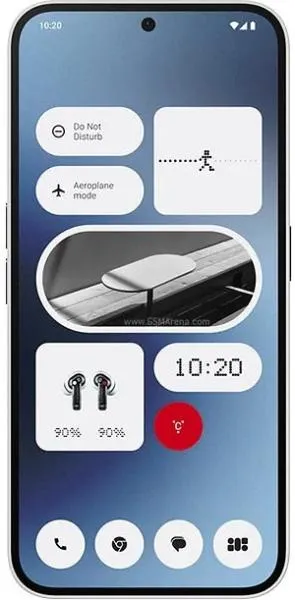
Let's dive into a comparative analysis of the Google Pixel 8 and the Nothing Phone (2a), dissecting their specifications and translating them into real-world implications for you.
1. Specifications Breakdown
| Feature | Google Pixel 8 | Nothing Phone (2a) | Real-World Implications |
|---|---|---|---|
| Design | |||
| Dimensions | 150.5x70.8x8.9mm | 161.7x76.3x8.6mm | Pixel 8 is noticeably smaller and potentially more pocketable. |
| Weight | 187g | 190g | Negligible weight difference in practical use. |
| Display | |||
| Size | 6.2" | 6.7" | Nothing Phone (2a) offers a larger screen for media consumption. |
| Type | OLED | AMOLED | Both offer vibrant colors and deep blacks. |
| Refresh Rate | 120Hz | 120Hz | Smooth scrolling and animations on both devices. |
| Peak Brightness | 2000 nits | 1300 nits | Pixel 8 significantly brighter in direct sunlight. |
| Performance | |||
| Chipset | Tensor G3 | Dimensity 7200 Pro | Tensor G3 expected to have AI advantages, Dimensity 7200 Pro focused on raw power. |
| CPU | Nona-core | Octa-core | Both offer strong performance, core configuration nuances matter less in typical usage. |
| GPU | Immortalis-G715s MC10 | Mali-G610 MC4 | Immortalis-G715s likely offers a performance advantage in gaming. |
| RAM | 8GB | 12GB | More RAM on Nothing Phone (2a) could benefit multitasking. |
| Battery | |||
| Capacity | 4575 mAh | 5000 mAh | Nothing Phone (2a) has a larger battery, potentially longer lasting. |
| Other | |||
| OS | Android 14 | Android 14 | Both ship with the latest Android version. |
| Storage | 256GB | 256GB | Equivalent storage capacity. |
| Video Capabilities | Up to 4K@60fps, 1080p@240fps | Up to 4K@30fps, 1080p@120fps | Pixel 8 offers superior video recording capabilities. |
2. Key Insights
- Display: While both phones boast 120Hz refresh rates, the Pixel 8's OLED display with a peak brightness of 2000 nits dramatically outshines the Nothing Phone (2a)'s 1300 nits. This translates to superior outdoor visibility and HDR performance on the Pixel.
- Performance: The Tensor G3 in the Pixel 8, while not focused solely on benchmark numbers, excels in AI-powered tasks, photography processing, and potentially smoother day-to-day performance due to software optimizations. The Dimensity 7200 Pro in the Nothing Phone (2a) might offer a slight edge in raw CPU and GPU tasks, but real-world differences might be minimal for average users. The extra 4GB of RAM in the Nothing Phone could provide smoother multitasking, particularly for demanding applications.
- Battery: The Nothing Phone (2a)'s 5000mAh battery promises longer endurance compared to the Pixel 8's 4575mAh battery. However, real-world battery life is influenced by various factors, including software optimization, display brightness, and usage patterns.
- Software and Updates: Pixel phones traditionally receive faster and longer software updates directly from Google, ensuring timely security patches and new features. This is a significant advantage over most Android phones, including the Nothing Phone (2a). Furthermore, the Pixel's tighter integration of hardware and software often results in a more optimized and fluid user experience.
- Camera: While detailed camera specs aren't provided, Pixel phones are renowned for their exceptional computational photography capabilities. Historically, Pixel phones outperform competitors in image quality, especially in challenging lighting conditions. The superior video recording capabilities of the Pixel 8 (up to 4K@60fps and 1080p@240fps), compared to the Nothing Phone (2a)'s (up to 4K@30fps and 1080p@120fps) make it the clear winner for videography enthusiasts.
3. User Profiles and Recommendations
- Pixel 8: Ideal for users prioritizing a compact size, a brilliant display, guaranteed fast updates, class-leading camera performance, and a seamless software experience. Photographers and videographers will particularly appreciate the Pixel's camera prowess.
- Nothing Phone (2a): Suitable for users who prefer a larger display, potentially longer battery life, and value a distinct design aesthetic. The extra RAM might appeal to power users who frequently multitask.
4. Buying Decision Framework
- What matters most? Compactness and camera quality vs. Larger display and potential battery life.
- How important are software updates? Pixel offers a significant advantage in this area.
- What's your budget? Both are in the medium price range, so consider which features justify the price for you.
My Choice: I would choose the Google Pixel 8. While the Nothing Phone (2a) offers a larger display and battery, the Pixel 8's superior display brightness, significantly better video recording capabilities, compact form factor, the promise of consistent and timely software updates, and the historically excellent camera performance make it a more compelling package for me. The Pixel's tighter integration of hardware and software generally leads to a more refined and optimized user experience. As a tech journalist who values staying up-to-date with the latest software and relies heavily on a phone's camera, the Pixel 8 aligns more closely with my needs and priorities.
