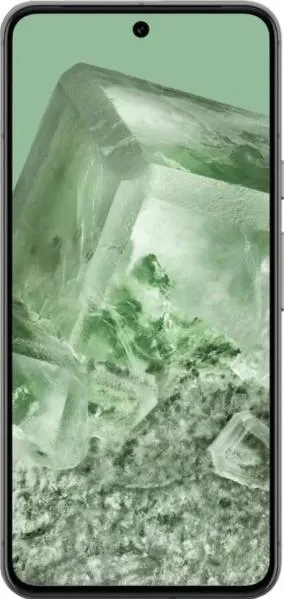
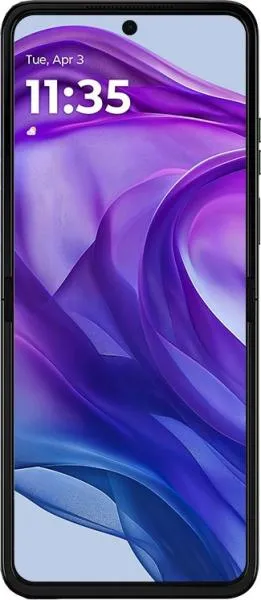
Let's dive into a comparative analysis of the Google Pixel 8 and the Motorola Razr 50 Ultra, dissecting their technical specifications and translating them into real-world implications for you.
1. Specifications Breakdown
| Feature | Google Pixel 8 | Motorola Razr 50 Ultra | Real-World Implications |
|---|---|---|---|
| Design | |||
| Dimensions | 150.5 x 70.8 x 8.9 mm | 171.4 x 74 x 7.1 mm (Unfolded) | Razr significantly larger unfolded, Pixel more pocketable |
| Weight | 187g | 189g | Negligible weight difference |
| Foldable | No | Yes | Razr offers compact portability when folded |
| Display | |||
| Display Type | OLED, 120Hz | Foldable LTPO AMOLED, 165Hz | Razr's higher refresh rate means smoother animations, but folding display introduces potential crease and durability concerns |
| Size | 6.2" | 6.9" | Razr offers more screen real estate |
| Resolution | 1080 x 2400 | 1080 x 2640 | Similar pixel density; Razr slightly sharper due to larger size |
| Peak Brightness | 2000 nits | 3000 nits | Razr boasts superior outdoor visibility |
| Performance | |||
| Chipset | Google Tensor G3 | Snapdragon 8+ Gen 1 | Snapdragon generally known for stronger GPU performance, Tensor for AI capabilities |
| CPU | Octa-core (1x3.0 GHz Cortex-X3 & 4x2.45 GHz Cortex-A715 & 4x2.15 GHz Cortex-A510) | Octa-core (1x3.19 GHz Cortex-X2 & 3x2.75 GHz Cortex-A710 & 4x1.80 GHz Cortex-A510) | Both powerful, real-world difference likely minimal for average users |
| RAM | 8GB | 12GB | Razr's extra RAM could benefit multitasking |
| Storage | 256GB | 256GB | Comparable storage capacity |
| Battery Life | |||
| Capacity | 4575 mAh | 3800 mAh | Pixel likely to offer longer battery life due to larger capacity and potentially better optimization |
| Other | |||
| OS | Android 14 | Android 12 | Pixel on newer OS with longer software support anticipated |
| Charging | USB Type-C 3.2 | USB Type-C 2.0 | Pixel supports faster data transfer speeds |
2. Key Insights
The Pixel 8 emphasizes a refined, traditional smartphone experience with a focus on Google's software prowess and AI integration. Its Tensor G3 chip, while perhaps not as graphically powerful as the Snapdragon 8+ Gen 1 in the Razr, excels in machine learning tasks, impacting features like voice recognition, photography, and overall system responsiveness. The larger battery in the Pixel promises better longevity.
The Razr 50 Ultra, on the other hand, is a statement piece. Its foldable design offers a unique blend of large-screen functionality and compact portability. The external display allows for quick interactions without unfolding, and the high refresh rate main screen delivers incredibly fluid visuals. However, the folding screen technology inherently introduces potential durability concerns and a crease down the middle. Battery life might be a concern given the smaller battery capacity and power demands of the large, high refresh rate display.
3. User Profiles and Recommendations
Pixel 8: Best suited for users prioritizing a seamless Android experience, reliable performance, excellent camera capabilities (not detailed in provided specs but generally a Pixel strength), and all-day battery life. Ideal for those who value practicality and software over flashy hardware.
Razr 50 Ultra: Perfect for users who crave the latest technology and prioritize portability and a unique form factor. The foldable design is a conversation starter and genuinely useful for compact one-handed use. Best for those willing to pay a premium for cutting-edge design and accept potential trade-offs in battery life and long-term durability.
4. Buying Decision Framework
- Is a foldable design a must-have? If yes, the Razr is the only option. If not, the Pixel 8 offers a more traditional, potentially more robust smartphone experience.
- How important is battery life? The Pixel 8 likely has a significant advantage in this area.
- What is your budget and how much do you value software updates? The Pixel 8 is expected to receive more software updates and security patches over its lifespan.
My Choice: The Google Pixel 8
While the Razr 50 Ultra is undeniably cool, the Pixel 8 aligns better with my priorities. I value a smooth, reliable software experience, long battery life, and a pocketable device. The Pixel's Tensor G3, while maybe not the best for gaming, shines in everyday tasks thanks to its AI capabilities. I also appreciate the commitment Google makes to software updates, ensuring the phone stays secure and feature-rich for years to come. While the foldable future is exciting, I'm not quite ready to compromise on battery life or potentially durability for the novelty. The Pixel 8 represents a more mature, well-rounded package for my needs.
