
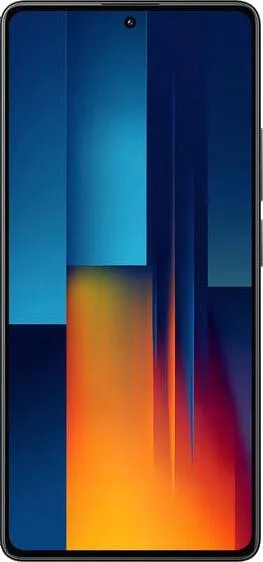
Let's dive into a comparative analysis of the Google Pixel 8 Pro and the Xiaomi Poco M6 Pro. Both phones occupy the "medium price" range, but their underlying technologies and target user experiences differ significantly.
1. Specifications Breakdown
| Feature | Google Pixel 8 Pro | Xiaomi Poco M6 Pro | Real-World Implications | |||||
|---|---|---|---|---|---|---|---|---|
| Design | ||||||||
| Dimensions | 162.6 x 76.5 x 8.8 mm | 161.1 x 75 x 8 mm | Pixel 8 Pro slightly taller and wider | |||||
| Weight | 213g | 179g | Poco M6 Pro noticeably lighter | |||||
| Build Materials | Glass and Aluminum (assumed based on prior models) | Plastic (assumed based on price and prior models) | Pixel likely more premium feel, Poco more durable against drops | Display | ||||
| Display Type | LTPO OLED, 120Hz | AMOLED, 120Hz | Pixel: More power efficient, smoother scrolling, superior blacks | |||||
| Resolution | 1344 x 2992 | 1080 x 2400 | Pixel: Sharper, more detailed visuals | |||||
| Peak Brightness | 2400 nits | 1300 nits | Pixel: Significantly brighter, better outdoor visibility | |||||
| Performance | ||||||||
| Chipset | Google Tensor G3 (4nm) | Mediatek Helio G99 Ultra | Pixel: Superior AI processing, overall faster performance | |||||
| CPU | Nona-core (1x3.0 GHz Cortex-X3 & 4x2.45 GHz Cortex-A715 & 4x2.15 GHz Cortex-A510) | Octa-core (2x2.2 GHz Cortex-A76 & 6x2.0 GHz Cortex-A55) | Pixel: More powerful, better multitasking | |||||
| GPU | Immortalis-G715s MC10 | Mali-G57 MC2 | Pixel: Much stronger graphics performance for gaming and demanding apps | |||||
| RAM | 12GB | 12GB | Ample RAM for both, enabling smooth multitasking | |||||
| Storage Options | 256GB, 512GB, 1TB | 512GB | Pixel offers more storage tiers | |||||
| Camera | Not specified but expected to be high-end | Not specified, likely mid-range | Pixel traditionally excels in computational photography | |||||
| Video Capabilities | Up to 4K@240fps | Up to 1080p@60fps | Pixel: Significantly better video recording capabilities | |||||
| Battery Life | ||||||||
| Capacity | 5050 mAh | 5000 mAh | Similar battery capacities, real-world usage will depend on optimization | |||||
| Charging | Not specified | Not specified | Charging speeds are a key unknown | |||||
| Software | ||||||||
| OS | Android 14 | Android 13 | Pixel: Latest Android version with guaranteed updates for longer |
2. Key Insights
Performance: The Pixel 8 Pro, powered by the Tensor G3, dramatically outperforms the Poco M6 Pro in raw processing power and graphics capabilities. This translates to smoother multitasking, faster app loading, and a significantly better gaming experience on the Pixel. The Tensor G3 also excels in AI-driven tasks, enabling features like advanced photo processing and voice assistance.
Display: The Pixel 8 Pro's LTPO OLED display with a higher resolution and significantly brighter peak brightness offers a superior visual experience compared to the Poco M6 Pro's AMOLED. The LTPO technology allows for a dynamically adjusting refresh rate, leading to smoother scrolling and potentially better battery life.
Camera: While detailed camera specs aren't provided, Google's Pixel line is renowned for its exceptional computational photography. It's safe to assume the Pixel 8 Pro will offer significantly better image quality, especially in challenging lighting conditions. The superior video recording capabilities of the Pixel are also noteworthy.
Build and Design: The Pixel 8 Pro likely features a more premium build with glass and aluminum, whereas the Poco M6 Pro probably utilizes a more cost-effective plastic construction. While the Poco M6 Pro is lighter, the Pixel's materials likely contribute to a more premium in-hand feel.
3. User Profiles and Recommendations
Pixel 8 Pro: Ideal for users who prioritize performance, a top-tier display, cutting-edge camera technology, and the latest software updates. Power users, photographers, videographers, and gamers would appreciate the Pixel's capabilities.
Poco M6 Pro: Best suited for budget-conscious users who primarily need a reliable device for everyday tasks like web browsing, social media, and light gaming. Its lighter weight might be appealing to some.
4. Buying Decision Framework
- What is your budget? The Pixel 8 Pro will command a higher price.
- What are your performance needs? For demanding tasks and gaming, the Pixel is far superior.
- How important is camera quality? The Pixel is likely to be the clear winner in photography.
My Choice
I would choose the Google Pixel 8 Pro. While the Poco M6 Pro offers decent value for its price, the Pixel 8 Pro's superior performance, stunning display, expected camera prowess, and the promise of timely software updates are compelling. The Tensor G3's AI capabilities also future-proof the device, making it a more compelling long-term investment. As a tech enthusiast and someone who values a smooth and powerful user experience, the Pixel 8 Pro aligns better with my needs and priorities. The price difference is justified by the significant leap in quality and features.
