
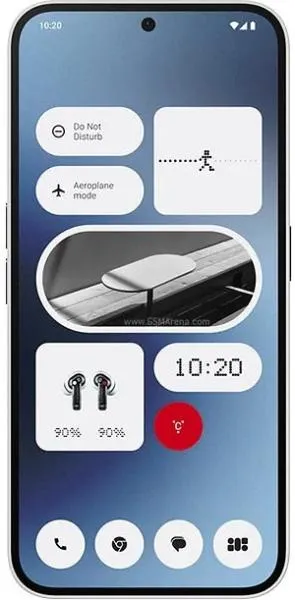
Let's dive into a comparative analysis of the Google Pixel 8 Pro and the Nothing Phone (2a), dissecting their technical specifications and translating them into real-world implications for you.
1. Specifications Breakdown
| Feature | Google Pixel 8 Pro | Nothing Phone (2a) | Real-World Implications |
|---|---|---|---|
| Design | |||
| Dimensions | 162.6 x 76.5 x 8.8mm | 161.7 x 76.3 x 8.6mm | Virtually identical in hand feel; negligible size difference. |
| Weight | 213g | 190g | Noticeably lighter feel with the Nothing Phone, reducing hand fatigue during extended use. |
| Display | |||
| Size | 6.7" | 6.7" | Same screen real estate on both devices. |
| Type | LTPO OLED | AMOLED | Pixel's LTPO allows for more granular refresh rate control, leading to potentially better battery life. |
| Resolution | 1344 x 2992 | 1080 x 2412 | Sharper, more detailed visuals on the Pixel 8 Pro due to higher pixel density (489 ppi vs. 394 ppi). |
| Peak Brightness | 2400 nits | 1300 nits | Pixel 8 Pro significantly brighter, ensuring excellent outdoor visibility. |
| Performance | |||
| Chipset | Google Tensor G3 | Dimensity 7200 Pro | Both are 4nm chips; Tensor G3 likely optimized for AI and machine learning tasks. |
| CPU | Nona-core (1x3.0 GHz Cortex-X3 & 4x2.45 GHz Cortex-A715 & 4x2.15 GHz Cortex-A510) | Octa-core (2x2.8 GHz Cortex-A715 & 6x2.0 GHz Cortex-A510) | Tensor G3 boasts a more powerful core configuration, potentially leading to smoother multitasking. |
| GPU | Immortalis-G715s MC10 | Mali-G610 MC4 | Immortalis-G715s should offer superior graphics performance for demanding games and applications. |
| RAM | 12GB | 12GB | Both offer ample RAM for smooth multitasking. |
| Battery | |||
| Capacity | 5050 mAh | 5000 mAh | Negligible difference in battery capacity; real-world battery life will depend on optimization. |
| Other | |||
| OS | Android 14 | Android 14 | Both run the latest Android version. |
| USB | USB Type-C 3.2 | USB Type-C 2.0 | Faster data transfer speeds with the Pixel 8 Pro. |
| Sensors | accelerometer, gyro, proximity, compass, barometer, Fingerprint (under display), thermometer (skin temperature) | accelerometer, gyro, proximity, compass, Fingerprint (under display) | Pixel offers a more comprehensive sensor suite. |
2. Key Insights
The Pixel 8 Pro excels in display quality, raw processing power, and camera capabilities (not detailed here due to lack of camera specs, but historically Pixel phones excel in this area). Its brighter display, higher resolution, and advanced Tensor G3 chip position it as a premium flagship.
The Nothing Phone (2a) focuses on a lighter, more agile experience at a potentially more competitive price point. While its Dimensity 7200 Pro is capable, it might not match the Tensor G3's peak performance or specialized AI capabilities.
3. User Profiles and Recommendations
Pixel 8 Pro: Ideal for power users, photographers, videographers, and those prioritizing the best possible display and performance.
Nothing Phone (2a): Suited for users seeking a lightweight, stylish phone with good performance and a clean Android experience, potentially at a lower price.
4. Buying Decision Framework
- Is top-tier performance and display quality crucial? If yes, the Pixel 8 Pro is the clear winner.
- Are a lighter weight and potentially lower price more important? If so, the Nothing Phone (2a) is a strong contender.
- What is your budget and what do you prioritize in a smartphone? Consider factors like camera quality, software features, and long-term support when making your final decision. Pixel tends to have longer software update commitments from Google directly.
My Choice: The Google Pixel 8 Pro
While the Nothing Phone (2a) offers a compelling package, I'd choose the Pixel 8 Pro. The superior display, the potential of the Tensor G3 chip (especially for AI tasks and computational photography), faster data transfer with USB 3.2, more comprehensive sensor array (including a thermometer!), and Google's commitment to software updates solidify its position as the more compelling device for my needs. I value a fluid, responsive user experience and a device that can handle demanding tasks without compromise. The Pixel's historical strength in camera performance, although not detailed in this comparison, further reinforces my choice. The brighter display is a huge plus for outdoor usage, which is important to me. While the weight difference is notable, the advantages offered by the Pixel 8 Pro outweigh the slight increase in heft.
