
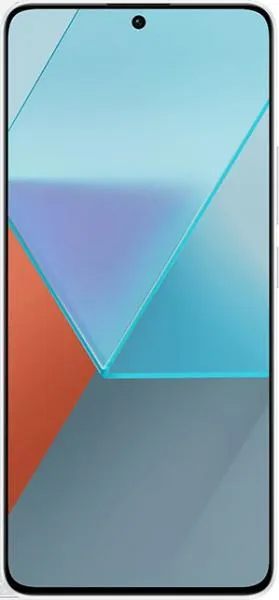
Google Pixel 7 vs. Xiaomi Redmi Note 13 Pro: A Deep Dive
Let's dissect the Google Pixel 7 and the Xiaomi Redmi Note 13 Pro, two compelling contenders in the mid-range smartphone arena. We'll go beyond the spec sheets to uncover what these numbers really mean for you.
1. Specifications Breakdown
| Feature | Google Pixel 7 | Xiaomi Redmi Note 13 Pro | Real-World Implications |
|---|---|---|---|
| Design | |||
| Dimensions (mm) | 155.6 x 73.2 x 8.7 | 161.2 x 74.2 x 8 | Pixel 7 is slightly more compact, potentially easier to handle. |
| Weight (g) | 197 | 187 | Redmi Note 13 Pro is marginally lighter. |
| Display | |||
| Size (inches) | 6.3 | 6.67 | Redmi Note 13 Pro offers a larger screen for media consumption. |
| Resolution (px) | 1080 x 2400 | 1220 x 2712 | Redmi Note 13 Pro has a sharper, more detailed display. |
| Refresh Rate (Hz) | 90 | 120 | Redmi Note 13 Pro provides smoother scrolling and animations. |
| Display Type | AMOLED, 90Hz | AMOLED, 120Hz | Both offer vibrant colors and deep blacks. |
| Peak Brightness | 1400 nits | 1800 nits | Redmi Note 13 Pro will be more visible in direct sunlight. |
| Performance | |||
| Chipset | Google Tensor G2 | Snapdragon 7s Gen 2 | Tensor G2 excels in AI tasks; Snapdragon 7s Gen 2 in sustained performance. |
| CPU | Octa-core (2x2.85 GHz Cortex-X1 & 2x2.35 GHz Cortex-A78 & 4x1.80 GHz Cortex-A55) | Octa-core (4x2.4 GHz Cortex-A78 & 4x1.95 GHz Cortex-A55) | Pixel 7 has a higher peak CPU frequency |
| GPU | Mali-G710 MP7 | Adreno 710 | Both offer decent gaming performance, but G710 generally edges out. |
| RAM (GB) | 8 | 8/12/16 | Redmi Note 13 Pro offers configurations with more RAM for multitasking. |
| Camera | |||
| Main Camera (MP) | 50 | 200 | Redmi Note 13 Pro boasts higher megapixel count. |
| Battery Life | |||
| Capacity (mAh) | 4355 | 5100 | Redmi Note 13 Pro has a significantly larger battery. |
2. Key Insights
- Display: The Redmi Note 13 Pro's 120Hz display is noticeably smoother than the Pixel 7's 90Hz panel. This translates to a more fluid and responsive user experience, especially in gaming and scrolling through content. Its higher resolution also packs more detail into the larger screen. The Pixel 7's display is still excellent, just not as cutting-edge.
- Performance: The Tensor G2 in the Pixel 7 shines in AI-powered features like voice assistance, language translation, and image processing. However, the Snapdragon 7s Gen 2 in the Redmi Note 13 Pro provides a better balance for gaming and heavy multitasking.
- Camera: While megapixels aren't everything, the Redmi Note 13 Pro's 200MP main sensor captures significantly more detail. The Pixel 7, however, leverages Google's computational photography prowess to produce stunning images, particularly in challenging lighting conditions. It often outperforms its hardware specifications.
- Battery: The Redmi Note 13 Pro's larger 5100mAh battery should easily last a full day of heavy use. The Pixel 7's battery life is good, but not exceptional.
3. User Profiles and Recommendations
- Pixel 7: Best for users who prioritize a clean Android experience, seamless Google integration, and top-notch camera performance in various conditions. Its compact size is also a plus for one-handed use.
- Redmi Note 13 Pro: Ideal for users who value a large, high-refresh-rate display, long battery life, and a high-resolution camera for capturing detailed shots. The various RAM configurations cater to different multitasking needs.
4. Buying Decision Framework
- What's your budget? While both are mid-range, the Redmi Note 13 Pro offers more storage and RAM for a similar price.
- What's most important: software or hardware? Pixel 7 excels in software and AI; Redmi Note 13 Pro leads in raw hardware specs.
- How important is battery life? The Redmi Note 13 Pro is the clear winner here.
My Choice: The Google Pixel 7
While the Redmi Note 13 Pro boasts impressive hardware, I'd choose the Pixel 7. My priorities lie in software experience, camera versatility, and a compact form factor. The Pixel's clean Android OS, coupled with Google's AI-driven features and consistent updates, offers a level of refinement that appeals to me. I'm willing to sacrifice some screen real estate and battery life for the Pixel's superior overall user experience and pocket-friendly design. The Tensor G2, while perhaps not as powerful in benchmarks, provides a unique advantage in AI tasks that I find incredibly valuable in my daily workflow. It's a more personalized and intuitive experience.
