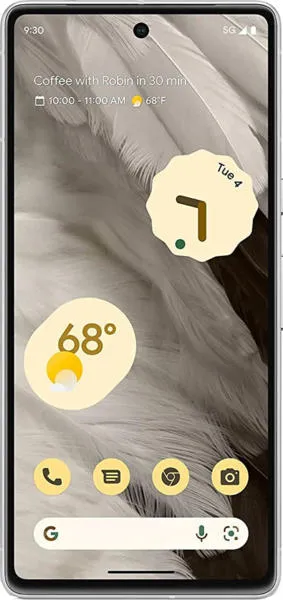
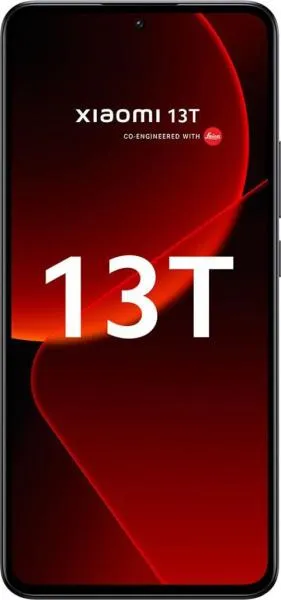
Google Pixel 7 vs. Xiaomi 13T: A Deep Dive for the Discerning Smartphone User
The mid-range smartphone market is fiercely competitive, with devices vying for your attention with compelling features and aggressive pricing. Today, we dissect two contenders: the Google Pixel 7 and the Xiaomi 13T. Let's move beyond the marketing hype and delve into the engineering realities to understand what each phone truly offers.
1. Specifications Breakdown
| Feature | Google Pixel 7 | Xiaomi 13T | Real-World Implications |
|---|---|---|---|
| Design | |||
| Dimensions (mm) | 155.6 x 73.2 x 8.7 | 162.2 x 75.7 x 8.5 | Pixel 7 is slightly smaller and more pocketable. |
| Weight (g) | 197 | 219 | Xiaomi 13T is noticeably heavier, potentially impacting comfort. |
| Display | |||
| Size | 6.3" | 6.67" | Xiaomi 13T offers a larger screen for media consumption. |
| Resolution | 1080 x 2400 | 1220 x 2712 | 13T boasts sharper visuals due to higher resolution and pixel density. |
| Refresh Rate | 90Hz | 144Hz | 13T provides smoother scrolling and animations. |
| Display Type | AMOLED | AMOLED | Both offer vibrant colors and deep blacks. |
| Peak Brightness | 1400 nits | 2600 nits | 13T excels in outdoor visibility. |
| Performance | |||
| Chipset | Google Tensor G2 | Dimensity 8200 Ultra | Both offer strong performance, but benchmarks will reveal granular differences. |
| CPU | Octa-core (2x2.85 GHz Cortex-X1 & 2x2.35 GHz Cortex-A78 & 4x1.80 GHz Cortex-A55) | Octa-core (1x3.1 GHz Cortex-A78 & 3x3.0 GHz Cortex-A78 & 4x2.0 GHz Cortex-A55) | 13T's slightly higher clock speed could provide marginal speed advantage in some tasks. |
| RAM | 8GB | 12GB | 13T's larger RAM enables better multitasking and app switching. |
| Camera | |||
| Main Sensor | 50MP Samsung GN1 | 50MP Sony IMX707 | Both utilize high-resolution sensors, image quality will depend on processing. |
| Ultrawide | 12MP | 13MP | Marginal difference in ultrawide resolution. |
| Telephoto | - | 50MP | Xiaomi 13T offers dedicated telephoto capabilities for optical zoom. |
| Battery Life | |||
| Capacity | 4355 mAh | 5000 mAh | Xiaomi 13T has a significantly larger battery, likely translating to longer usage. |
2. Key Insights
- Display: The Xiaomi 13T's 144Hz display is a clear winner for smoothness and responsiveness. While the Pixel 7's 90Hz is adequate, the 13T provides a noticeably more fluid experience, especially in gaming and fast-paced content consumption. Its higher peak brightness ensures excellent outdoor readability.
- Performance: While both chipsets are powerful, the Dimensity 8200 Ultra in the 13T, coupled with 12GB of RAM, offers a potential advantage in demanding tasks and multitasking. The Tensor G2, however, excels in AI-driven features and computational photography.
- Camera: The Pixel 7 leverages Google's renowned image processing to deliver stunning photos. While the 13T boasts impressive hardware, including a dedicated telephoto lens, the real-world image quality will depend heavily on Xiaomi's software processing.
- Battery: The Xiaomi 13T's larger 5000mAh battery promises significantly longer usage time compared to the Pixel 7. This is a crucial advantage for power users.
3. User Profiles and Recommendations
- Pixel 7: Ideal for users prioritizing a compact form factor, clean Android experience, and exceptional camera performance, especially in challenging lighting conditions. Its AI-powered features enhance daily productivity.
- Xiaomi 13T: Best suited for users who value a large, high-refresh-rate display, extended battery life, and versatile camera capabilities, including optical zoom. Gamers and media enthusiasts will appreciate the 144Hz display.
4. Buying Decision Framework
- What matters most: Camera quality or screen smoothness? If photography is paramount, lean towards the Pixel 7. If a fluid display experience is a priority, the 13T is the better choice.
- How important is battery life? Heavy users who demand all-day battery life should opt for the Xiaomi 13T.
- Do you prefer a clean Android experience or extensive customization options? Pixel offers a pure Google software experience, while Xiaomi's MIUI offers more customization.
My Choice: The Xiaomi 13T
While I deeply appreciate Google's software prowess and the Pixel 7's camera excellence, I would choose the Xiaomi 13T. The combination of a stunning 144Hz display, a significantly larger battery, a versatile camera system with a dedicated telephoto lens, and a powerful processor with ample RAM makes it a compelling package. The slight increase in size and weight is a trade-off I'm willing to make for the substantial gains in screen quality, battery life, and overall performance. The inclusion of a dedicated telephoto lens, often missing in this price range, expands creative possibilities for photography enthusiasts like myself. For my usage patterns, which include heavy multitasking, content creation, and mobile gaming, the 13T aligns more closely with my needs.
